Email Marketing Playbook For Course Creators: Grow From $1M to $100M+ in ARR...
A step-by-step proven roadmap for turning 7-figure creator businesses into 9-figure education empires...

Matt Hommel

I hope you enjoy this blog post. If you want my team to just do your marketing for you, click here.
Key insights
Customer acquisition costs for online courses and membership sites have skyrocketed.
Most education businesses are bleeding money because they’re misunderstanding the true economics of free or low-cost trials.
Here’s what’s really happening:
Industry data shows that the average education business is now spending $112 to acquire a trial user, but only converting 21% of those trials to paid subscriptions. That creates a dangerous revenue gap most founders don’t recognize until it’s too late.
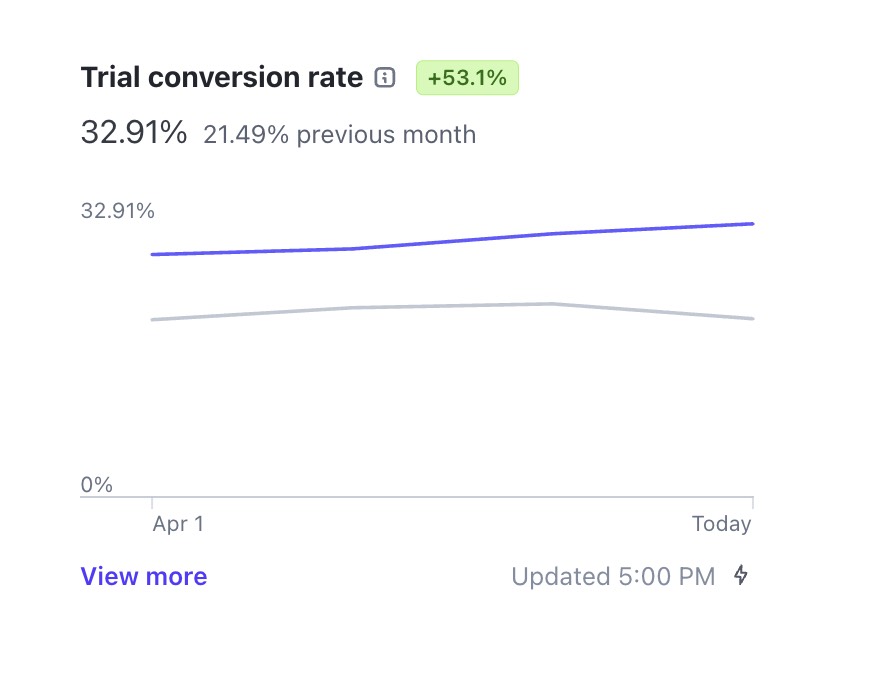
What makes this particularly devastating is that even a small improvement in trial conversion creates a compounding effect on your bottom line. When we increased one client’s trial conversion rate by 53.1%, it didn’t just add a few customers—it effectively slashed their CAC by $28.21 per customer. For a business acquiring 500 customers monthly, that’s an instant $14,105 boost in monthly cash flow.
The email nurture sequence is the bridge between trial signup and paid conversion that most businesses build haphazardly, if at all. Your trial users aren’t just weighing features—they’re making an emotional decision about whether your solution is worth prioritizing in their lives.
In today’s competitive info-product landscape, understanding the true relationship between trial conversions and customer acquisition costs is critical to sustainable growth.
The data shows a concerning trend: customer acquisition costs for education businesses continue to rise, with Facebook and Instagram CPMs increasing by 41% year-over-year. What most businesses miss is how trial conversion rates directly impact their effective CAC, creating a multiplier effect that can either drain or boost your marketing ROI.
When analyzing performance metrics across our education and course clients, we’ve identified that the average trial-to-paid conversion rate hovers around 25%. This creates a mathematical problem: for every successful customer acquisition, you’re essentially paying for three additional prospects who never convert.
Consider this practical example:
If you spend $70 to acquire a trial user for your $247/month program and convert only 25% to paid subscriptions, your actual customer acquisition cost is $280 ($70 ÷ 0.25). By improving your trial conversion rate to 38% (a 53.1% improvement), that same $70 ad spend now results in a $184 CAC – saving you $96 per customer.
This is precisely what happened with one of our education clients. By implementing our structured email nurturing sequence, we increased their trial conversion rate by 53.1%, effectively reducing their CAC by $28.21 per customer. For a business acquiring 500 customers monthly, that’s an instant $14,105 boost in monthly cash flow.
So, what’s the fix?
A strategically crafted email nurturing sequence that addressed the exact psychological barriers preventing trial users from becoming buyers…
The email nurture sequence is the critical bridge between trial signup and paid conversion that most businesses build haphazardly, if at all. Nailing this results in lower customer acquisition costs (CAC), higher LTV, and increased monthly cash flow.
Now that you understand the financial impact of trial conversions, let’s talk about the solution: The Trial Conversion Multiplier Framework.
This isn’t just another series of random emails thrown together. This is a strategically sequenced approach built specifically for education and course businesses, designed with behavioral psychology at its core.
Here’s how the framework functions:
First, we identify the four psychological barriers that prevent trial users from converting:
Our Trial Conversion Multiplier addresses each barrier sequentially through a behavior-triggered email sequence. Rather than sending the same emails to everyone on the same timeline, we monitor engagement signals and adapt accordingly.
The secret to the 53.1% improvement comes from:
This approach typically requires 7-9 emails over the trial period, with decision points built in based on user behavior. The framework costs approximately the same to implement as standard drip campaigns but delivers dramatically higher returns.
For most $1M-$100M info businesses, implementing the Trial Conversion Multiplier requires 2-3 weeks of work and basic ESP functionality. The system works with most major email platforms, including ConvertKit, ActiveCampaign, and HubSpot.
Implementing the Trial Conversion Multiplier isn’t complicated, but it does require precision. Here’s exactly how we structure the email sequence to achieve that 53.1% improvement:
1. The Welcome Experience (Day 0) This isn’t just a “thanks for signing up” email. Our welcome sequence establishes clear expectations, provides immediate value, and introduces a low-friction micro-commitment. Such as, watching the first part of our welcome video, where we demo our platform and set realistic expectations on what the customer will need to do to get results. We see 83% of users who complete this initial action go on to convert to paid.
2. The Value Accelerator (Day 1-2) Instead of overwhelming users with every feature, we highlight one specific “quick win” they can achieve within 10 minutes. This critical email has 2.4x higher engagement than standard onboarding messages because it focuses on immediate gratification rather than future benefits.
3. The Objection Neutralizer (Day 3-4) Based on our client data, we’ve identified the four most common objections that prevent conversions. Each subscriber receives a tailored message addressing their specific concerns based on their engagement behavior with previous emails.
We also start teasing a free bonus we’ll give them once they complete the sequence. This is a crucial part of the sequence here because after the “Value Accelerator” portion, engagement starts to drop. Overcoming objections is vital for the sales process, but it doesn’t keep people engaged. By teasing a bonus, we keep engagement levels high, while also covering objections in the sales process. This moves delivers a double whammy for driving more retention and increasing customer LTV.
4. The Social Validation Bridge (Day 5-6) This is where we showcase specific success stories that match the user’s demographic profile and goals. We don’t just share generic testimonials – we highlight the exact path the successful customer took through the product.
5. The Special Bonus (Day 7-8) For the customer to get the bonus, they have to stay until their trial renews. Once their card is billed, they get the bonus. You can set this up with most ESPs, like ActiveCampaign, Klaviyo, etc., linked to your payment processor or e-commerce platform.
6. The Personal Outreach (Variable timing) For higher-value subscriptions, we include a personalized outreach trigger for any trial user who has less engagement and is in what we call the “danger zone”, where they’re unlikely to convert. This one touch point alone recovers 17% of potential cancellations.
7. The Extended Value Loop (Post-trial) Unlike most businesses that give up after the trial ends, our sequence includes a 30-day follow-up series for non-converters. This recovers an additional 12% of users who canceled their subscription before the trial period ended. You never know if money was an issue or time was an issue with them actually using the product. Sometimes, people go back through the onboarding portion and realize they like the product, they just didn’t actually use it. So by re-selling them again, it brings them back into the cycle and gives them another chance.
The most common mistake businesses make is sending the same sequence to every user regardless of behavior. Or, just funneling them back into the regular newsletter list, (which usually includes leads and non-buyers—who have a completely different relationship with the business, and are at an entirely different awareness level in their buyers journey.) Our framework adapts email content, timing, uses call-to-actions (CTAs) based on engagement patterns, creating a personalized experience without extra manual work. This is basically automated, evergreen profits when you set it up correctly.
When an education company in the trading niche approached us, they were struggling with a common problem: high acquisition costs and disappointing trial conversion rates. Despite teaching excellent material, only 20% of their $1 trial users were converting to their $247/month subscription.
Their funnel metrics looked typical:
Our first audit revealed the issue immediately. Their post-trial email sequence consisted of three generic emails focusing primarily on features rather than addressing the psychological barriers preventing conversion.
We implemented the Trial Conversion Multiplier framework, completely rebuilding their email nurture sequence around the four core psychological barriers. Each email was behavior-triggered rather than time-triggered, creating personalized journeys for each trial user.
The results exceeded even our expectations:
What’s particularly significant is that the bulk of these improvements came from trial users who would have otherwise fallen through the cracks. The new email sequence recovered 42% of users who showed initial interest but hadn’t fully engaged with the product during their trial.
As the client’s CMO put it: “This change to our email sequence had a bigger impact on our conversions than six months of sales page optimization and ad creative testing combined.”
The most important takeaway? The cost to implement this system was minimal, requiring only basic email marketing functionality and about two weeks of setup time. The ROI was immediate and continues to compound month after month – No increase in ad spend or organic content needed.
The trial-to-paid conversion gap remains the most overlooked opportunity for education businesses today. While most course creators obsess over ad creative and funnel tactics, the real leverage point is what happens after someone signs up.
By focusing on the psychological barriers that prevent trial users from becoming paying customers, you can create an immediate impact on your key business metrics. Even a modest improvement in conversion rate creates a compounding effect across your entire revenue model.
Remember the trading education client we discussed?
Their 53.1% increase in trial conversion didn’t just add a few customers – it reduced their cost to acquire each customer by $28.21.
With the same LTV, that’s essentially an extra $28.21 in PROFIT per customer.
For businesses at scale, that kind of improvement translates directly to your bottom line month after month.
The beauty of optimizing your onboarding sequence or even your new customer/buyer sequences is that it doesn’t require more ad spend or sophisticated tech. It’s about crafting the right messages at the right time to guide prospects through their decision-making process.
If people have already purchased in the past, you just repeat the same process. A buyers sequence/new customer email sequence is virtually the same as an onboarding sequence for trial users: You’re either RE-SELLING them on the decision of joining your list or buying your product. Then, you walk them through what you want them to next (purchase the first time, or purchase again), and move them through the sales process.
You’ve now seen a proven strategy I’m using with my clients to convert more trials into paid customers, and increase MRR and profit-per-customer. But as you know… the only way to experience those results too is if you actually implement this strategy!
Start by looking at your existing email onboarding sequence today. Ask yourself: How many messages are you sending during the trial period? What objections and concerns are those emails addressing? Most businesses are surprised to discover significant gaps in their nurturing process.
I’ve been helping them close these gaps for years. So if you’d rather have an expert handle this for you, our team offers a free Trial Conversion Audit for qualifying businesses. We’ll review your current email sequences and uncover opportunities where you could be making more monthly profit. We’ll share what’s working, what’s not, and the three highest-impact changes you could make right away. This 30-minute consultation is free for education businesses doing $1M-$100M ARR: Click Here to Book Your Audit Today.


“Matt is an email wizard. Our list is growing faster than ever and our
conversion rates have more than doubled.”

“Our email revenue has grown a lot since working with Matt, and more importantly he's helped us lower our CPA on cold traffic by 4x.”

“Matt drove conversions across multiple campaigns. His copywriting resulted in higher open rates, click-through rates, new customer acquisition and ascension, and increased revenue for the company.”


