
Email Marketing Playbook For Course Creators: Grow From $1M to $100M+ in ARR...
A step-by-step proven roadmap for turning 7-figure creator businesses into 9-figure education empires...

Matt Hommel

I hope you enjoy this blog post. If you want my team to just do your marketing for you, click here.
I analyzed 192 emails from Neil Patel and Alex Hormozi.
In this post, I breakdown the exact email marketing strategies they’re using inside their $100M+ businesses to scale further.
I’ll be showing you live email examples & screenshots from both of them:
…And what you can takeaway from their email strategies to quickly & consistently scale your business.
I’ve been on Neil’s list for a while. From what I see, he emails his list virtually every day.
To prove it:
I analyzed how many times he emailed me from January 2nd, 2025 to June 12th, 2025.
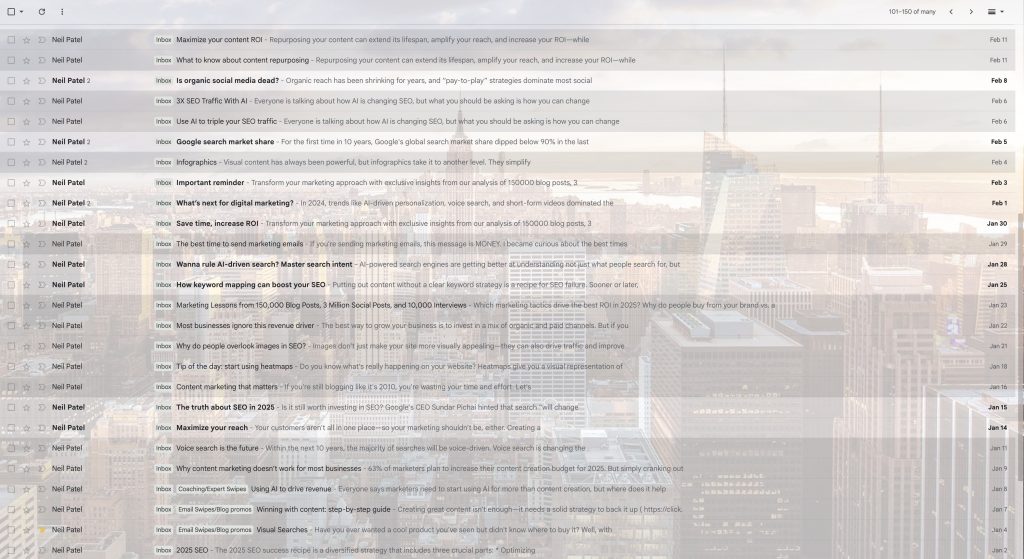
He sent me 140 total emails.
According to ChatGPT, that’s 📩 ~0.86 emails per day
Conservatively, I’ll say 6/week.
Or, since I’m way smarter than ChatGPT, I’ll just say 26 emails per month (every 30 days)
Now, let’s break down Neil’s 7-day email content calendar for Neil Patel’s email list.
For THIS breakdown…
I’ll show you what he sent me between June 1, 2025 to June 7, 2025.
June 1, 2025 was a Sunday. I didn’t receive an email from Neil.
What’s fascinating is May 25, 2025 is also a Sunday and I didn’t receive an email from Neil on that day either.
So was May 18.
It seems like Sunday is Neil’s least favorite day to send emails, with his 0.86 per day email cadence.
June 2nd, here’s what I received:
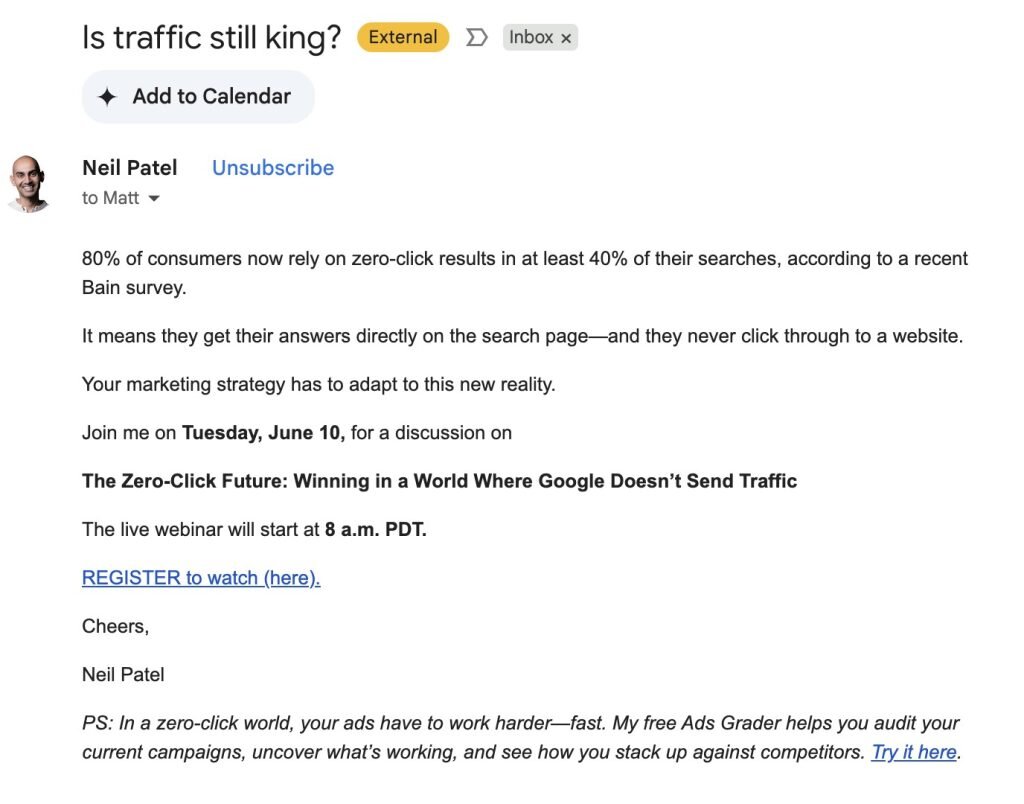
He’s promoting a webinar.
And then subtly pushing you to his software (his free ads grader tool, which obviously has a paid component too).
June 3rd, here’s what I received:
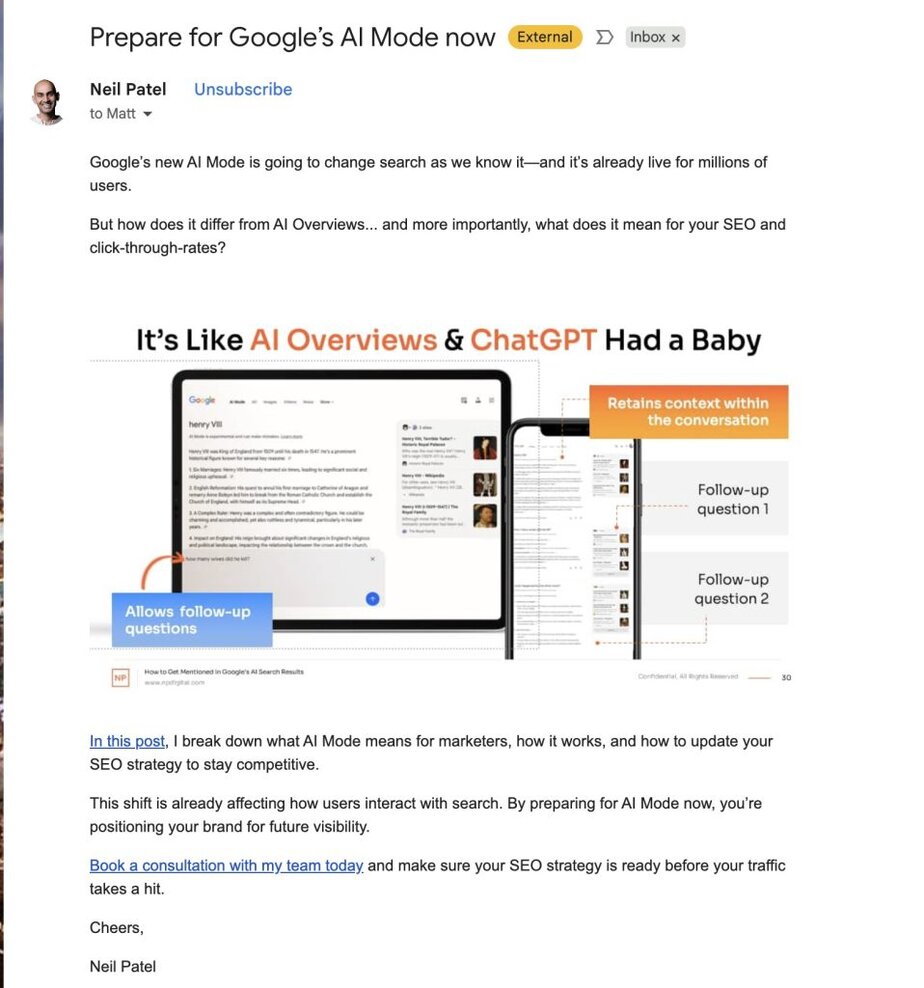
He pushes you to a blog post on his website.
Then, subtly pushes for you to book a call with his team.
Slightly less promotion.
June 4th, here’s what I received:
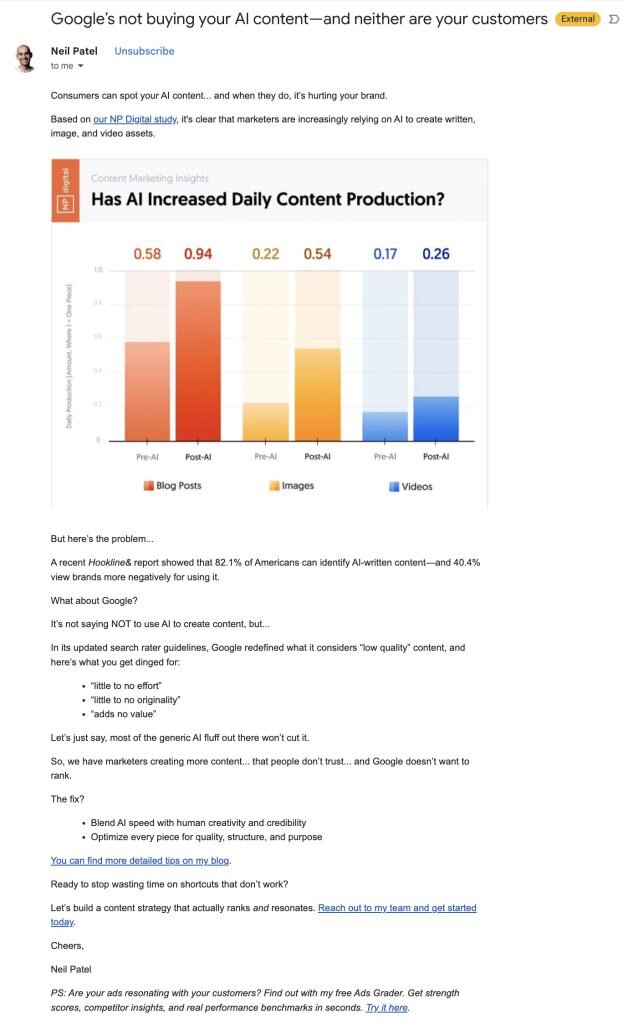
The linked text, our NP Digital study, actually brings you to a call booking/application page.
I thought it would bring me to a case study page. Idk if that was on purpose or not. It seems a little jarring or clickbaity. Like the page didn’t deliver based on the text link.
You know when you click something and the page isn’t what you thought it’d be?
I would’ve just sent to a case study article, with CTAs at the bottom of the case study article page.
The bottom text, “You can find more detailed tips on my blog” directs you back to a blog article.
Then, there’s another CTA to book a call.
And lastly, Neil has a subtle push to try his Ads Grader tool like he did in the Jan 2nd email.
June 5th, I received this email:
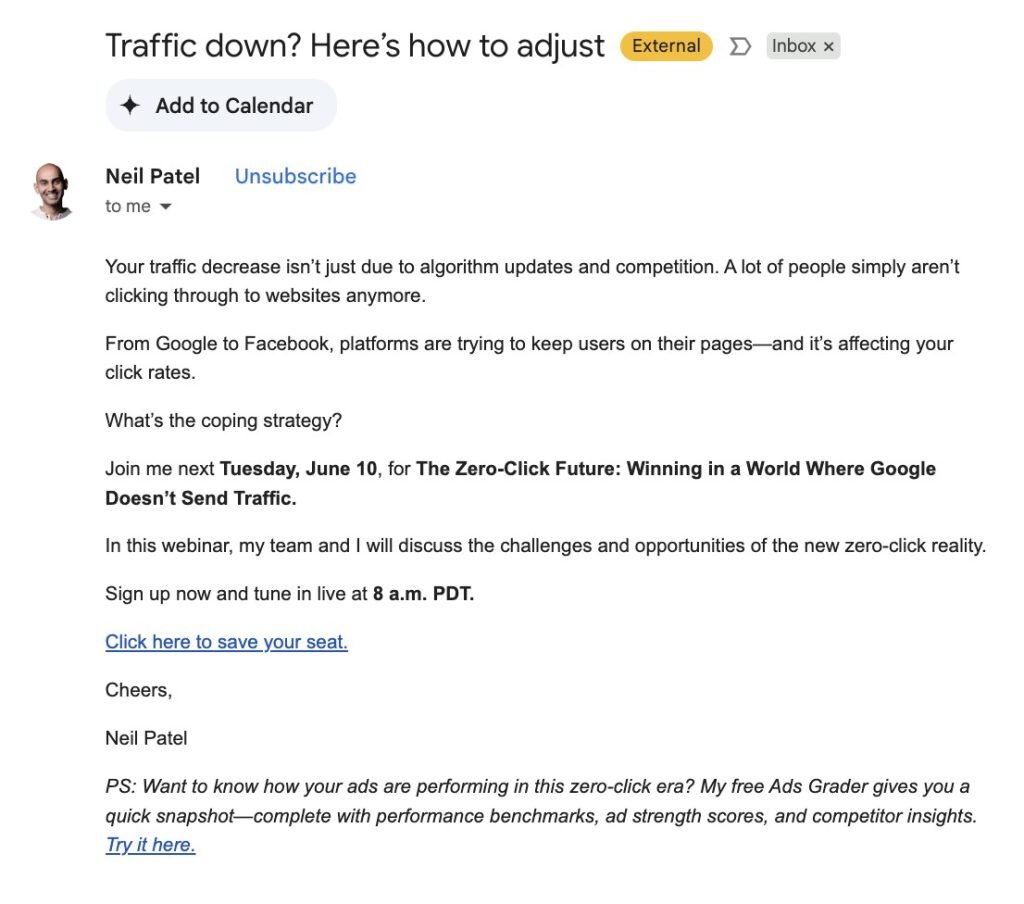
Another promotion for the webinar.
June 6th, I received this email:
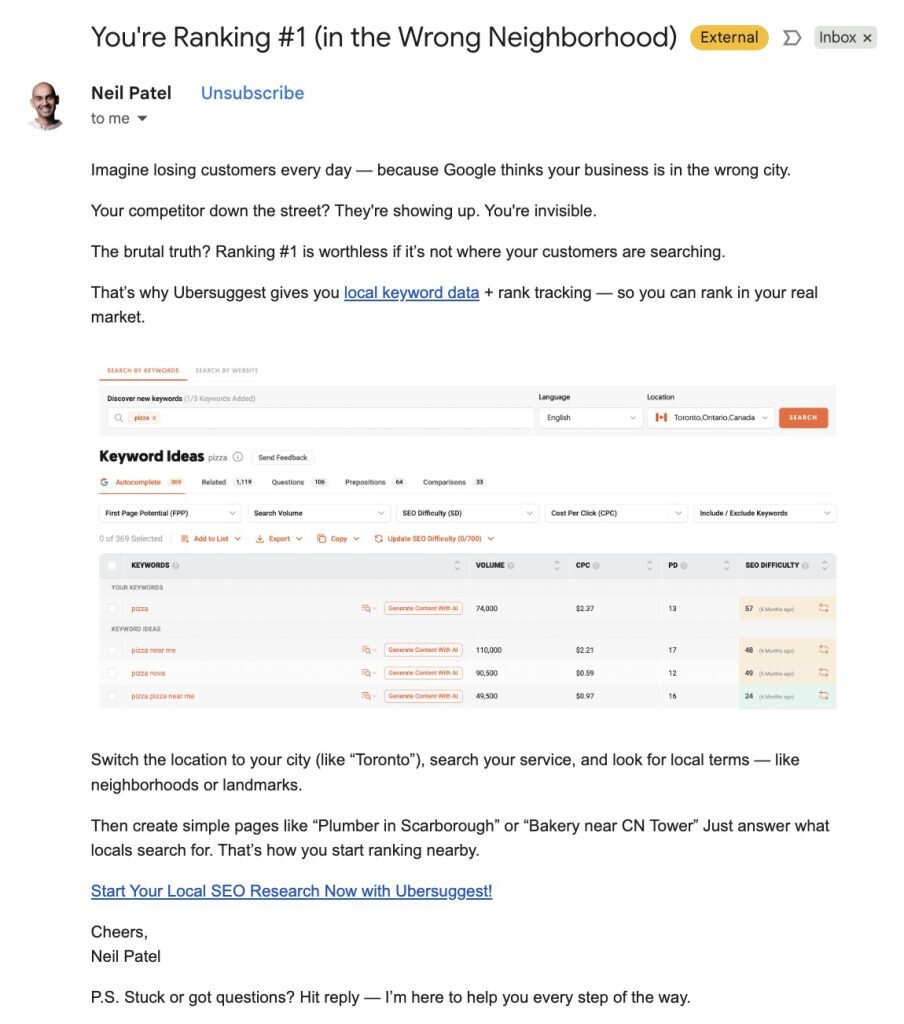
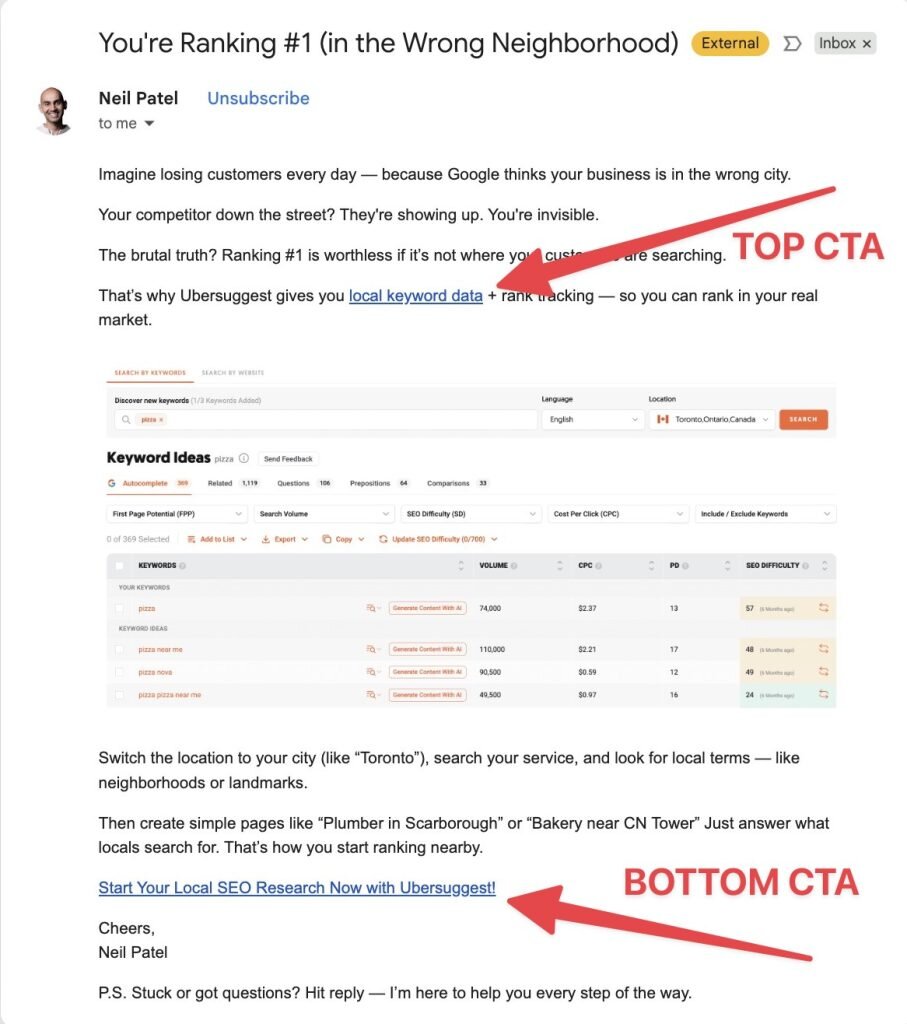
This is mostly a promotion for the Ubersuggest software tool.
He does have a subtle CTA in the P.S. to get you to reply. So he generates agency leads that way in a less pushy way.
I also like how before the CTA, “Start Your Local SEO Research Now with Ubersuggest!” he adds a little bit of teaching/value.
You’ll notice the opening of the email starts with classic problem/solution messaging and aims to drive an immediate click. Which will get some people.
But those who need more nurturing or don’t respond to that messaging (usually high end b2b decision makers who are immune to fear-based messaging), Neil teases a valuable concept of how to actually use the tool. Then urges you to try it out yourself.
June 7th, he sends me this email:
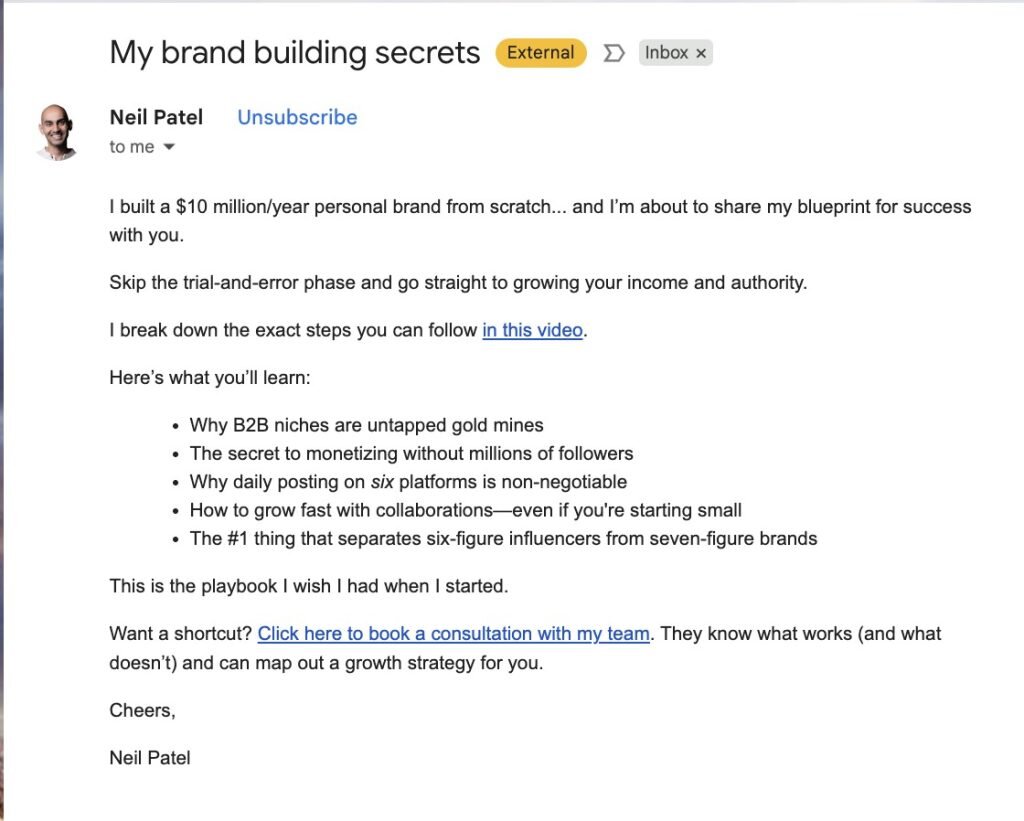
He drives you to his YouTube video.
The hyperlinked text “in this video” goes to his YouTube video 🙂
Then, there’s a subtle CTA to book a consultation with his team at the bottom.
June 8th or 9th I didn’t receive anything.
June 10th, I got this:
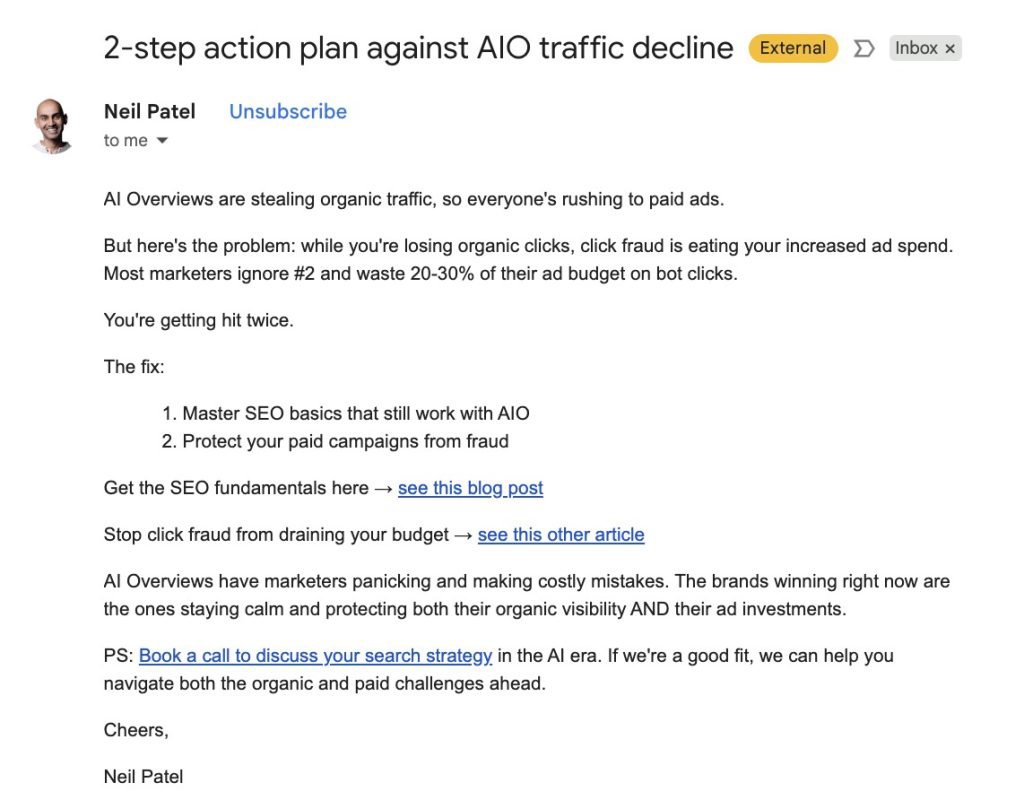
Driving traffic to the blog and getting you to book a call with his team.
And June 11th I received this MEGA Email!
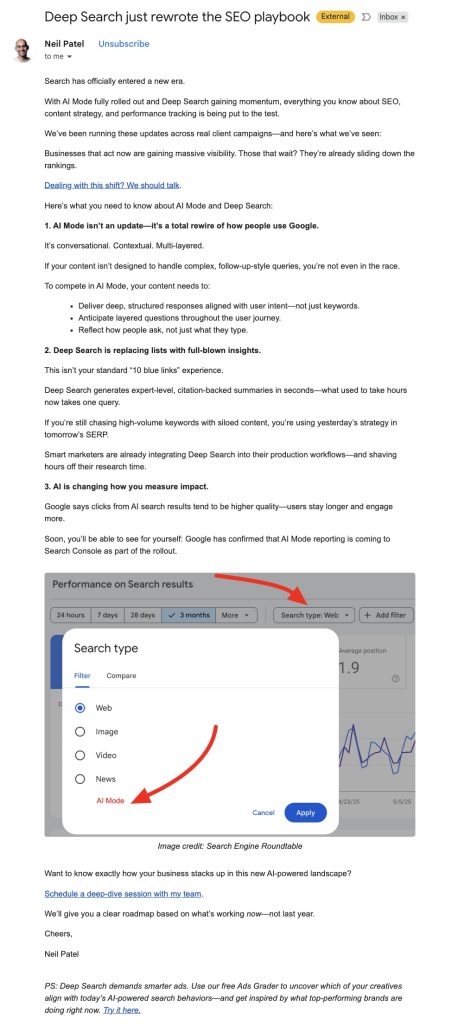
Overall, you can tell Neil’s primary goal is to get you to book a call and work with his agency.
He uses a lot of authority content with secondary CTAs.
By secondary CTAs, I mean he rarely pushes directly to work with his team, WITHOUT doing something else first in the email.
Contrary to most B2B businesses who pitch you to book a FREE strategy session, which is kinda cringe.
AND…
Unlike the other B2B businesses or high ticket coaching businesses, who are afraid to give CTAs to book a call…
Those people will try and “sequence” their messaging with a cadence like:
–Email 1: Value (no pitch)
–Email 2: Value (no pitch)
–Email 3: Value (no pitch)
–Email 4: Straight pitch
===> Or, they’ll pitch in every email in a salesy way, which just doesn’t work with sophisticated decision makers. It only works in D2C or low conscious-level BizOpp markets who hate their lives, and are looking for someone to give them a “do nothing, get everything” type of solution. Like fat loss pills, how to make your first 10k online and leave your 9-5 job, etc. That’s not to be mean or undermine those buyer personas, it’s just that they kinda move like sheep. They’re programmed to conform, and don’t really question things as much. My friend, Nick Verge covers conscious levels extensively, if you’d like to learn more about this concept.
That’s a mouthful I know. But what I’m saying is that different markets respond to different styles of messaging.
Neil Patel does a good job of always giving you the opportunity to work with his agency in his emails, but without straight pitching you on it.
He includes links to his blog, YouTube channel, or promotes webinars and other SaaS tools.
If you’re just starting out and don’t have many offers or much of a content engine, this is harder to do.
But if you’re already past $10M ARR in your business and have an established YouTube channel or Blog or long form content engine you’ve built up, you should absolutely be doing that. And selling softwares or lower tickets and other offers.
One last thing I’ll add is the structure of Neil Patel’s marketing emails.
By using primary and secondary CTAs, he includes links at the top of the email and further down the bottom:
But… there’s another way to do this that helped me generate $514k in just 2 days. So, while Neil may direct you to his blog in one link (the top link in his emails), and then drive you to book a call with his agency in other links (the bottom links)…
…instead of sending people to 2 different places like Neil does, you can send people to the exact same offer.
I’ve done this with a 9-figure brand, who has a very product-aware audience. (Learn about product aware and other market awareness levels in this article).
Here’s an example of a business selling a course this way below…
A CTA at the top for “hyper-aware” subscribers. Then more at the bottom, for those who needed more persuasion throughout the email (like what’s included in the offer, transformation, benefits, etc.):
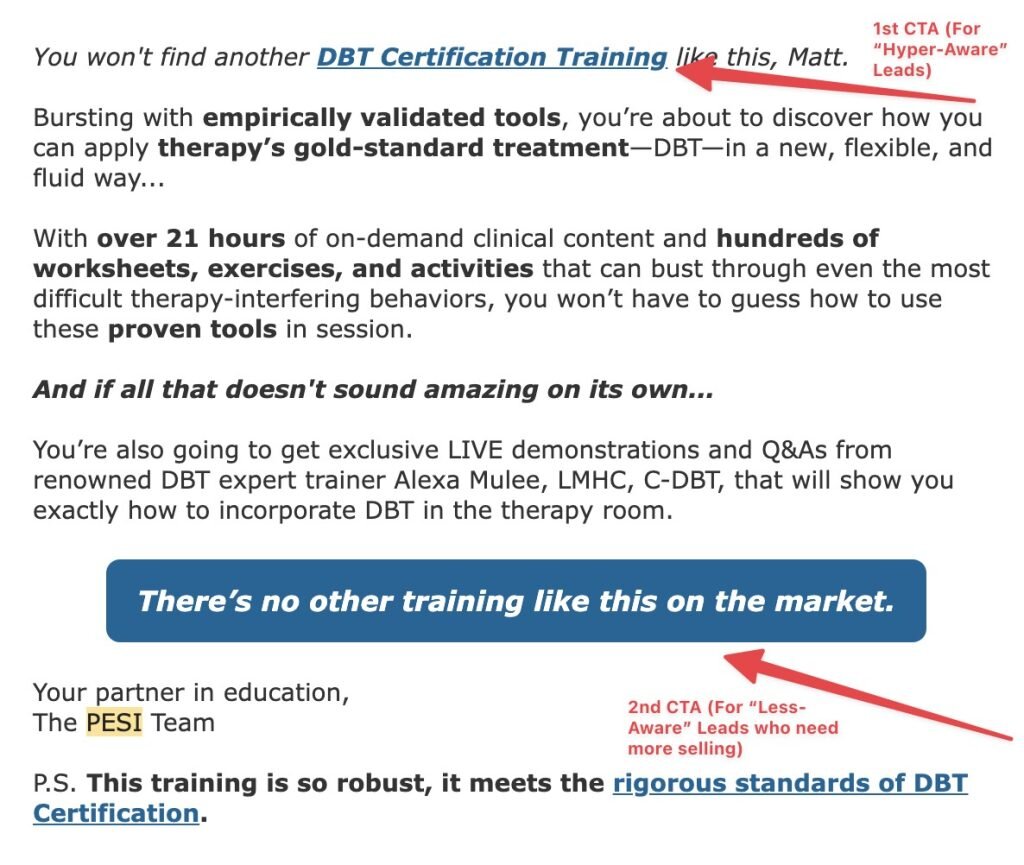
I break down the above email style in this video:
Now, I could talk all day about this email strategy…
But the main principle is this:
-People want to work with you today. So every single email should have some type of opportunity for them to do that.
-Leverage primary and secondary CTAs. Primary is driving traffic to a blog/YouTube, or download a free guide, or use your free SaaS tool, etc. Secondary is when you’d subtly push people to book a call or reply to your email to start the conversation.
Each “Value” email you send that doesn’t include a secondary CTA for people to work with you is a missed opportunity to generate more leads and sales for your business.
As you grow past $10-20M+ in ARR and have more data and labor costs, you’ll see, it’s expensive to send emails that don’t make you money—even if your email makes just a tiny bit with the slightest, most subtle, most anti-CTA ever—it influences your balance sheet.
I know this from experience running email lists for several 8 and 9-figure companies. Click here if you want me to scale your revenue & profits, too. Or, you can decide later and…
Read on to see what Alex Hormozi does with his email marketing.
Between Jan 2 and June 12th, 2025 I received 52 emails from Alex Hormozi (or Lelia, as I explain below).
The emails come from value@acquisitions .com
They use the From Name Alex Hormozi or Leila Hormozi.
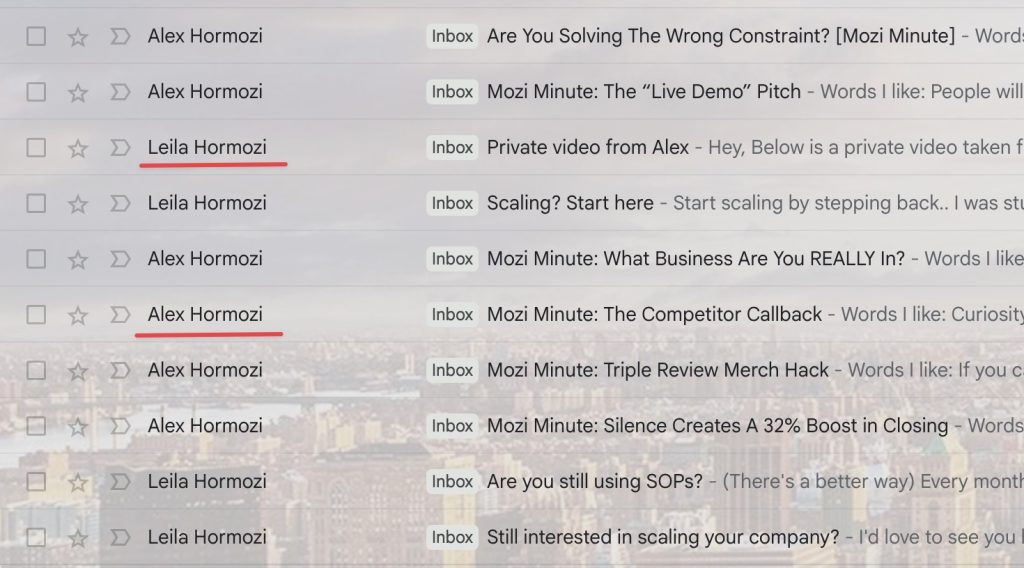
Unlike Neil’s daily email approach, the Hormozis send, in ChatGPT’s words:
📩 ~0.32 emails per day
📅 ~9.6 emails per month
(Emoji’s. So ChatGPT, lol).
Let’s get into a typical email calendar for them, and I’ll break down the types of emails they send.
We’ll start from April 7, 2025 to April 25th. 7 total emails.
Email 1:
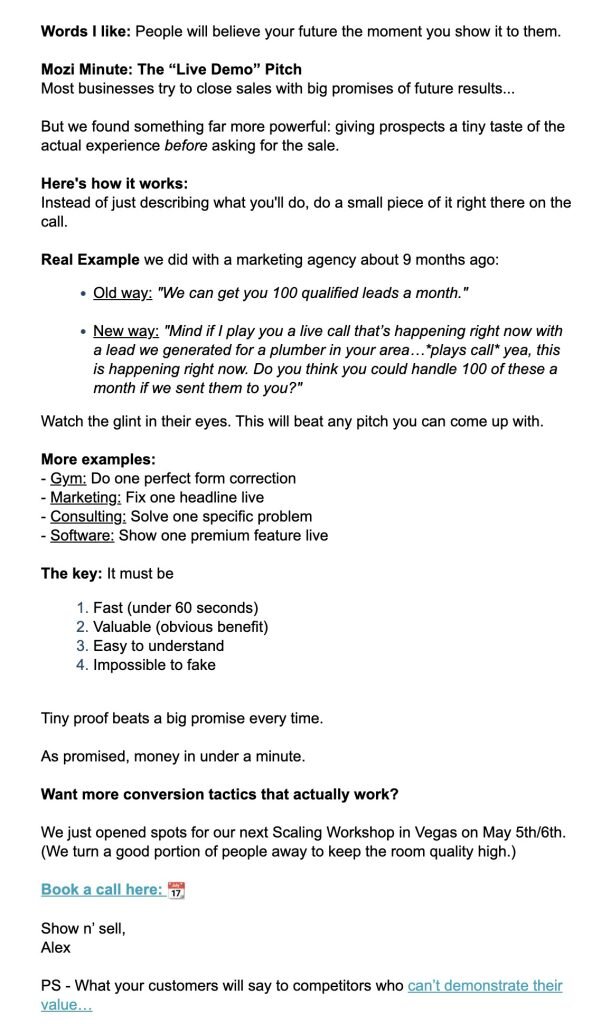
This is Alex’s standard “Mozi Money Minute” newsletter.
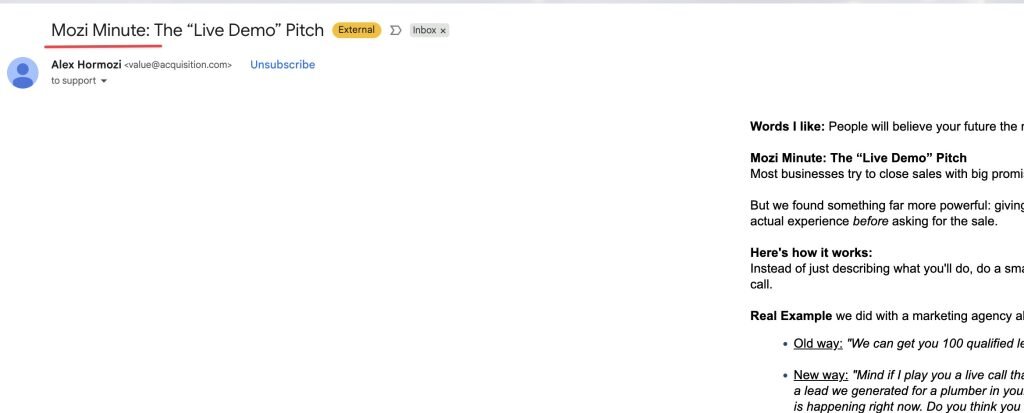
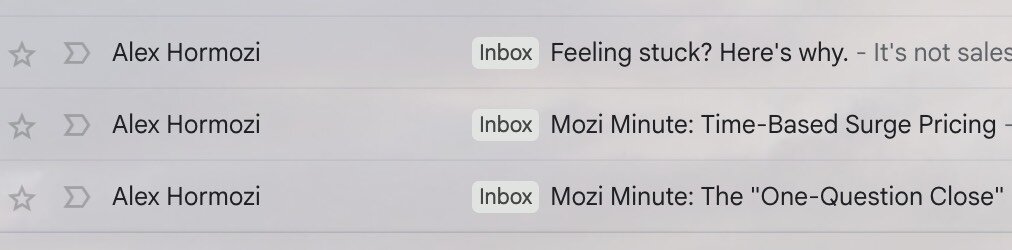
The subject lines all include “Mozi Minute”
I like this approach actually.
The goal with the email is to establish your WHO so high, that it doesn’t matter WHAT your subject line says – people will still open your emails.
By creating a theme around your emails, you make your “From Name” more important also.
The theme “mozi minute” or anything else you say, ultimately becomes part of the WHO the email is coming from.
Another example of this is people using emojis in every newsletter subject line.
Now, let’s get back to the email itself (Email 1).
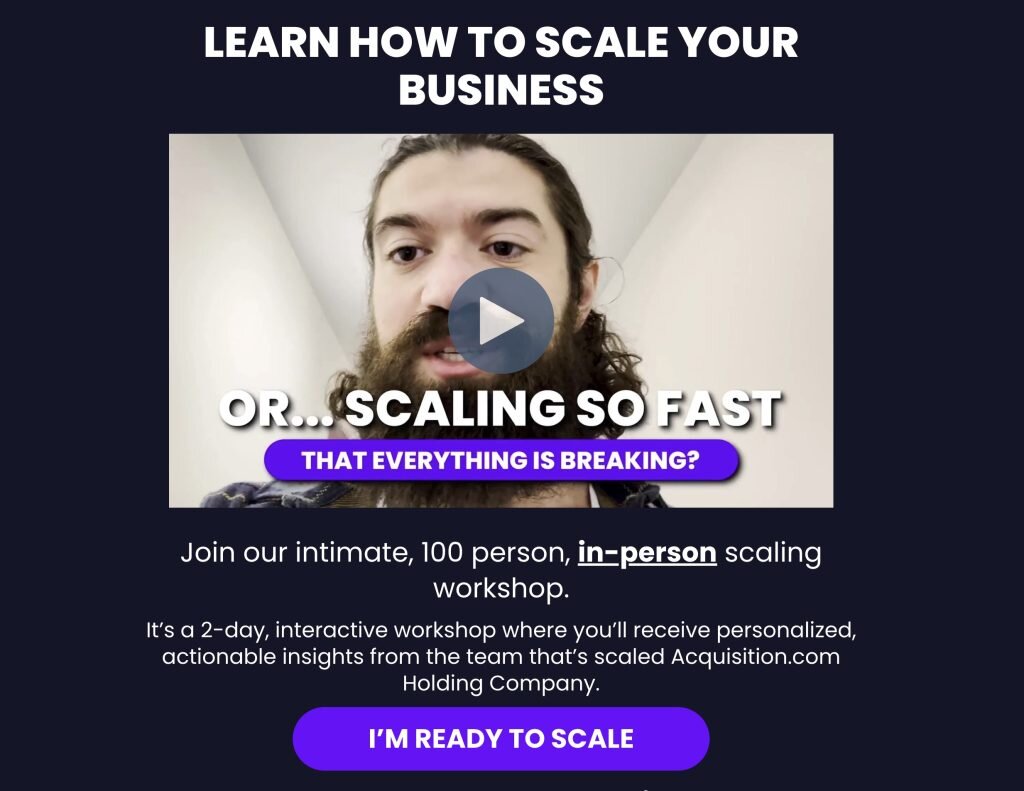
Hormozi’s main thing is pitching the scaling workshops.
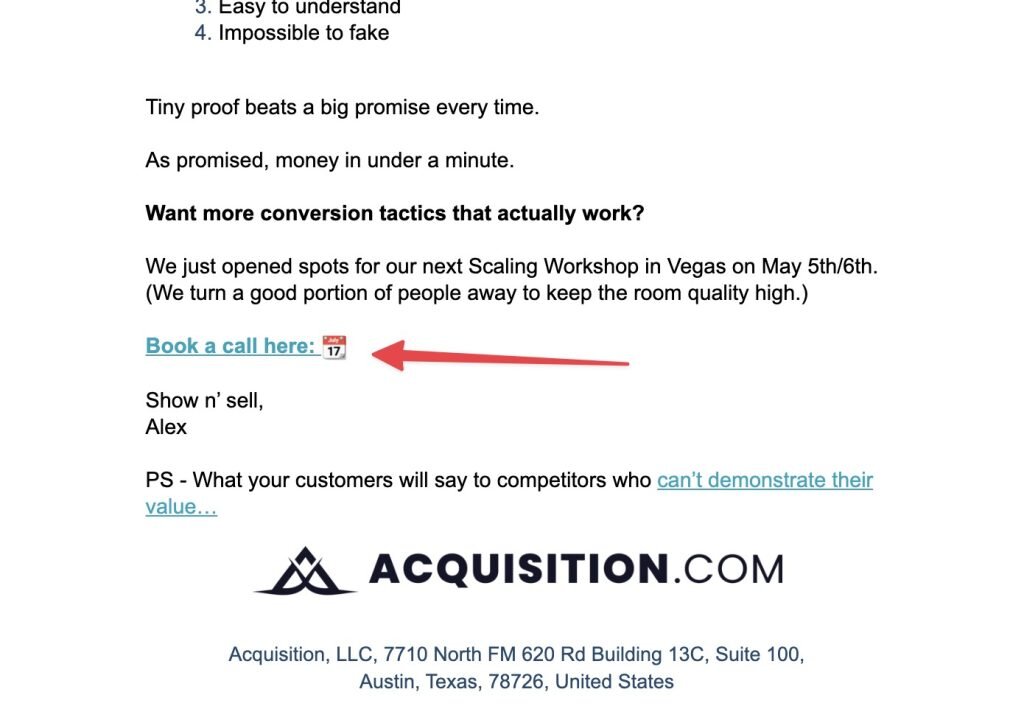
When you click that link, you go to a VSL page:

Now, let’s get into Email 2:
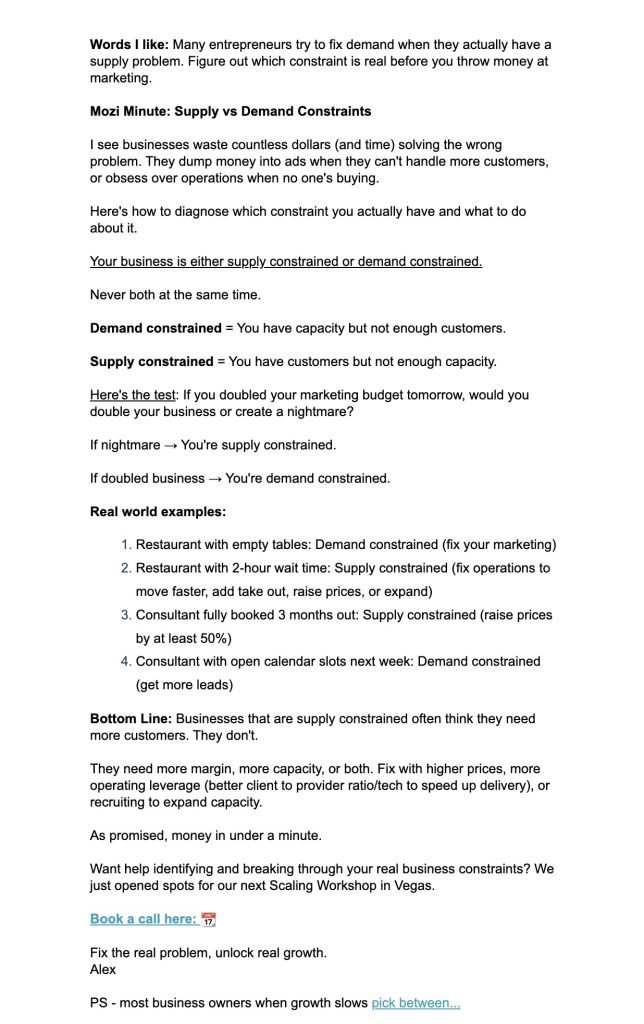
Again, we can see this is a standard mozi minute style email.
He gives value in the email in true newsletter style. Then transitions into promoting the scaling workshops.
The CTA at the bottom “Book a call here” brings you to the same VSL page I just showed.
The PS section brings you to another gif.
Email 3:
This email came from Leila Hormozi.
(Small I know, but I wanted to fit the full email!)
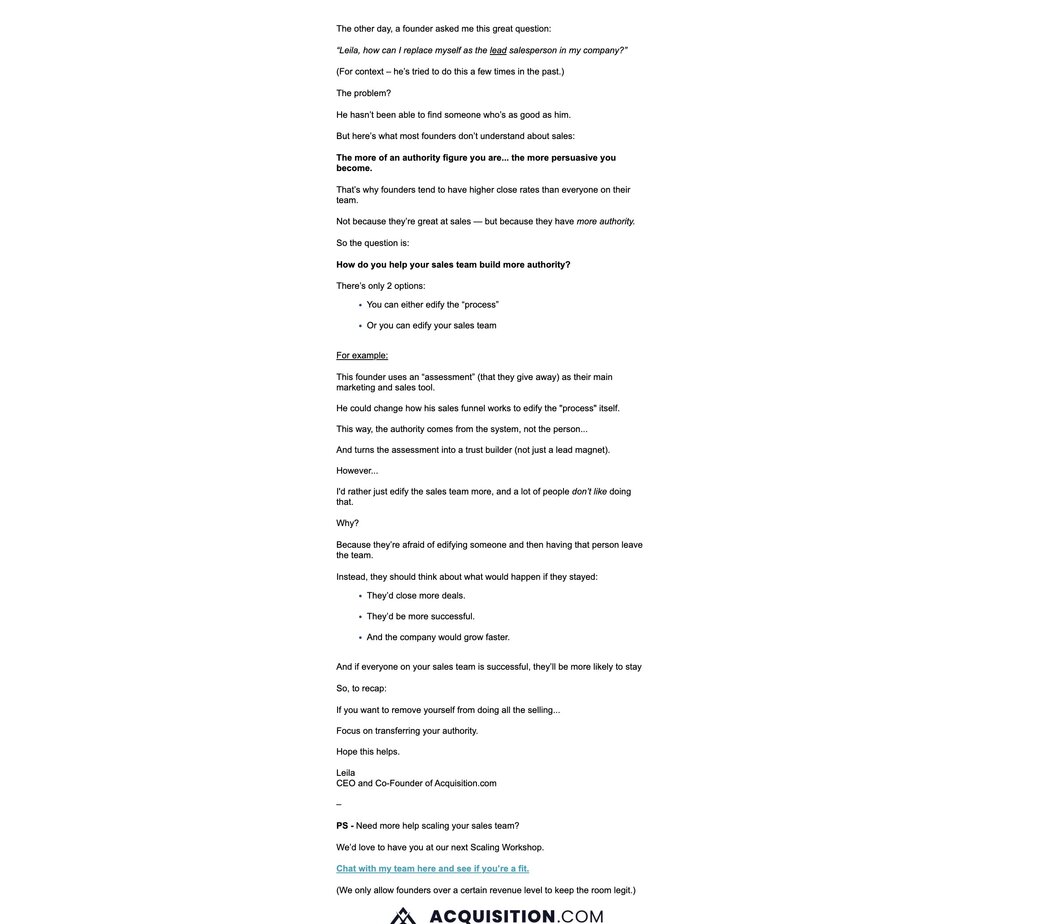
A little bit of a different style than Alex’s Mozi Minute.
Leila focuses on giving value in the email, then giving a subtle CTA in the PS section, which links to the same Scaling Workshop VSL I showed earlier.
Email 4:
This one came from Alex Hormozi.
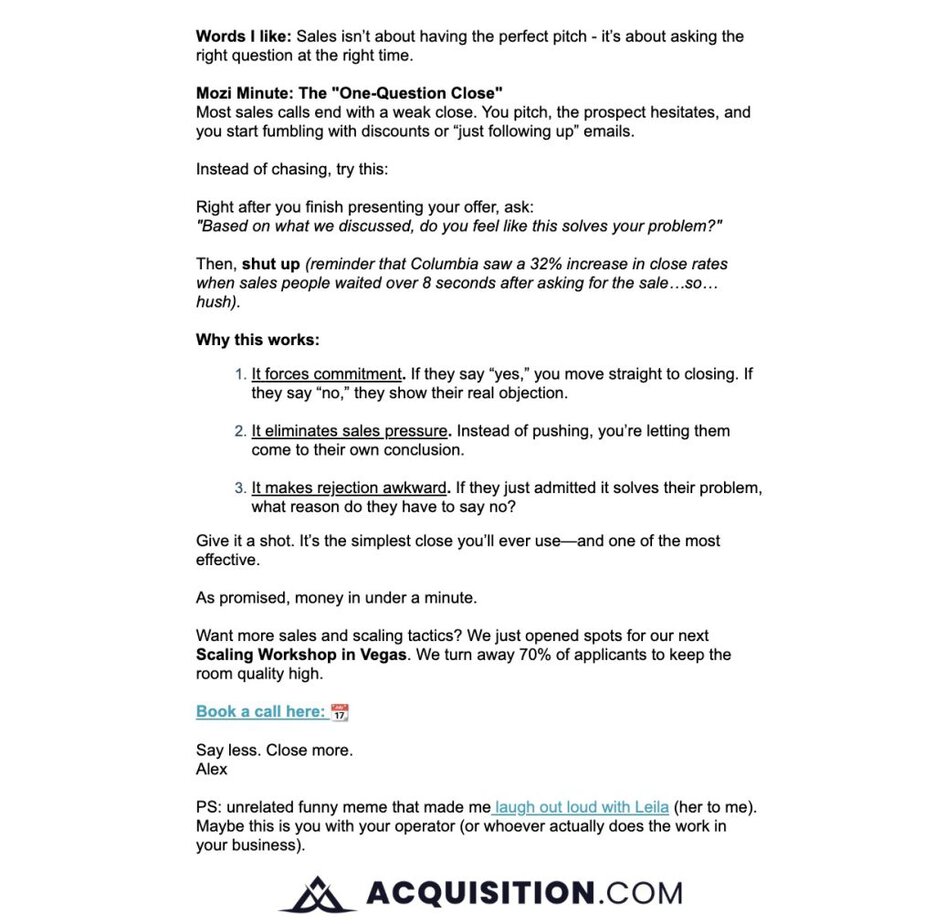
This is the same style as Alex’s earlier emails.
-> Gives value (mozi minute style)
-> CTA to Scaling Workshop
-> PS with a silly gif
Email 5:
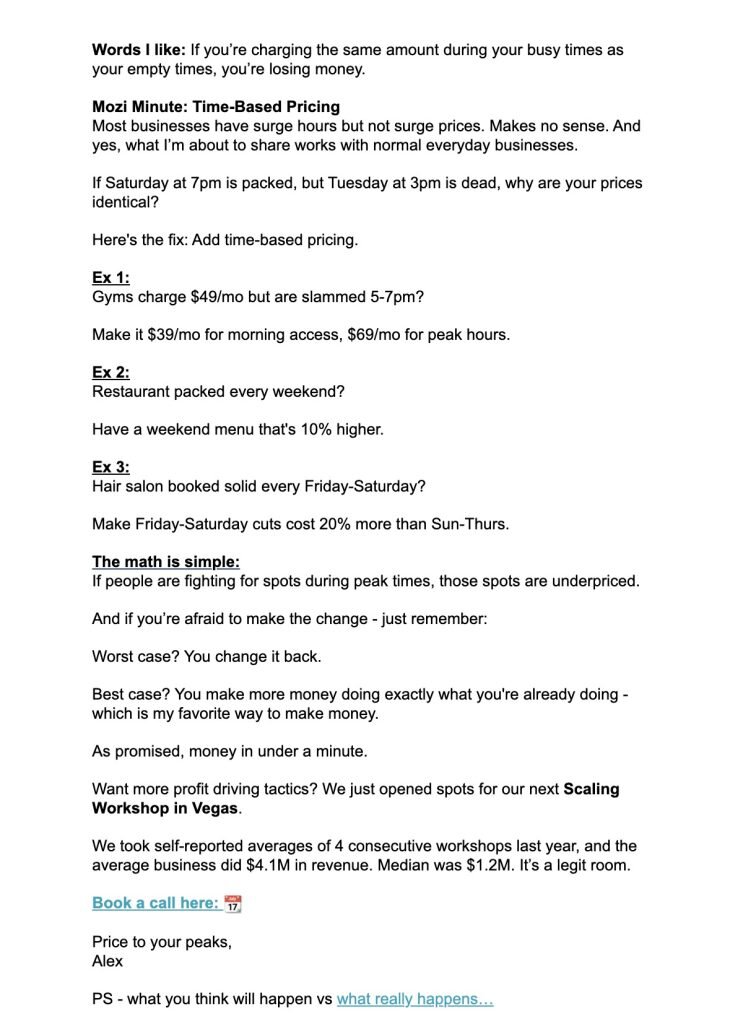
Same thing. However…
Email 6:
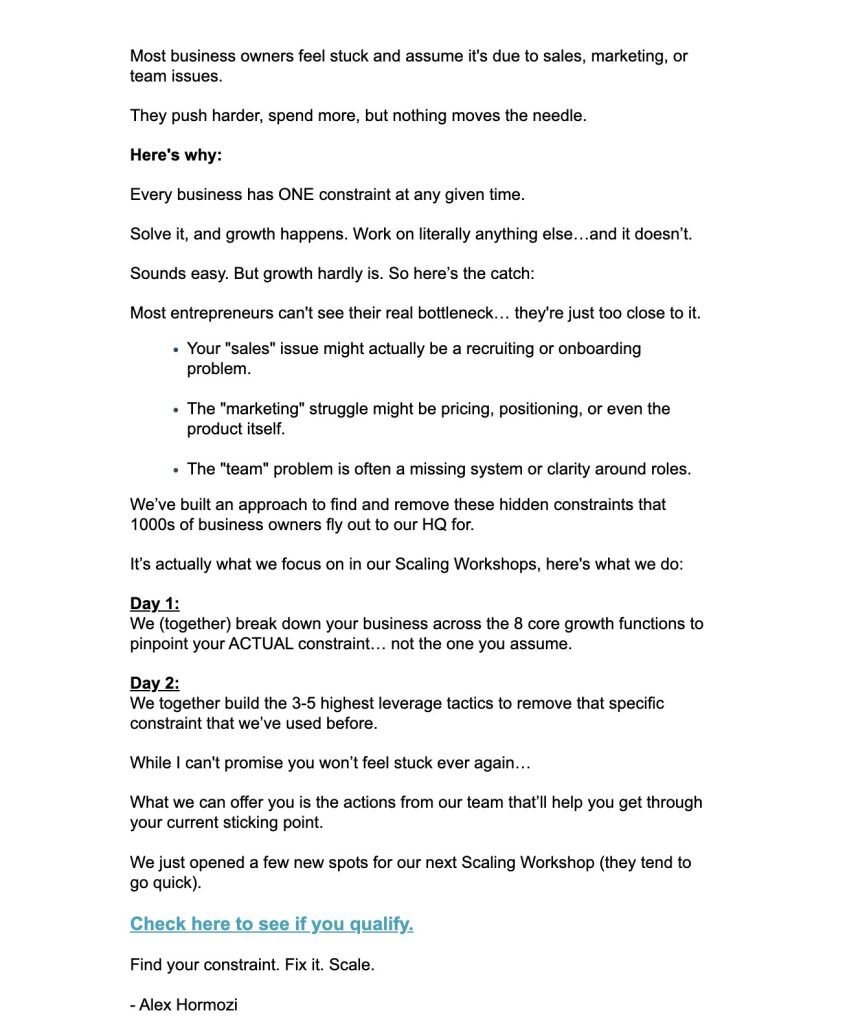
This email is a little more direct.
It did not include the subject line “mozi minute”
Instead, the subject line was, “Feeling stuck? Here’s why.”
Then, lastly…
Email 7:
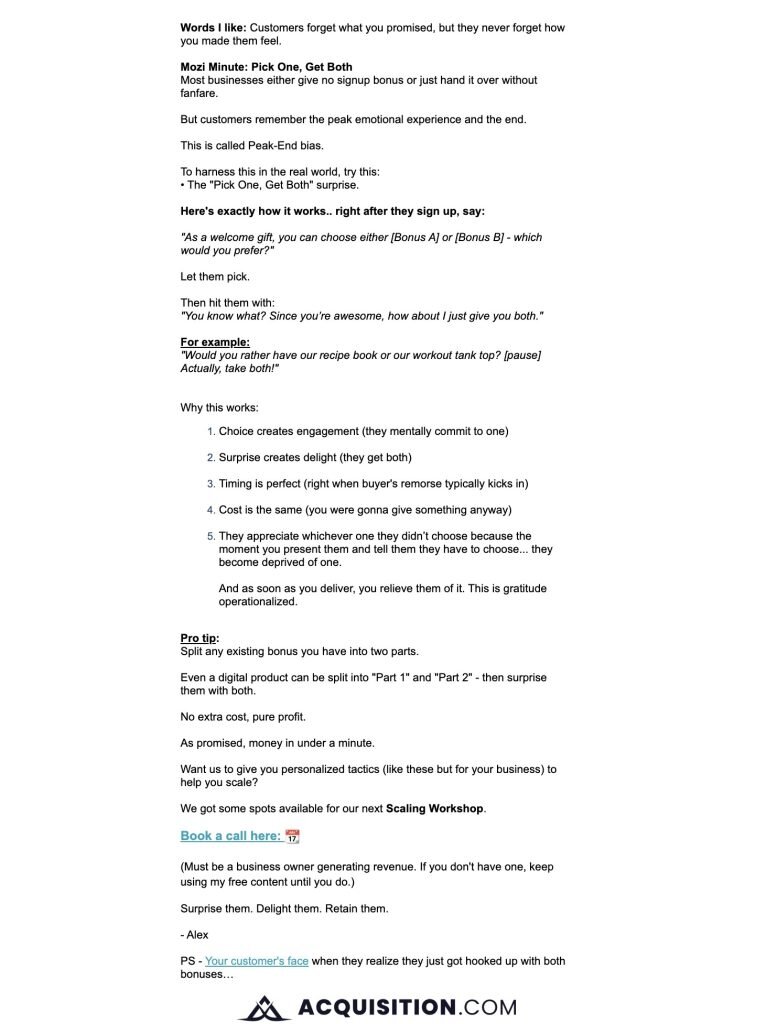
This last email was back to our regular scheduled programming!
Subject line was, “Mozi Minute: Pick One, Get Both”
Almost all of the emails followed a similar style, mostly pushing the Scaling Workshops, and then including a Gif in the PS section for personality/laughs.
Hormozi mostly drives to the scaling workshops. You need to apply to work with him and the Acquisition.com team.
I’m sure they know their numbers, and this is what works best for their business model.
Hormozi doesn’t have a blog like Patel does. I’m also sure he gets most of his leads from YouTube too. However, I would like to see them do some more frequent traffic driving to YouTube. Including the scaling workshop CTAs in the description of the video or even just leaving as it would likely create a much bigger flywheel for Hormozi’s business.
Hormozi has even said they get most of their applications (for their private equity business) from YouTube.
That’s not from a discovery only perspective either. I would almost guarantee if they sent people to YouTube in emails, those same people would then click to fill out an application to work with Hormozi’s firm.
In essence, driving more qualified applications into their funnel.
Alex Hormozi and Neil Patel’s email marketing strategies reveal fascinating insights about how $100M+ businesses approach email marketing.
Despite their different industries and business models, both follow remarkably similar foundational principles:
Both use value-first approaches (education before selling). They establish expertise first, then subtly guide you toward their offers. This works especially well for sophisticated decision makers.
Both leverage personal branding heavily in their “From” names. When you see “Neil Patel” or “Alex Hormozi” in your inbox, you know exactly what you’re getting.
Both use subtle CTAs rather than aggressive pitching. Neither say, “BOOK A FREE STRATEGY SESSION NOW.” Instead, they use phrases like “Book a call here” or embed CTAs naturally within valuable content. This works because high-level decision makers hate feeling sold to.
What’s most insightful is their differences. Their differences expose how your business model should dictate your email strategy:
Email Frequency: Daily vs. Weekly
Why this matters for you: Neil can email daily because he has multiple revenue streams to promote (blog content, YouTube videos, software tools, agency services). More touchpoints = more monetization opportunities.
Hormozi emails less frequently because he primarily promotes one high-ticket offer (scaling workshops). He doesn’t need daily touchpoints—his prospects need time to digest each insight.
For your business: If you’re doing $1-10M ARR with primarily one core offer, follow Hormozi’s model. If you’re $10M+ with multiple products/services, consider Neil’s approach.
Neil drives email traffic to blog posts, which link to tools, which generate leads for his agency. It’s a sophisticated content flywheel that works because his audience spans across different market sophistication levels.
Hormozi drives almost everything to scaling workshops because his audience is more targeted.
The hidden insight: Neil’s approach requires more content creation resources but captures prospects at different awareness levels. Hormozi’s approach requires less content but demands higher-quality prospects upfront.
This is where it gets interesting…
Neil showcases multiple revenue streams openly—you see his SaaS tools, agency services, courses, and affiliate partnerships. This works because his audience includes both beginners (who buy tools) and advanced operators (who hire his agency).
Hormozi keeps his revenue model more mysterious. You know about the workshops, but the private equity business, software investments, and other ventures stay in the background. This maintains focus and prevents confusion.
If you serve multiple customer segments (beginners to advanced), show your full product suite like Neil. If you serve one specific avatar, maintain laser focus like Hormozi.
Neil uses what I call “graduated CTAs”:
Hormozi uses “singular focus CTAs”:
The counter-intuitive truth: Neil’s approach generates more total revenue but lower conversion rates on any single offer. Hormozi’s approach generates higher conversion rates but requires more qualified traffic.
If you’re $1-5M ARR: Follow Hormozi’s model. Focus on one primary offer, email 2-3x weekly, and drive everything to that core revenue generator. You don’t have the resources for Neil’s multi-touchpoint approach yet.
If you’re $5-20M ARR: Test Neil’s approach. You likely have enough products and content to justify multiple CTAs. Start driving email traffic to your best content, then nurture those readers toward your offers.
If you’re $20M+ ARR: Definitely implement Neil’s strategy. You need multiple revenue streams to sustain growth, and your audience is sophisticated enough to handle graduated CTAs.
They try to copy Neil’s multi-touchpoint approach without his content infrastructure.
Here’s what happens: They send daily emails promoting blog posts they barely have time to write, tools they can’t afford to build, and multiple offers that confuse their audience.
The fix: Start with Hormozi’s focused approach. Master one email-to-offer conversion path first. Once you’re consistently generating $500K+ per year from just email, then consider expanding to Neil’s model.
Based on my work with 8 and 9-figure education businesses, here’s what the data shows:
Hormozi’s approach typically generates:
Neil’s approach typically generates:
The bottom line: Your choice depends on your current revenue level, team capacity, and growth goals. Most info businesses should start with Hormozi’s model and graduate to Neil’s approach as they scale.
Both strategies work—but only when matched to the right business stage and execution capacity.
If Alex Hormozi had software products to sell, I’d be doing something different with his emails.
Maybe I’m in a specific segment of his list. But from what I can see, he’s not monetizing beyond the scaling workshops as much as he could.
Here’s what I’d do:
Create different buyer personas and segments.
THEN:
Or create another list and call it:
Alex Hormozi | Software Name
So instead of just “Alex Hormozi” in the From field, you’d see “Alex Hormozi | Software Name.”
With “Software Name” being whatever the name is of the software business.
I’d test different variations:
This would give another monetization opportunity.
The key is tracking the right metrics – open rates, click rates, and most importantly, email revenue. Whatever your northstar business metrics are.
Bottom line: Both Neil and Alex have built massive businesses through email. But there’s always room to optimize based on what you’re selling and who you’re selling to.
The best email strategy is the one that fits your business model and execution capacity right now.
Want help implementing these strategies for your info business? See how we’ve helped clients generate millions in email revenue here.


“Matt is an email wizard. Our list is growing faster than ever and our
conversion rates have more than doubled.”

“Our email revenue has grown a lot since working with Matt, and more importantly he's helped us lower our CPA on cold traffic by 4x.”

“Matt drove conversions across multiple campaigns. His copywriting resulted in higher open rates, click-through rates, new customer acquisition and ascension, and increased revenue for the company.”


