Email Marketing Playbook For Course Creators: Grow From $1M to $100M+ in ARR...
A step-by-step proven roadmap for turning 7-figure creator businesses into 9-figure education empires...

Matt Hommel

I hope you enjoy this blog post. If you want my team to just do your marketing for you, click here.
Alex Becker just revealed the exact email funnel that generates 25% of the revenue for Hyros, a company that sold for over $110 million. We’re talking about a system that turns $10 in ad spend into $52 in returns in just 6 weeks.
After building email funnels that generated over $50M in revenue for 7-9 figure companies, I can spot profit leaks from a mile away, and today’s breakdown might shock you…
I’ll break down exactly what Alex is doing, why it works, what it can do better, and 3 brilliant strategies you absolutely need to steal.
First, let’s start with how people join the email list at the beginning of the customer lifecycle.
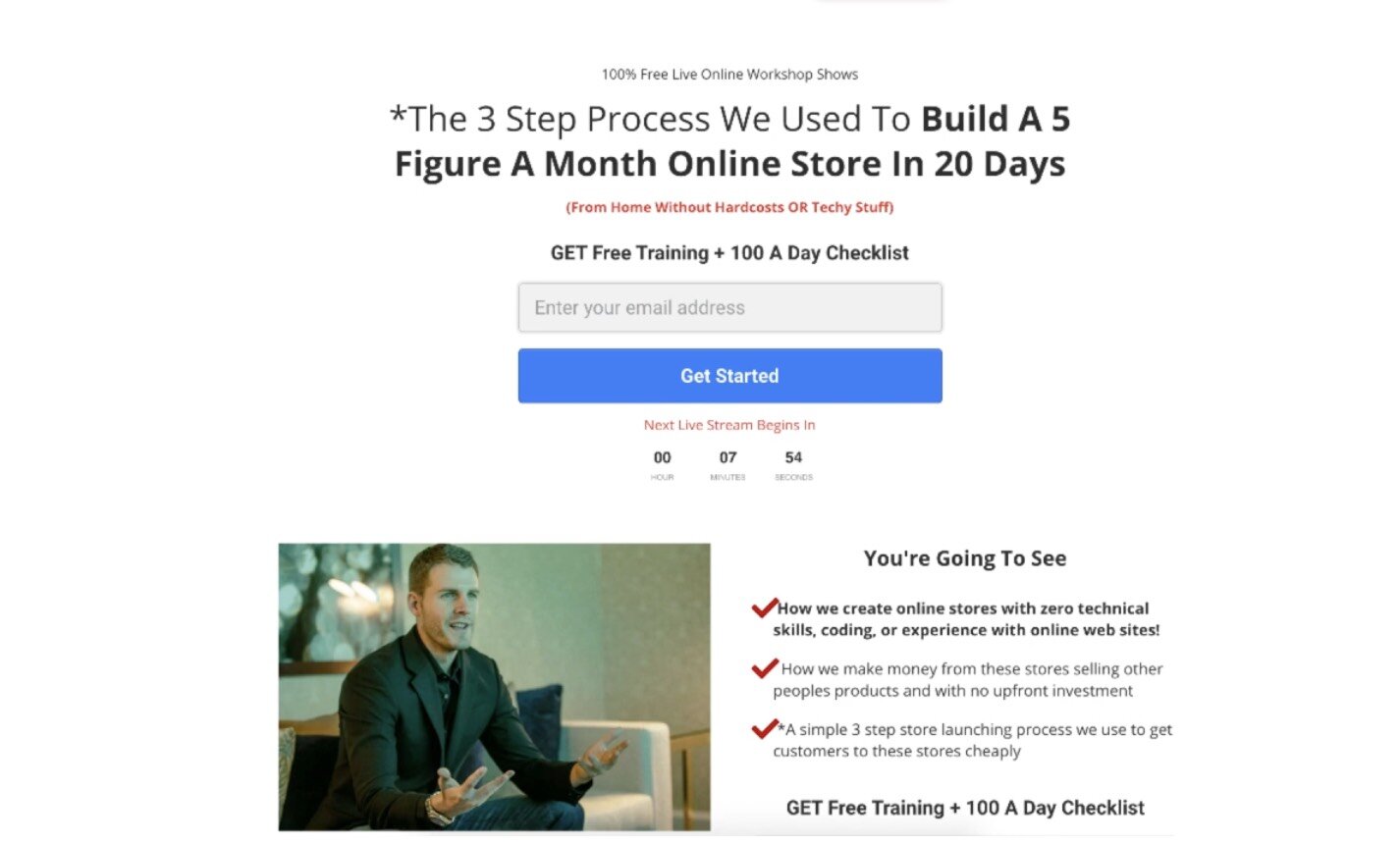
People enter this email funnel by opting in through Hyros’ lead magnets, VSLs/Webinars and other advertisements.
Opt-in page example 1:
Opt-in page example 2:
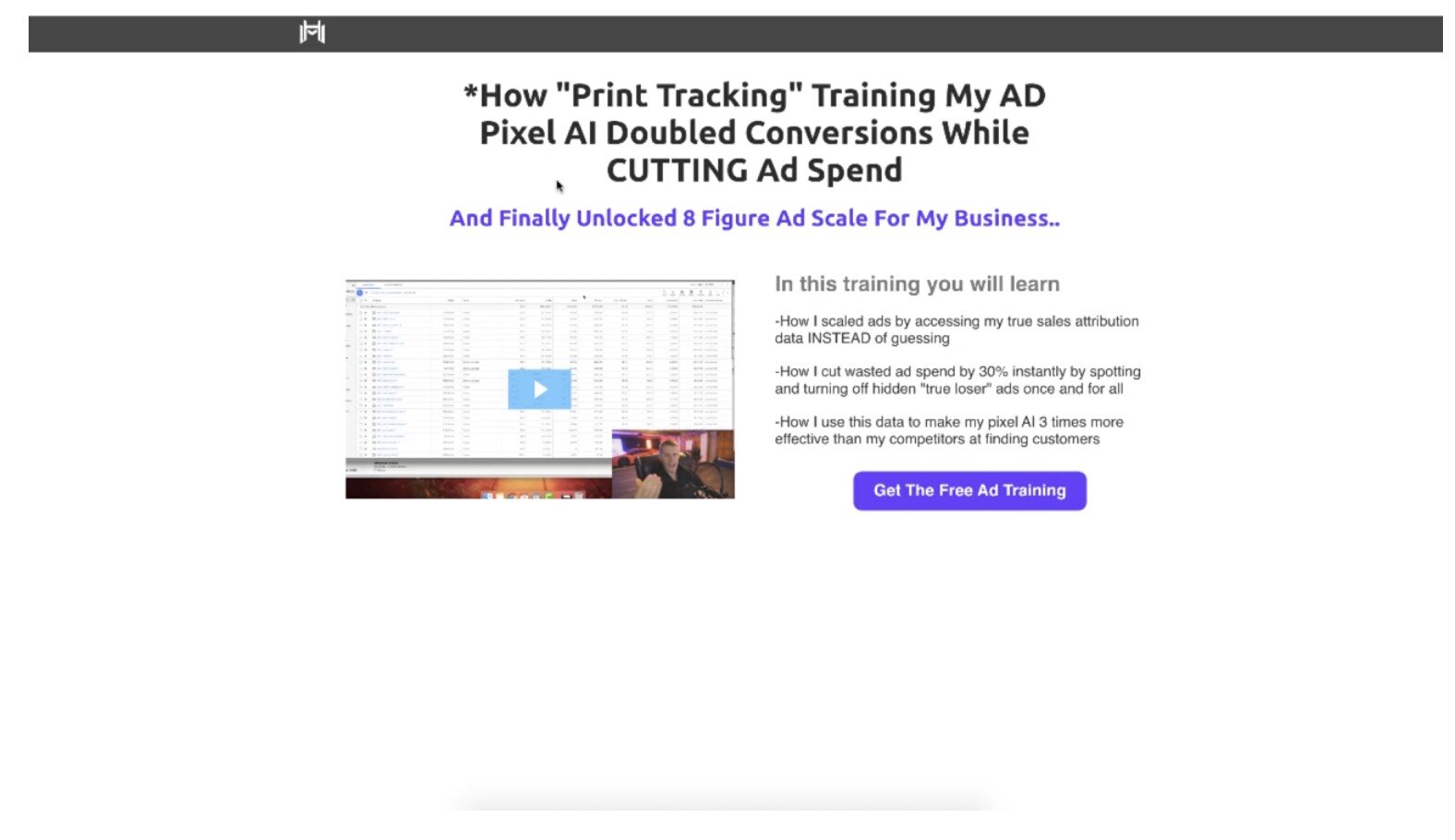
The entry point is an opt-in form connected to their advertising campaigns. Once someone provides their email address, they immediately enter this 6-week sequence.
The following 6-week email funnel is broken down into 3 specific stages:
Let’s break down each stage.
People get sent 2 emails immediately after they opt-in to the funnel. Whether that was through a VSL, webinar etc.
No wait time between emails 1 & 2. Both are immediately sent.
I do this with my email funnels, and many top players send people 2 emails right on the initial opt-in.
The 2 emails Alex sends drive people directly to the sales page to book a call.
The page looks like this:
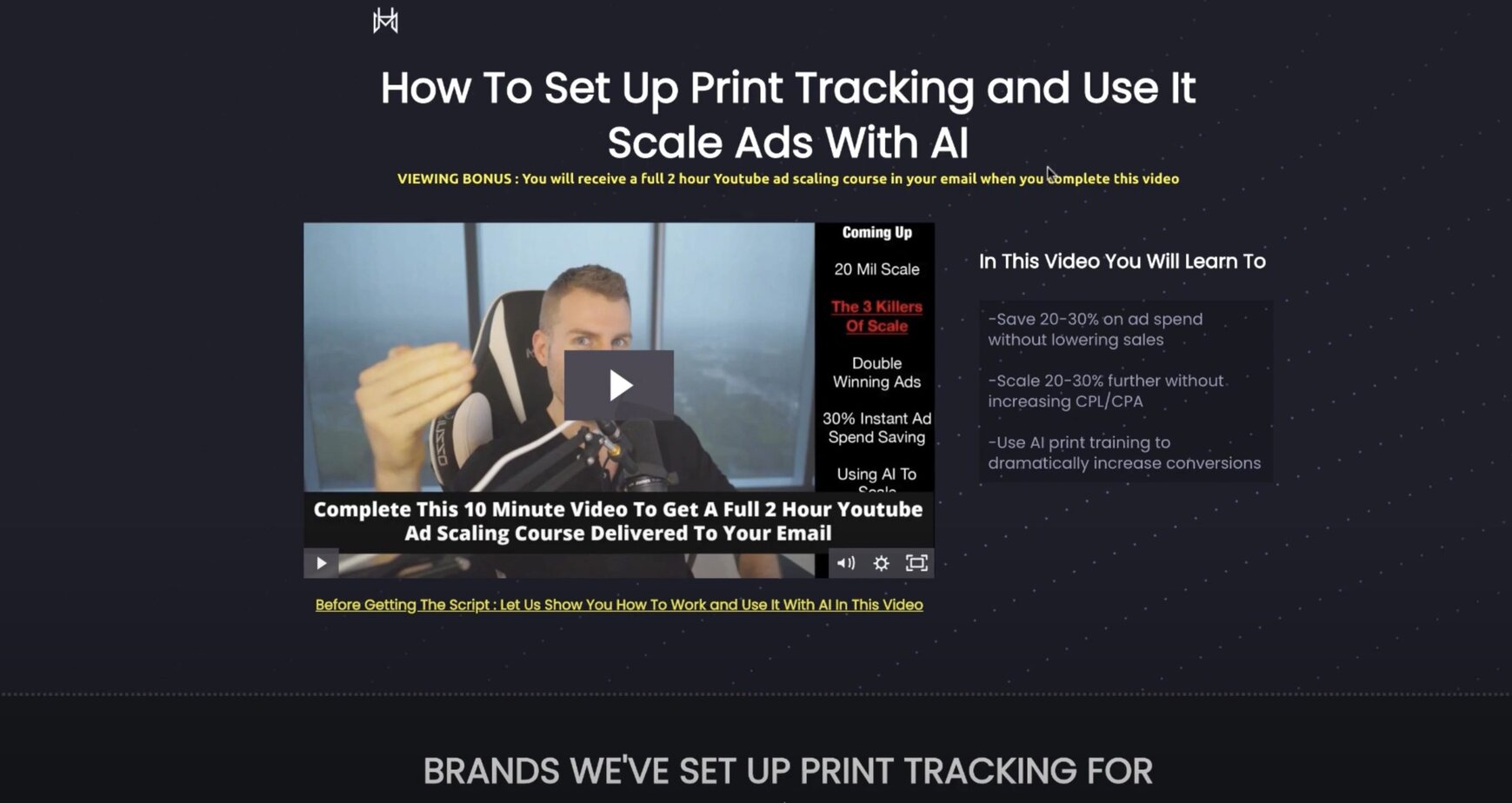
The page also has some testimonials and persuasion elements throughout:
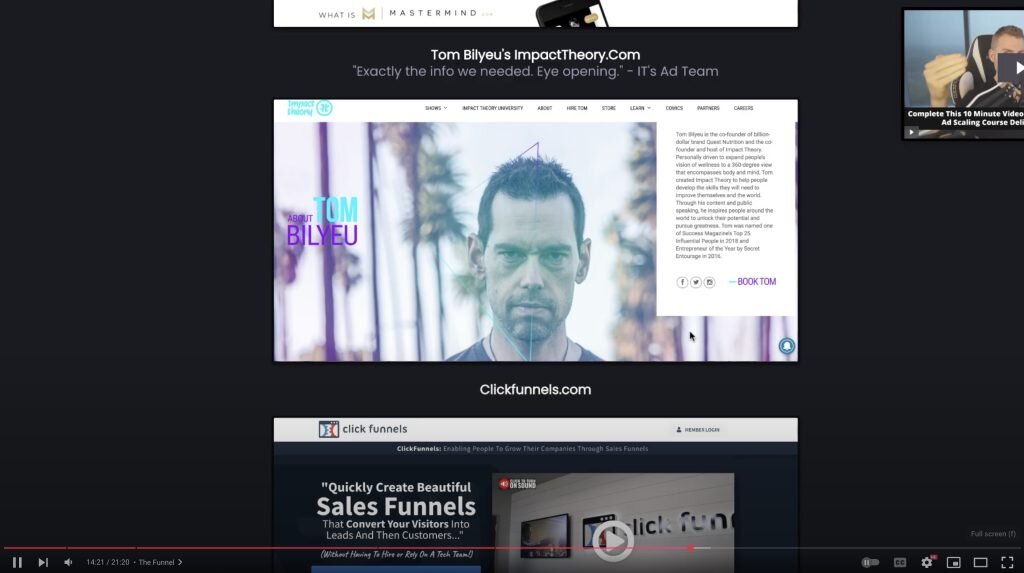
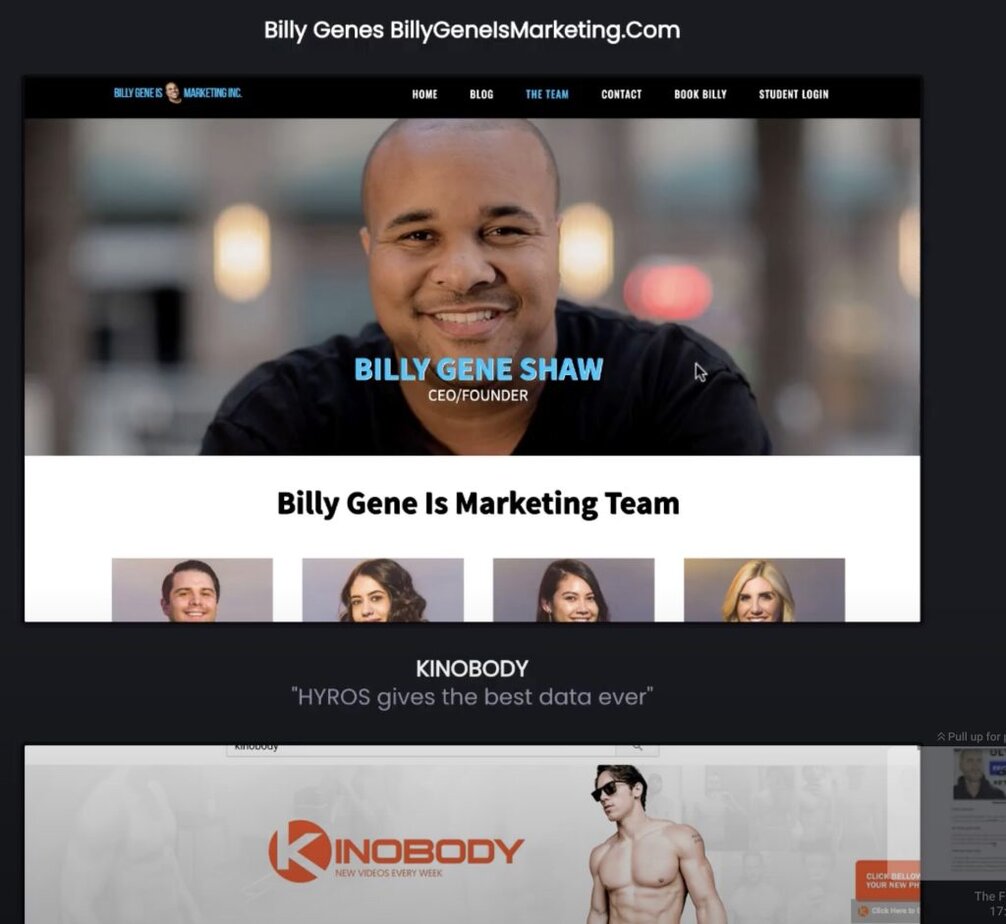
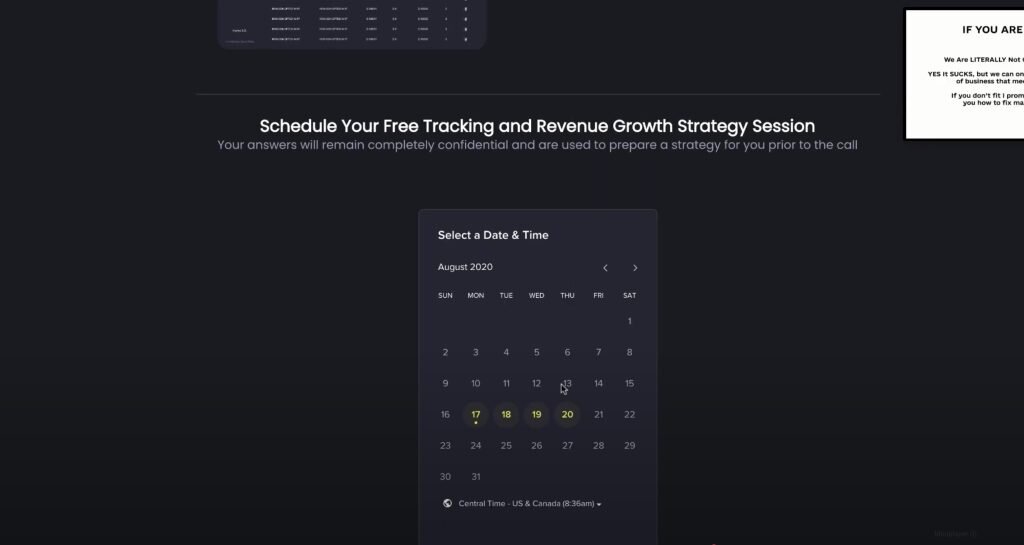
And then at the bottom, they have an embedded calendar.
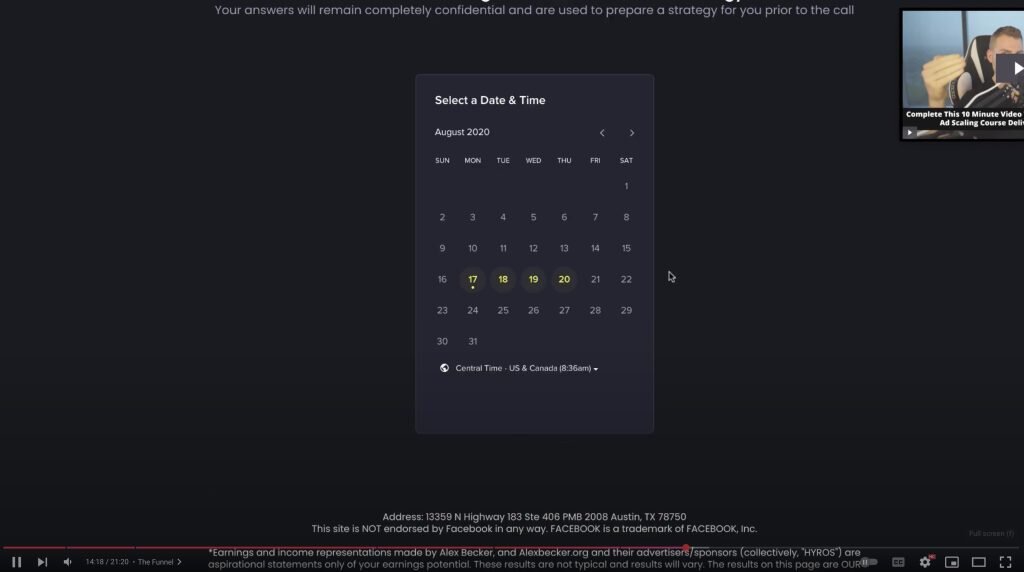
This is kinda like a Proof Funnel. Which I’ve talked about before.
If the prospect doesn’t open EITHER Email 1 OR Email 2, they are completely removed from the entire email sequence. Only engaged prospects continue.
After the first 2 emails, those who opened get sent one last email (Email 3), that drives them to a different page.
The page they get sent to on this 3rd email is different than the one they got sent to in the previous 2 emails.
Previously, they were sent to a long form sales page with testimonials and persuasion elements.
This time, they are sent directly to a simple call booking page – without any testimonials or persuasion elements, etc.
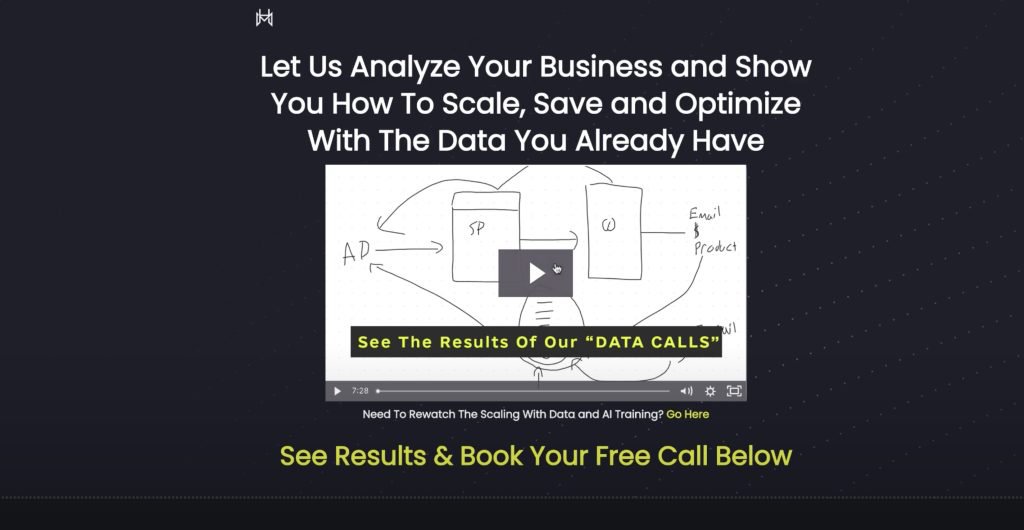
The Bootcamp Page Setup: The bootcamp page contains 4 different training videos, each focusing on a different angle:
All emails drive to this same bootcamp page shown below:
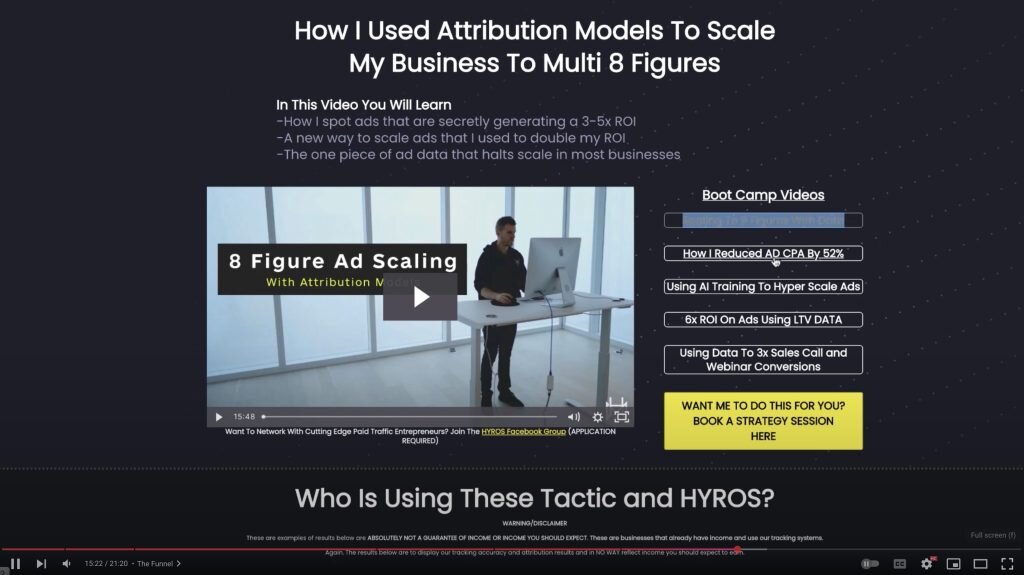
When prospects land on the bootcamp page, they see all 4 video options and can click the one that interests them most.
Each video trains them on that specific topic, then at the end makes a pitch specifically tied to what they selected.
For example, if they picked “scaling ads,” the pitch focuses on how Hyros helps with scaling. If they picked “saving money,” the pitch focuses on cost savings with Hyros.
If someone clicks “Scaling with AI,” they get training on AI scaling techniques, then at the end the pitch is “if you want to see how to do what I showed you with AI scaling, you can track it with Hyros” plus an offer to book a call or check out their ad consulting—another one of Alex’s offers.
In essence, when someone lands on the Bootcamp page and also receives the bootcamp emails, they’re gonna find something that makes them go, “whoa, okay, cool, I should do this.”
Because there’s something at Hyros to increase their business by at least 20%. Hyros just has to figure out which thing makes the most sense for the prospect to book a call for.
Luckily, the person is able to basically sell themselves by picking what’s of most interest to them.
The Email Sequence (Weeks 2-3):
Why This Works: People sell themselves by picking what’s most important to them, then get converted based on that specific interest rather than a generic pitch.
Instead of one pitch for everyone, prospects choose their biggest pain point (scaling ads, saving money, AI optimization, LTV growth) and receive training + messaging specific to their selection. Someone who clicks “saving money” gets cost-focused messaging. Someone who clicks “scaling” gets growth-focused messaging. This eliminates the “one-size-fits-none” problem where generic messaging resonates with nobody.
Essentially, prospects self-select what interests them most, then get pitched based on that specific interest.
For the training sequence, Alex sends emails every 3-4 days (not a fixed schedule).
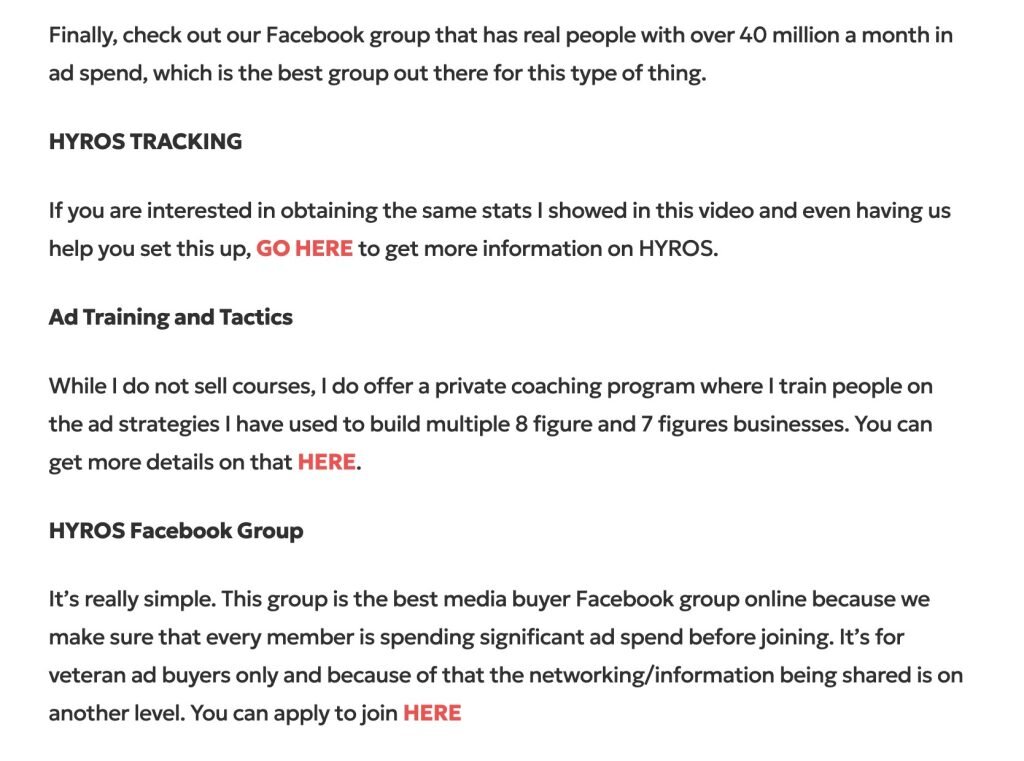
These emails drive people to the Hyros Blog.
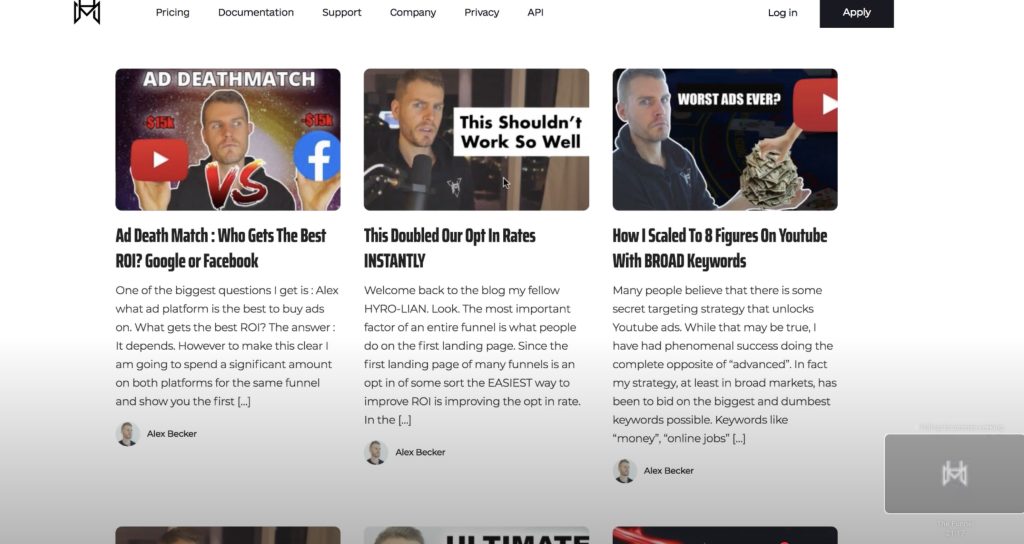
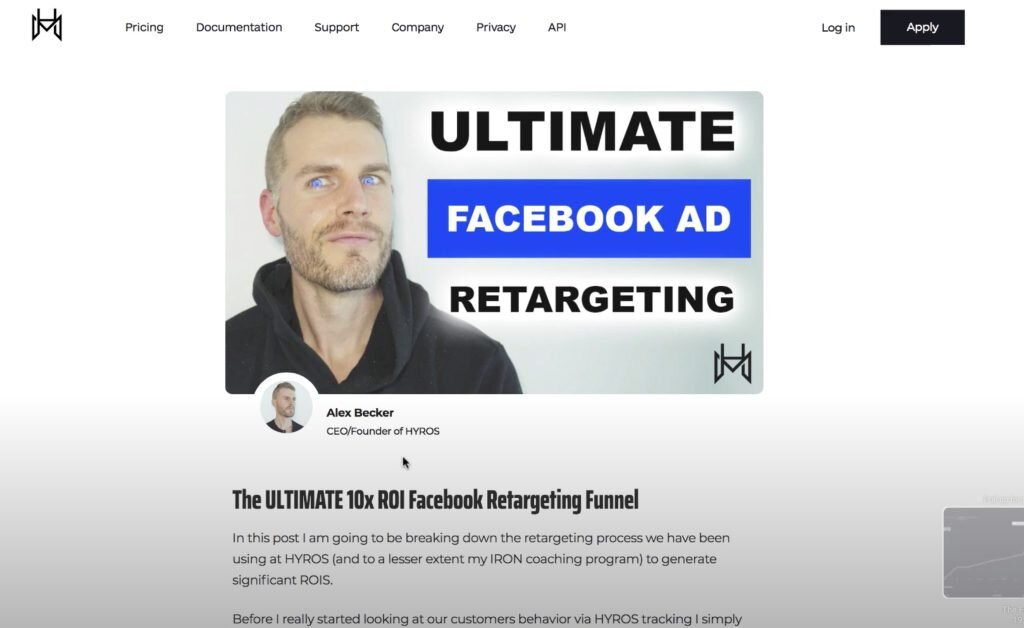
Each email sends to a blog post that provides genuine training on ad management topics. Alex naturally incorporates how he uses Hyros during the training (the same way he showed email tracking in this very training), then at the end includes soft calls-to-action.
The Blog Post Structure:
Every 3-4 Emails Rule:
Every 3rd or 4th training email, Alex sends them directly back to the call booking page with a simple message: “I know you’ve been enjoying the training. Would you like us to set this up for you? Book a call if so. If not, just enjoy the rest of the training.”
The Facebook Community Component: Drives people to join their Facebook group where they can:
Why use this training sequence?
Alex has said to me, “You want people to join your cause. You want people to have that Apple-like effect. You want them to be part of your community. You want them to really overall be a fan of your business. And the best way to do that is to not just provide a service, but to also provide a lifestyle.”
He continued, “”For what we’re doing at Hyros, it’s a lifestyle of running ads super effectively. So we provide training to help them with that lifestyle.”
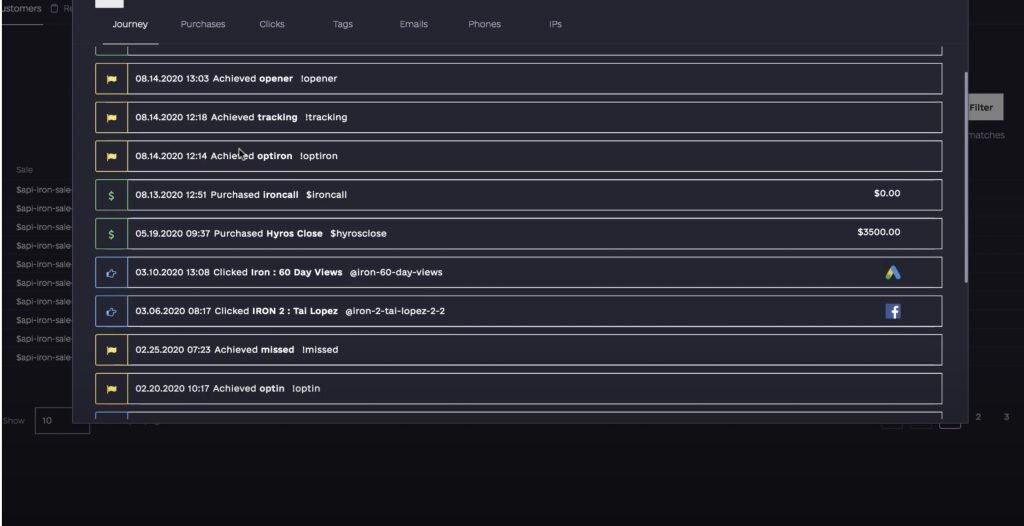
The Problem Alex Solves: When someone clicks an ad for $100, then later clicks an email to buy, standard tracking gives credit to either the ad OR the email, but not both. This creates two bad scenarios:
Alex’s Solution: He uses UTM parameters to create two separate source types in Hyros:
Email Sources:
Ad Sources:
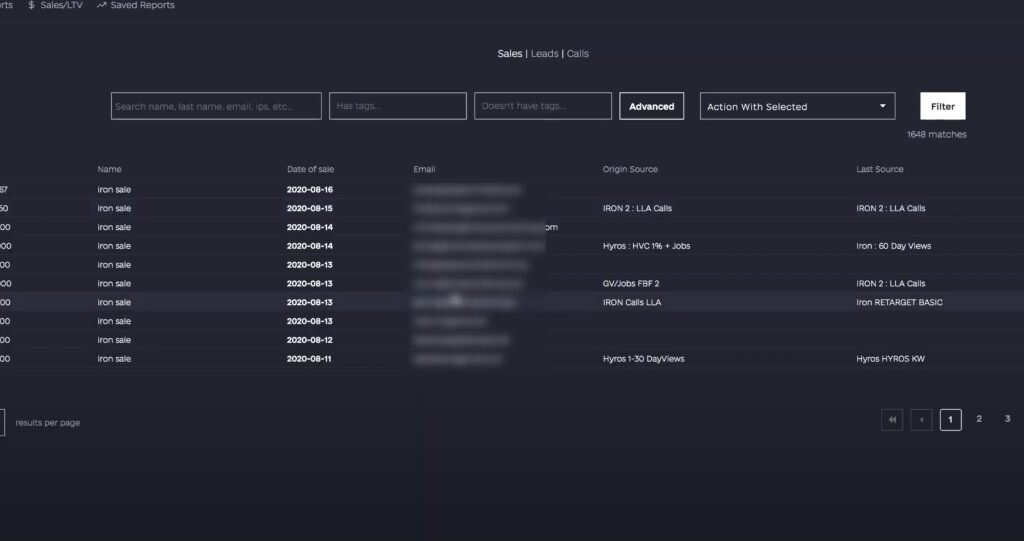
The Reporting Power: Alex can now run three types of reports:
Why This Matters: He can see that an ad generates a lead for $10, then a specific email in week 4 closes them for $52. Now he knows to keep running that ad AND optimize that email, instead of accidentally turning off a profitable ad or killing a high-converting email.
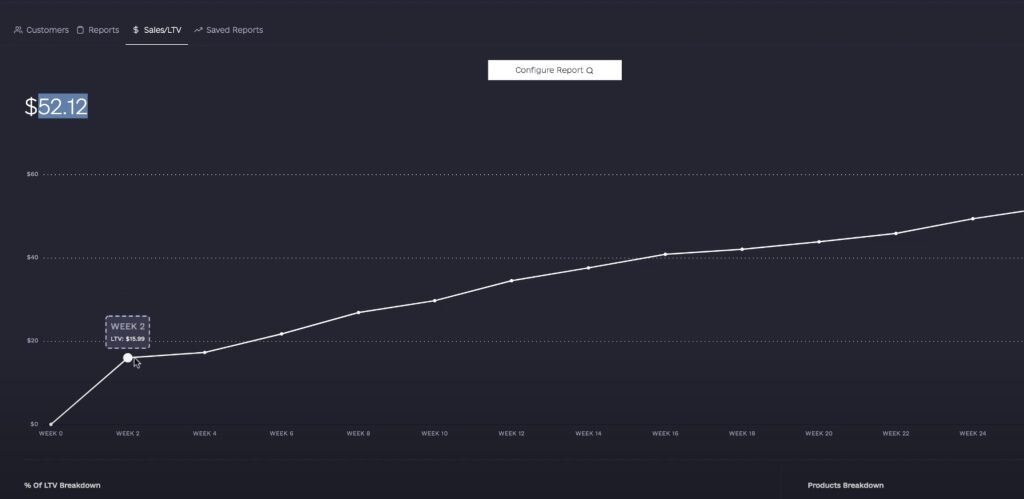
The Data Alex Tracks:
Why 6 Weeks Is Actually Conservative: Alex shows multiple examples of people taking 6+ months to buy. The 6-week funnel is just the automated portion. After 6 weeks, people stay on the training sequence indefinitely, getting new content as it’s created.
The Compound Effect: Each week builds on the previous. Week 1 gets immediate buyers. Weeks 2-3 get people who need education first. Weeks 4-6+ get people who need to see consistent value and build trust over time.
The “6-week funnel” refers to the structured, automated sequence:
But the training continues indefinitely. They keep sending people down the funnel as long as they can, and they’re constantly adding new training to send their subcribers.
This is why Alex shows 6+ month sales cycles – people continue receiving value-driven training emails for months or years until they’re ready to buy, which often happens 6+ months after their initial opt-in.
The ROI Data Spans 25+ Weeks: Alex’s data showing $52 ROI from a $10 investment “by week 25” confirms this system extends far beyond the initial 6-week sequence into ongoing long-term nurturing that can last 6+ months before conversion.
The 35-40% Open Rate Rule: Alex removes non-openers because if you’re not maintaining 35-40% open rates, email providers (Gmail, Yahoo, Hotmail) will stop delivering your emails to anyone. Better to have a smaller, highly-engaged list than a large list that gets sent to spam.
The Two-Email Test: By sending two immediate emails and only keeping people who open at least one, Alex ensures his list consists entirely of people who actually read emails. This protects deliverability for all future sends.
The Business Impact: This strict hygiene means when Alex sends training emails weeks later, they actually reach the prospects’ inboxes instead of getting filtered as spam.
Training Content Rules:
The Community Strategy: Alex wants people to join their “cause” and have an “Apple-like effect” where customers become brand evangelists. The training builds this by providing a lifestyle around effective advertising, not just software features.
Why This Works Long-Term: When people make more money from their ads (which they will from the training), they think of Hyros. It’s a win-win because Hyros customers typically make $100+ for every $10 they pay, so the relationship compounds over time.
This complete system turns a $10 opt-in into a $52 average return over 25+ weeks, making it “better than Bitcoin” according to Alex’s ROI calculations.
What Alex does: Tracks and optimizes for 6+ month conversion cycles while most companies focus on 7-30 day windows.
Why this is genius: B2B software buyers aren’t making impulse purchases. His data shows prospects clicking in February and buying in August. Most attribution models miss this entirely.
The missed opportunity: If you’re only measuring 30-day attribution, you’re making budget decisions based on incomplete data and potentially killing profitable campaigns.
What Alex does: If prospects don’t open the first two emails, they’re permanently removed from all sequences.
Why this works: Email deliverability is algorithmic. Low engagement rates below 35% cause Gmail, Yahoo, and Outlook to filter your emails to spam – even for engaged prospects.
It’s better to have 20,000 highly-engaged subscribers than 200,000 mixed-engagement subscribers who kill your deliverability.
What Alex does: Instead of one generic pitch, prospects choose their pain point (scaling, saving, AI, LTV) and get training + pitch specific to their selection.
Why this is brilliant: People sell themselves by picking what matters most to them. Someone who clicks “saving money” gets cost-focused messaging. Someone who clicks “scaling” gets growth-focused messaging.
This eliminates the “one-size-fits-none” problem where generic messaging resonates with nobody.
Removing people indefinitely after not opening 2 emails is a bit off.
I would remove those people from future newsletter emails…
BUT… I would immediately enroll them in a winback sequence with 1-3 emails over an extended time period.
So, instead of removing them completely: automatically enroll them into a winback or revival email sequence over time.
That alone will get you 20% MORE leads long term.
6-weeks is great for an initial sequence, but I would work to extend that up to 12-months.
I would consistently take my best performing content, and add it to my autoresponder over time. I would suppress those who are still in the sequence from future broadcast emails, unless it’s an important email.
Then, if I send a great email, I would add it to the autoresponder, so people currently in there receive it next – this way everybody always gets my best content, whether they’re in the autoresponder or on my main broadcast list.
A sales sequence is what you send your most engaged leads.
For example if someone keeps clicking one of the pages on our bootcamp page, or on our blog 10 times in the last week, that signals they are a VERY hot lead.
So I would trigger a sales sequence that basically does the selling with more frequent emails sent every 1-2 days: Case studies, stronger pain/benefit language, more urgency/scarcity.
This helps you convert your hottest leads when they’re most likely to buy.
This isn’t just email marketing – it’s a complete system for capturing long-term value from every prospect. The combination of strict list management, multi-angle education, and proper attribution tracking turns a simple opt-in into a $52 average return over 25+ weeks.
The real insight: most businesses are optimizing for immediate conversions when the biggest money is in the 3-6 month nurture cycle.
When you nail that, scaling your total profit Year over Year (YoY) is so much easier.


“Matt is an email wizard. Our list is growing faster than ever and our
conversion rates have more than doubled.”

“Our email revenue has grown a lot since working with Matt, and more importantly he's helped us lower our CPA on cold traffic by 4x.”

“Matt drove conversions across multiple campaigns. His copywriting resulted in higher open rates, click-through rates, new customer acquisition and ascension, and increased revenue for the company.”


