Email Marketing Playbook For Course Creators: Grow From $1M to $100M+ in ARR...
A step-by-step proven roadmap for turning 7-figure creator businesses into 9-figure education empires...

Matt Hommel

I hope you enjoy this blog post. If you want my team to just do your marketing for you, click here.
Before we even THINK of sending traffic to your offers, we gotta make sure we’re able to convert the traffic.
How?
With a High-Converting Sales Funnel.
A High-Converting Sales Funnel converts more traffic from all of your traffic sources.
You’ll notice:
In this post we’ll outline how to collect 363% more profit from your warm audience with a High-Converting Funnel.
That means more revenue from your email subscribers, social media followers, and podcast subscribers.
For simplicity, most of what we cover will apply to email subscribers.
Meaning, people are on your email list, and when you email them, we want them to click to a page that’s optimized for conversions.
That makes the emails you send your leads perform better. And it increases your profit-per-lead.
There’s 3 main principles of a high-converting sales funnel:
For the sake of this post, I won’t get too much into offer creation.
Here’s a quick overview though.
There’s only 3 reasons anybody buys anything:
There are 3 components to constructing an offer:
Claim is the most important one. This is the clear outcome they’ll get.
The things they’ll GAIN.
Or the pain you’ll REMOVE.
For more information on offers go read $100M offers by Alex Hormozi…
Next…
Simply including a video on your landing page can boost conversions by over 86% (EyeView).
Typically, the purpose of a VSL is to turn cold/warm leads into hot leads, who show up to the call educated, already understanding who you are and what you’re offering them.
If you have good case studies and testimonials, they should already be pre-sold by the time they show up to the call…
And the sales call will basically be an “order taking” call instead.
And if you’re selling a PRODUCT, that doesn’t require a call to make the sale (like an info/eCom product) – the principles are the same.
You are either selling the call (for phone sales) or you’re selling the product itself and the customer will buy on the sales page.
Her’s how to structure your VSL…
Step 1: Hook/Promise
Your VSL needs a hook. Something that STEALS your audience’s attention and FORCES them to keep watching.
Either a pain only the audience has or call out the avatar.
Have you recently sold stocks, real estate or crypto?
If you have, then you’re probably [pain]
But what if you could [promise?]
Step 2: Pain points/struggles
Elaborate on the specific pain points and challenges your audience faces. Like actual experiences pulled from forums, call transcripts, etc.
Can also mention their goals that they have struggled so much to achieve despite trying everything to achieve them =)
Step 3: Future pace your bold claim.
Help them clearly visualize what their life will be like when they [Big Benefit/Outcome]
Step 4: Establish Authority & Credibility
Give a quick background of you and why we should listen to you.
If we haven’t met yet, then hello, my name is (name), and I (big claims about yourself that make you an authority, superhuman feats of strength).
Step 5: Social proof.
Show some examples of how you’ve helped people like them.
Customer testimonials, case studies, and positive experiences to reinforce your bold promise and boost credibility.
Step 6: Transition/tease unique mechanism
They’re no different than you. They’re just using a [unique system].
Tease the unique thing about your offer that differentiates it from other offers/people selling the same thing.
Step 7: Discovery story (short)
How you stumbled upon this…
Show how your unique experience has given you a unique perspective. DIFFERENTIATE.
Show them a problem they didn’t even know they had. The ROOT problem, why they haven’t gotten results before and why this product addresses that root problem directly – essentially making this offer failproof.
**If no true discovery story, then just go into the process. Make sure you show why this process is unique. What we’ve discovered is most clients need these 4 things, whenever they miss 1, they don’t get as good results. Blah blah**
Step 8: Restate big promise
Reenforce the promise after giving your discovery.
“Eg. And that’s why I’ve been able to (big claim) and why so many others have been able to…”
“So instead of [pain], you get [benefit]”
Step 9: More proof
Testimonial stack of who did what with using what you’re saying (exact offer or system)
Step 10: Transition to offer + what’s included
That’s why I’ve created the (offer) that will help you do the same thing.
If it’s a coaching offer or service, you can just explain your process more and what you’ll take them through.
Step 11: Price Justification
The reveal of what this actually costs, and why you’re giving it away.
**If you’re doing coaching/services, emphasize the resources they’ll get in the program. How much money they’ve helped you make (for wealth offers) and how much more others have had to pay for these exact things + how prices will increase. “We’ve already raised the price twice.”
Step 12: Risk Reversal
Your money-back guarantee or other guarantee (if you don’t get x result in 90 days, I’ll coach you until you do).
Step 13: CTA
Tell them how to buy.
Step 14: Urgency
Time limit.
These opportunities have strict deadlines to invest. We only have x spots left this year. Blah Blah.
They have to know there is a cost of not taking action or else they’ll never buy.
What are the consequences of not addressing the problem? Bring that pain back to the present – make them feel it now.
This creates loss aversion, and motivates your leads to take action.
Step 15: CTA
Tell them how to buy once more.
Whether it’s buying your info product, signing up for a trial, or booking a call, make it easy for them to take the next step (literally tell them to click the button, lots of people are digitally challenged.)
On top of your VSL, you’ll also need a landing page (or sales page), and you’ll embed the VSL on the page.
Some course creators and info product businesses won’t have a VSL, and will just have a sales page.
However, I’ve rarely seen this perform better. I always recommend having a video. Then testing with vs. without the video.
Now here’s how to structure your landing/sales page for maximal conversions…
For context:
At this point, somebody has already signed up to your email list (either via lead magnet, VSL opt-in, webinar, etc.).
That means they are WARMER than somebody who just clicked a facebook ad.
What we send them to now is a landing page/sales page optimized for conversions.
This is exactly how your landing page should be structured:
Pages that do this well:
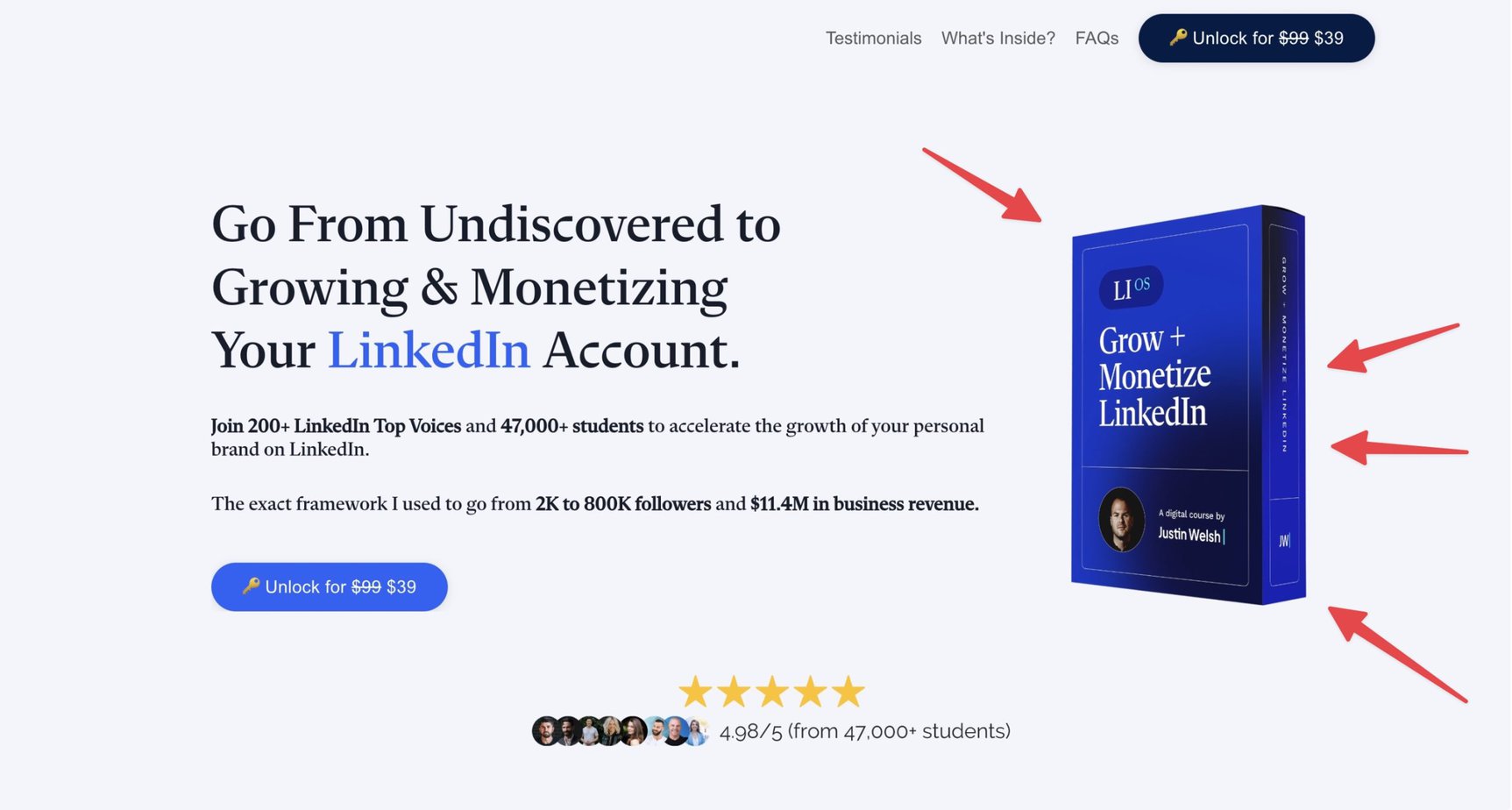
Justin Welsh – Creator MBA (Link)
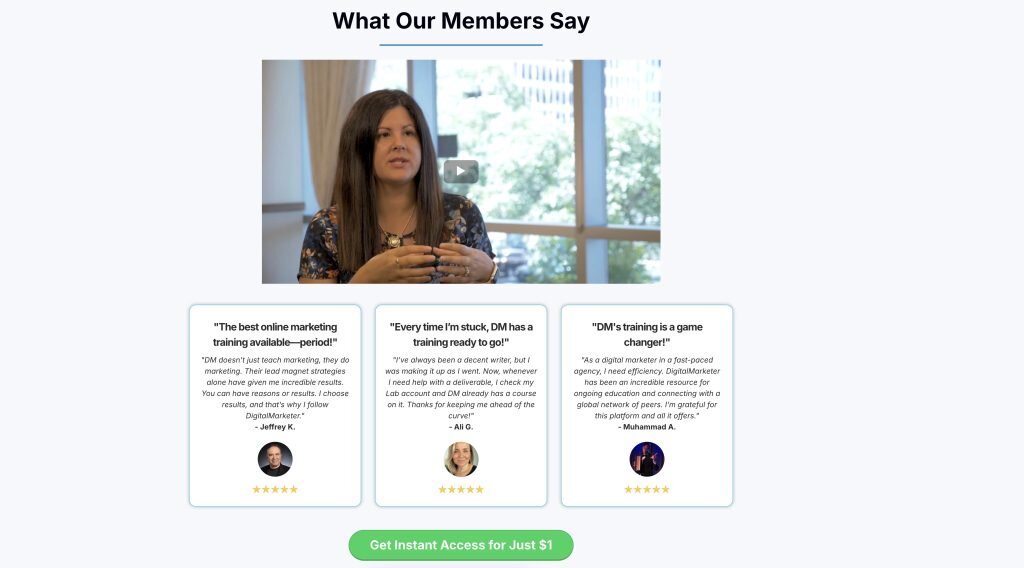
Digital Marketer – $1 Trial (Link)
Ali Abdaal – Part Time YouTube Academy (Link)
I’ll now break down each of those individual components of the landing page.
Real quick – whenever creating your own: it’s always good to follow these steps:
You already have these components if you created the VSL I spoke about.
You can simply take those components and put them into the page structure I’ve given.
For example, your “Lead” is your hook, pain points, and bold claim used in the beginning.
These skimmable landing pages work great. Let me show you…
There’s 17 parts to the landing page if you want maximum conversions, and to make 363% or more profit from your warm audience.
The first is what you do “above the fold” which you may have heard before.
The top of fold needs to accomplish several things before someone scrolls:
1) Immediately identify who this is for:
Eg..
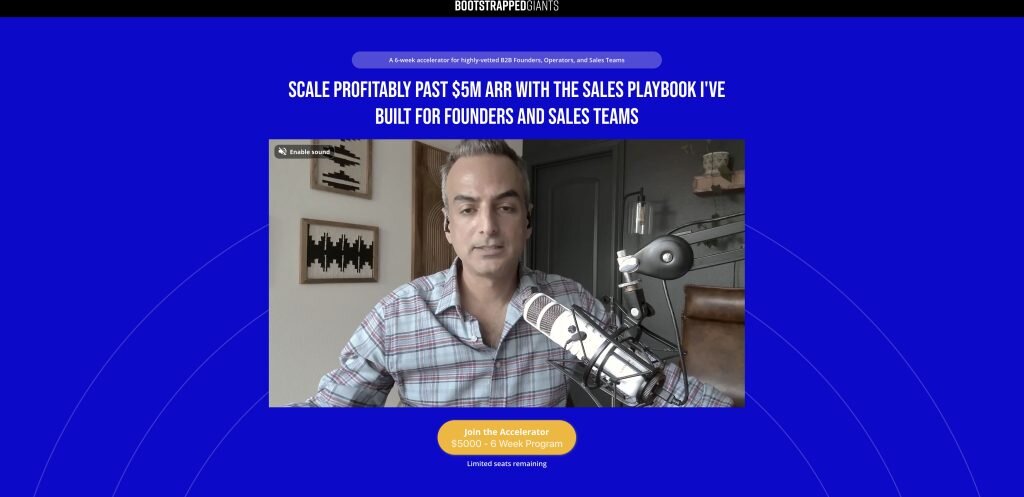
B2B founders generating less than $50,000 a month
People who want to grow their linkedin audience
People who want to build a youtube channel
2) Have a clear promise or outcome:
Eg…
Scale Profitably Past $5m Arr With The Sales Playbook I’ve Built For Founders And Sales Teams
Steal the Proven Growth Strategies of 3,500+ Successful Businesses
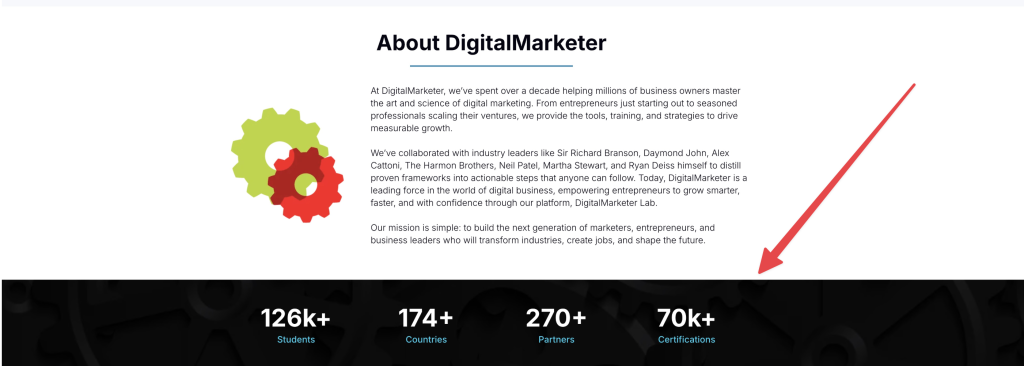
3) Some type of authority, credibility or social proof:
Eg…
4.9/5.0 star reviews from thousands of customers.
Social proof doesn’t necessarily have to be written, it can be visual.
4) A VSL or product image
If you use a product image, use a video below the page, either as an “explainer” section or look inside the course.
5) A call to action on top of fold
That’s what you do above the fold.
Your headline should:
Scale Profitably Past $5m Arr With The Sales Playbook I’ve Built For Founders And Sales Teams
Steal the Proven Growth Strategies of 3,500+ Successful Businesses
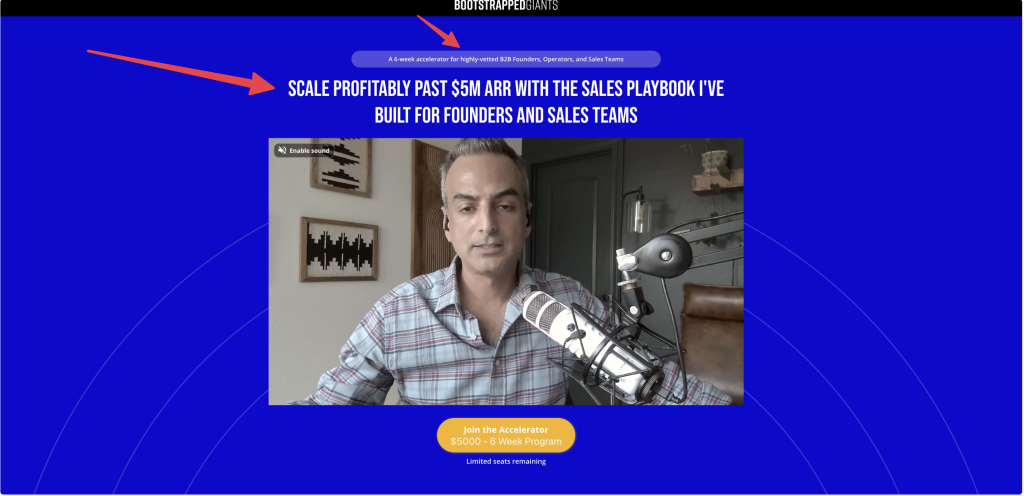
Your subheadline should either:
Objection…
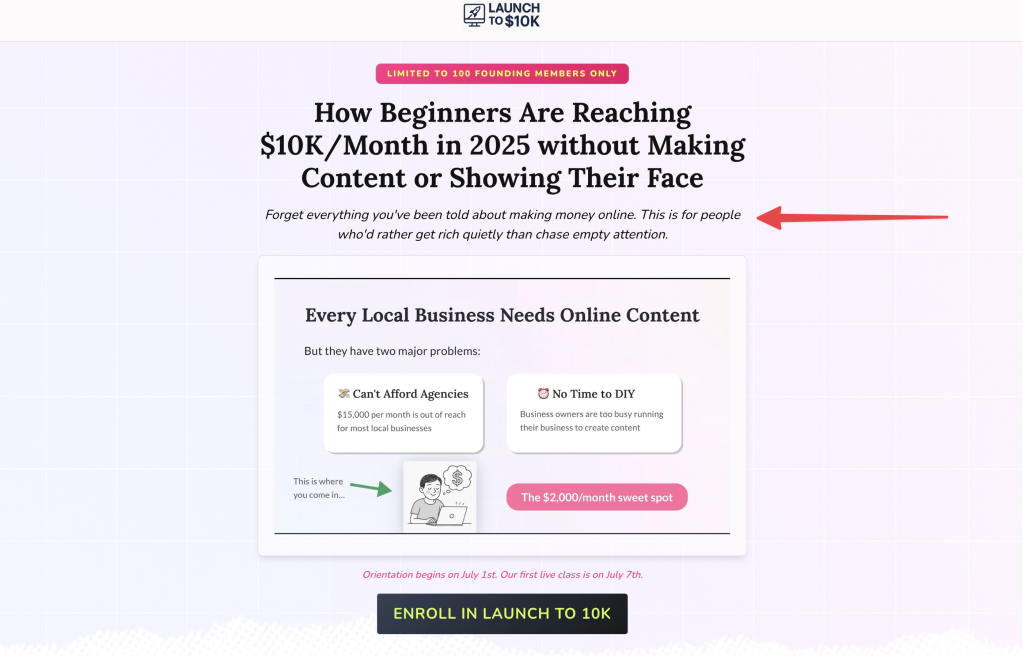
Specific benefits + proof…
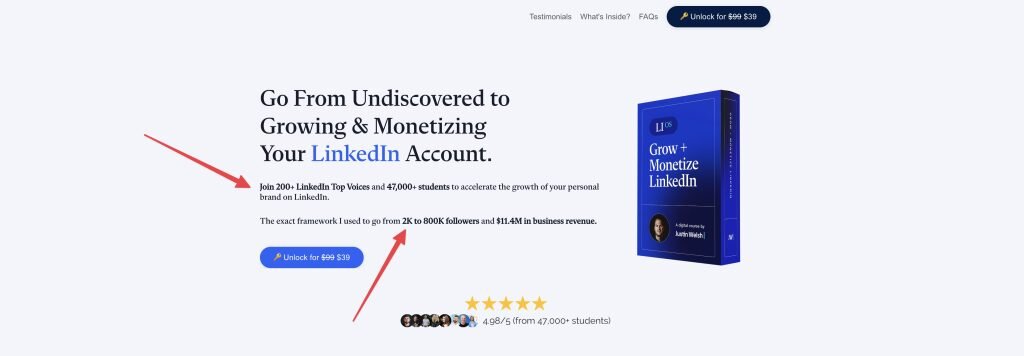
Specifics on what’s included + proof…
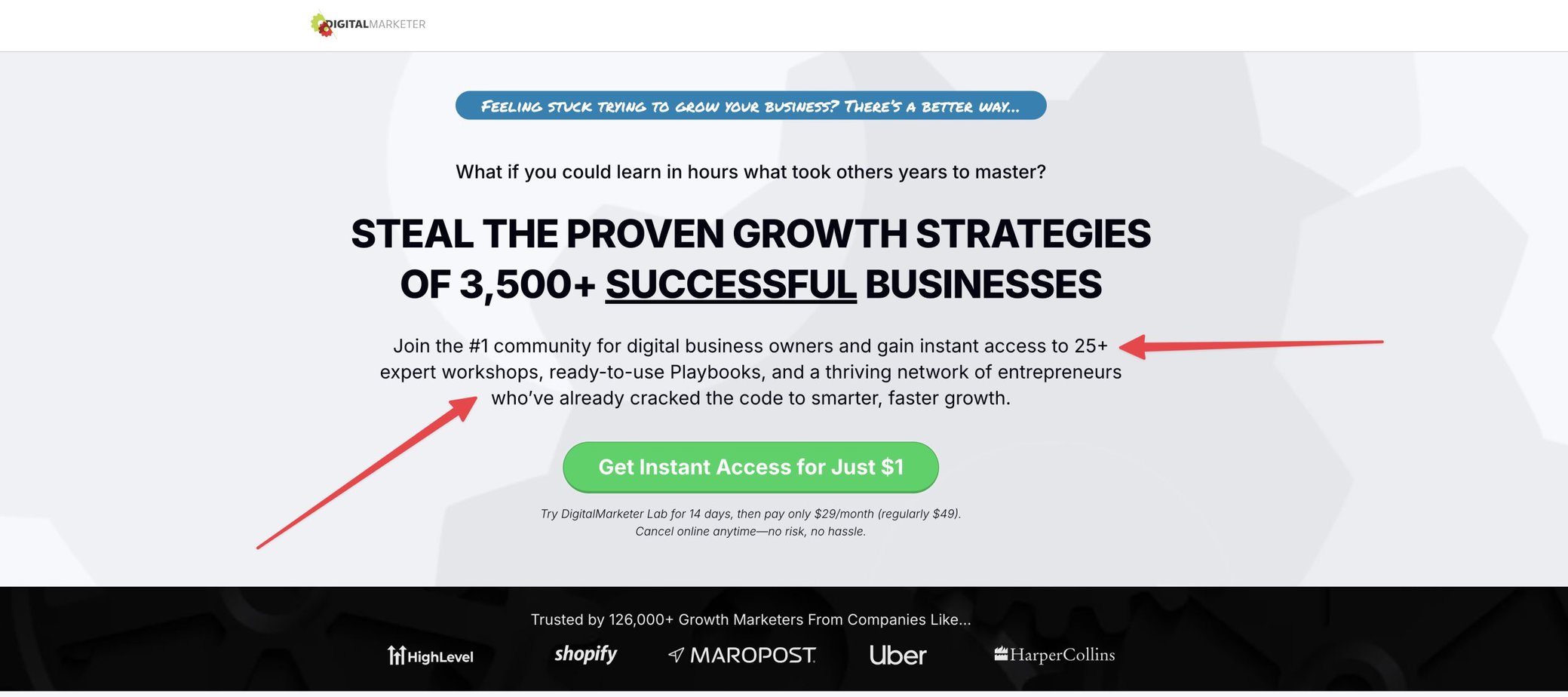
Specific proof.
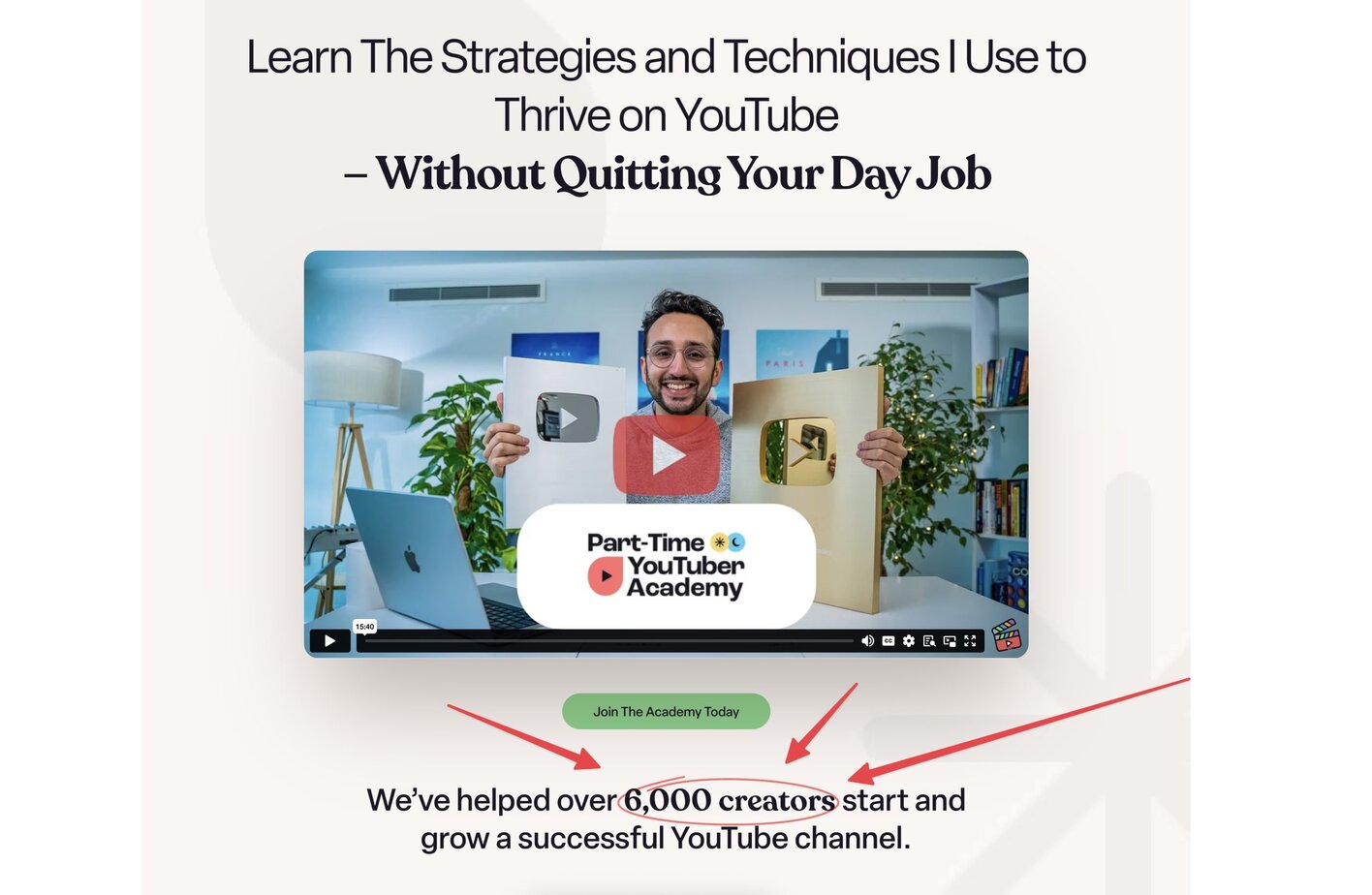
VSL…
Product image stack:
Your CTA should:
Voices.com saw a whopping 400% increase in conversion rates by using a credibility banner…
They’re one of the most powerful Conversion Rate Optimization hacks you can use.
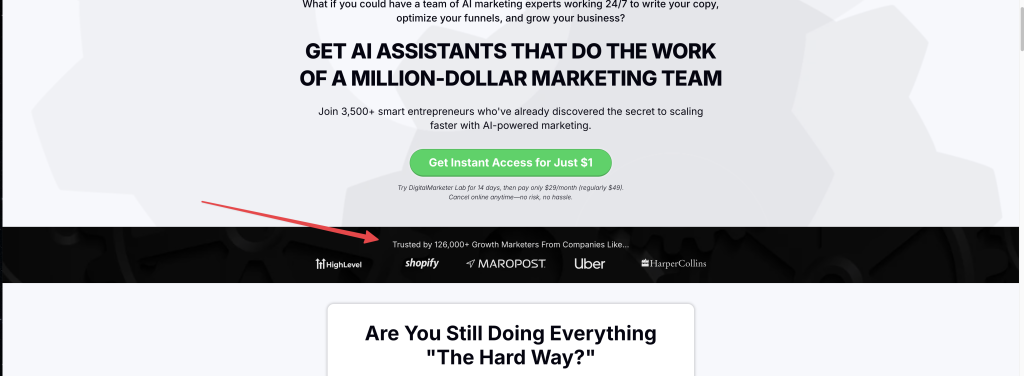
Including social proof higher up the page skyrockets your conversion rates. It makes people trust what’s further down the page, so instead of bouncing they’ll continue reading (if they don’t buy above the fold).
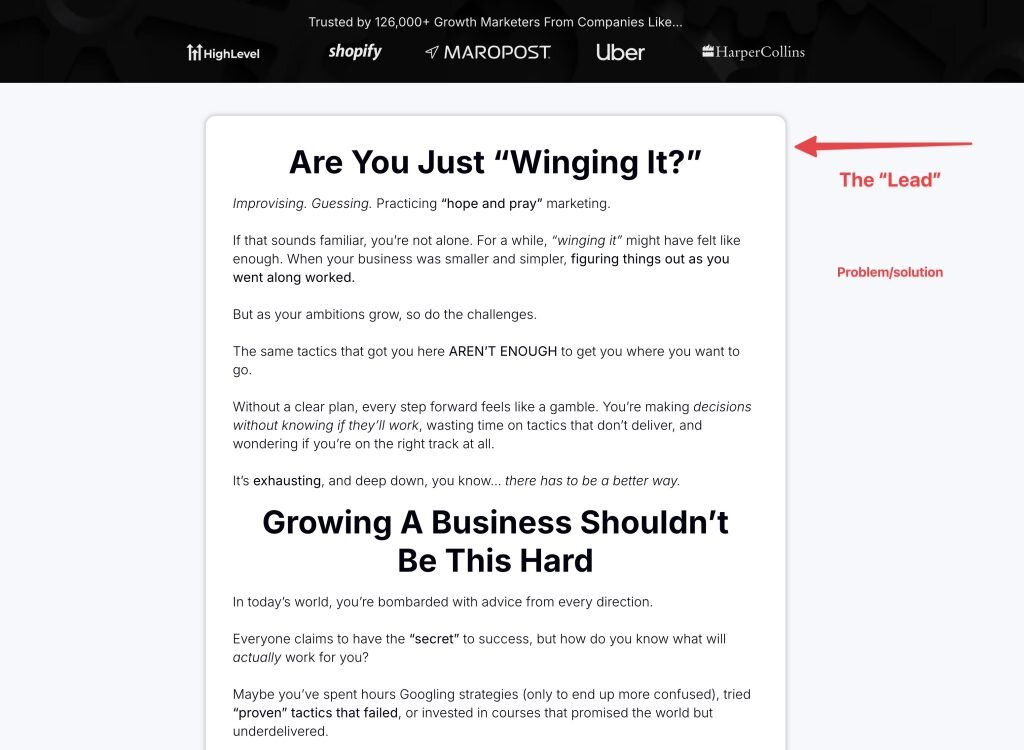
The lead is where you hook them into the story/problem.
It’s where you:
Your process section should:
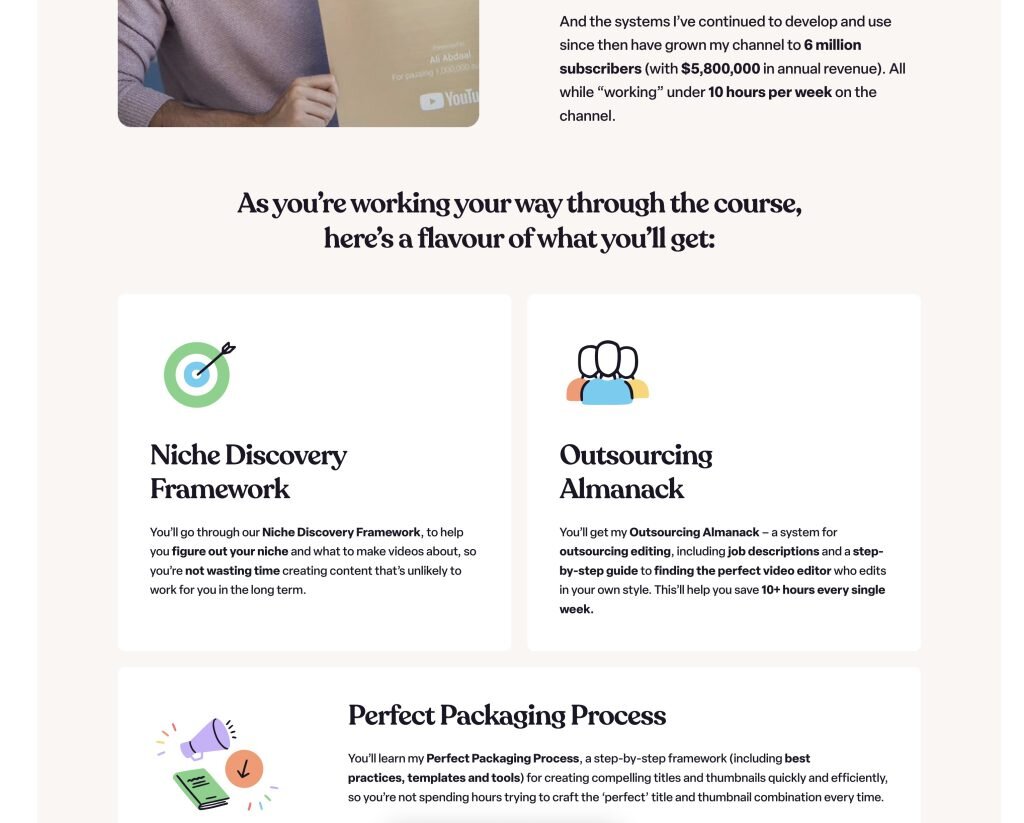
For example, Ali Abdaal talks about “systems” being the unique thing that lets people succeed with his YouTube course.
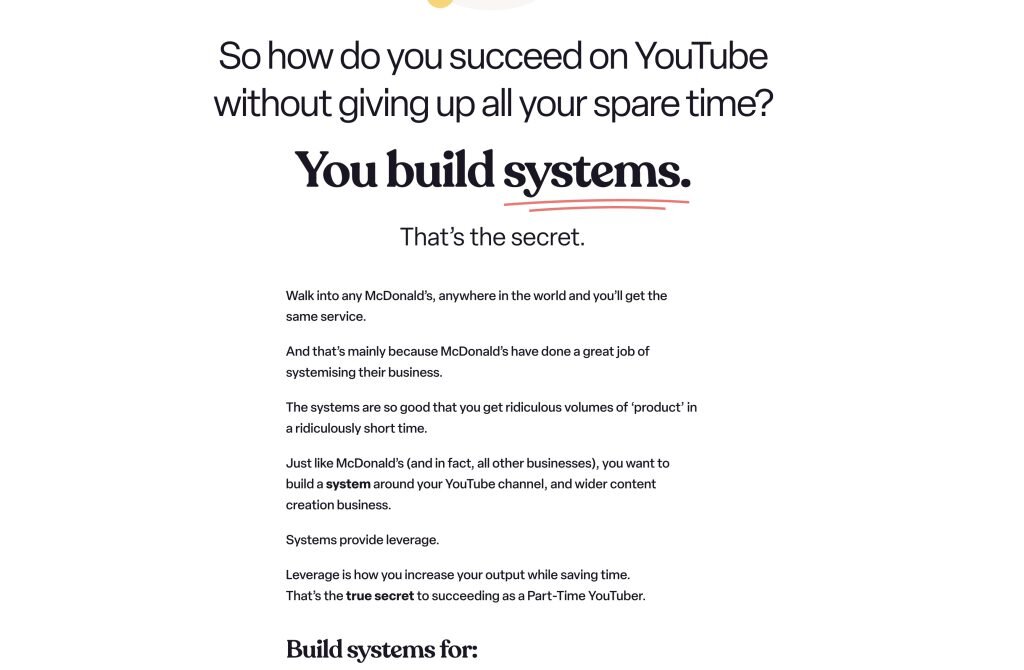
He then shows more of the process/how it works…
Keep layering on more social proof to boost your conversion rates…
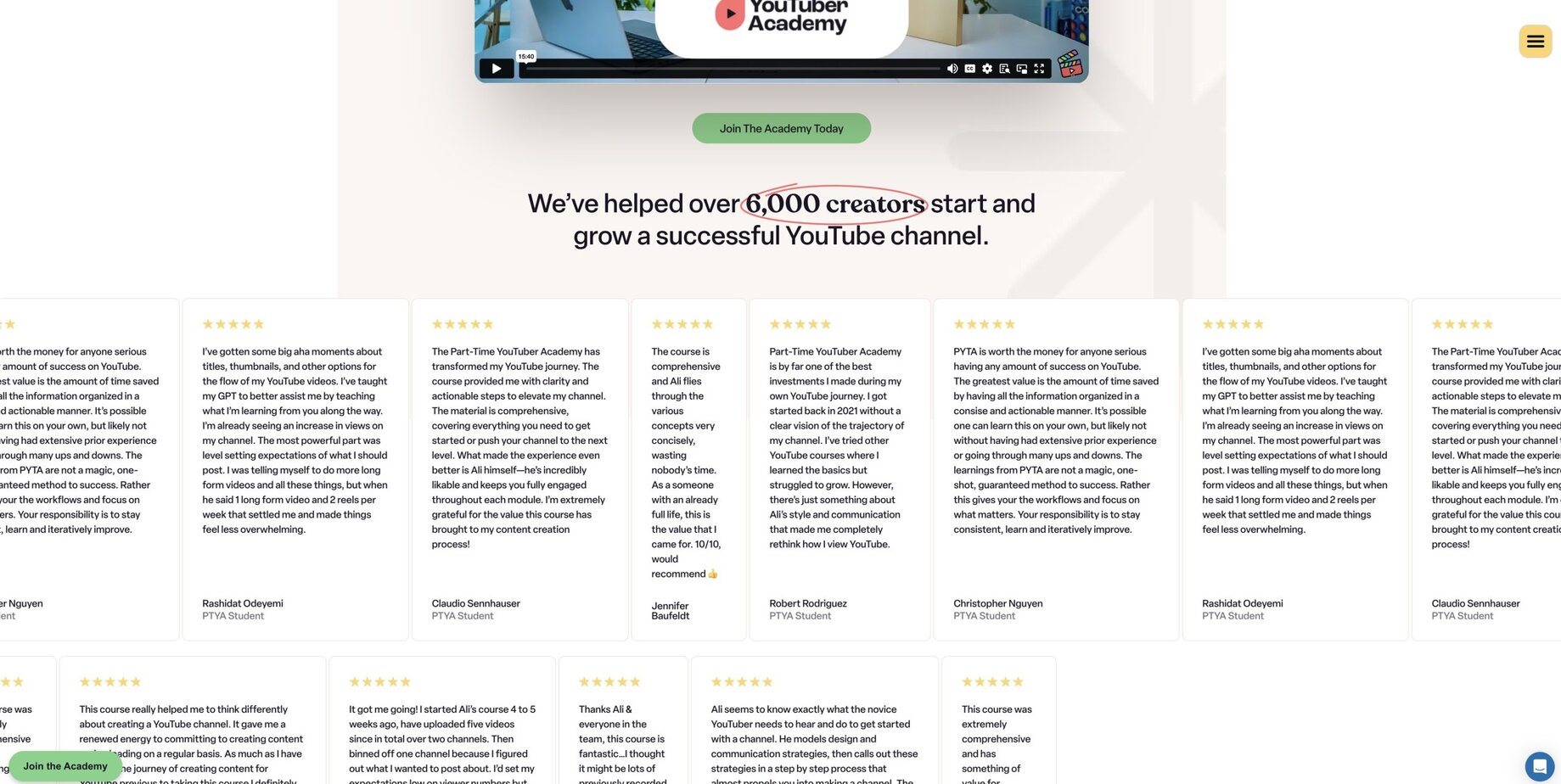
Spiegel Research Center showed that a potential customer is 270% more likely to buy a product with 5 reviews than one with no reviews.
Your social proof should systematically address every single objection potential customers have (many buy for different reasons!).
You want to add these things around the call to actions. That’s the best place to have social proof.
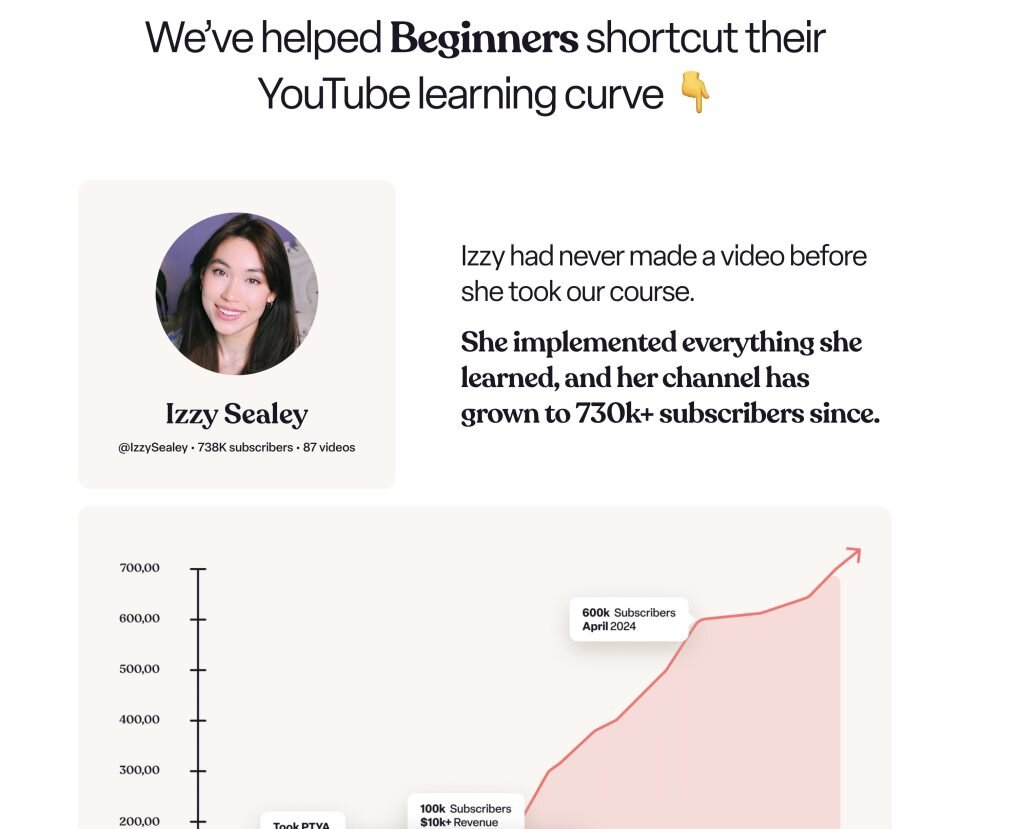
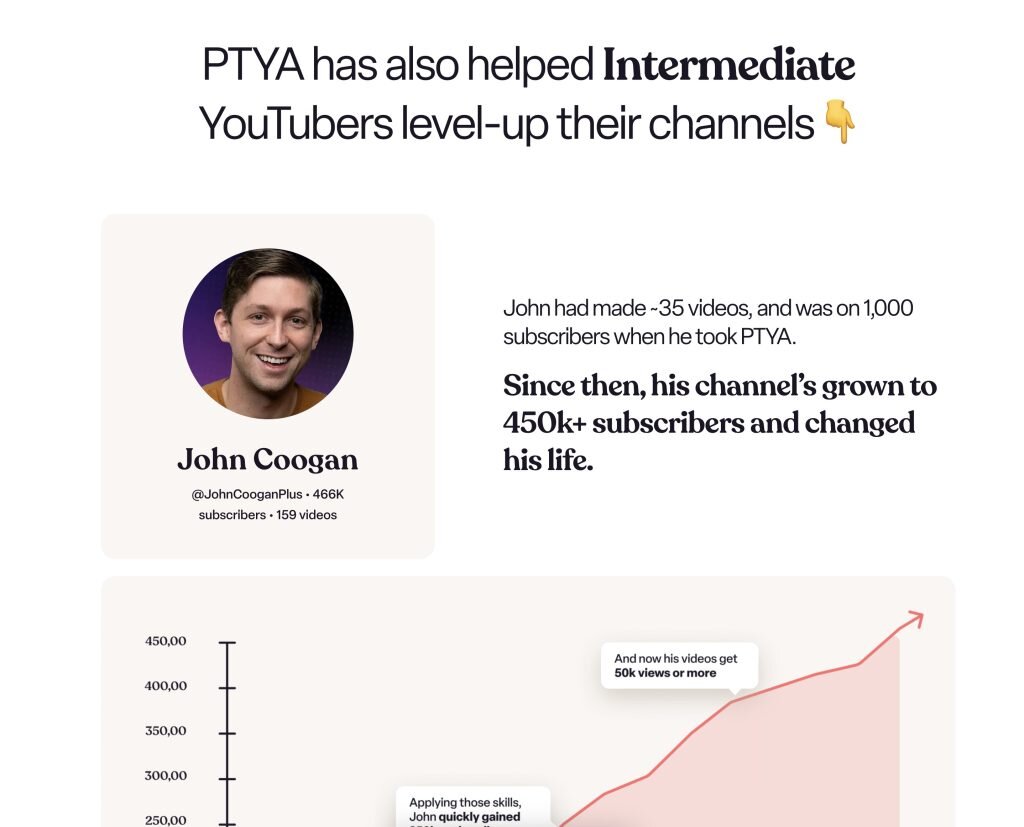
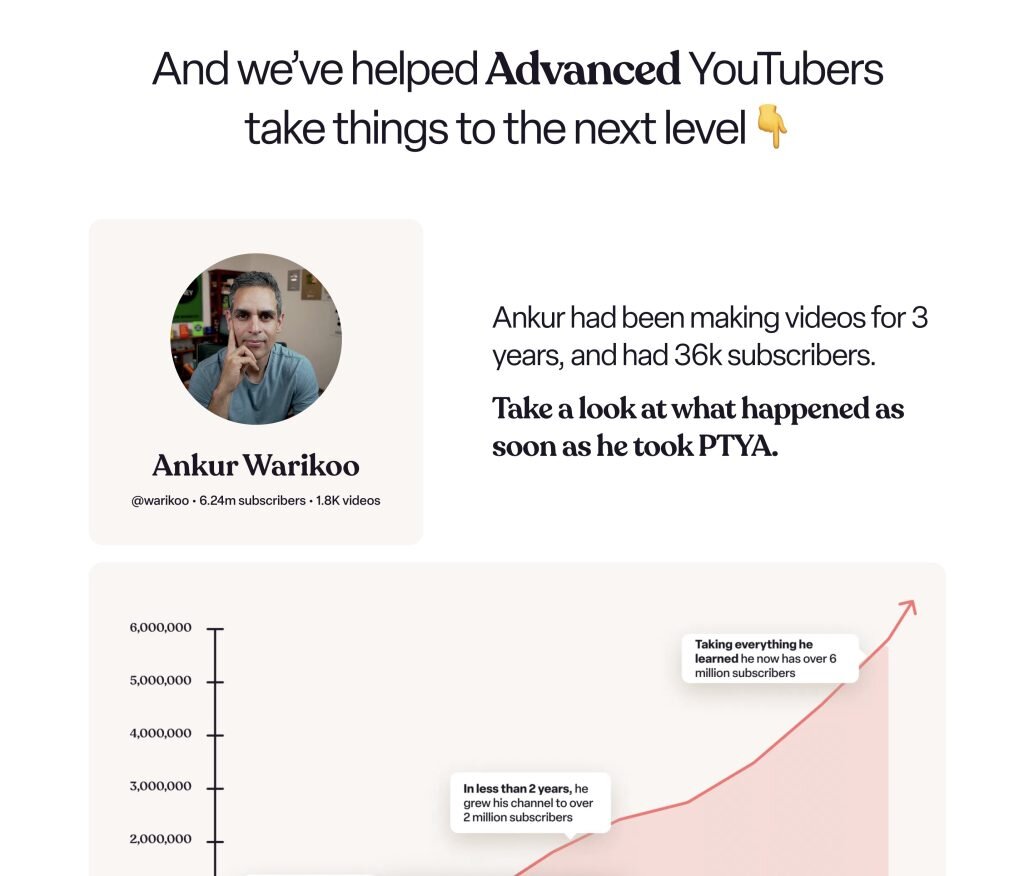
Use different testimonials that address specific objections/concerns at this point in the page
For example, ‘We’ve helped beginner YouTubers’…
‘We’ve helped intermediate YouTubers’…
‘We’ve helped advanced YouTubers’…
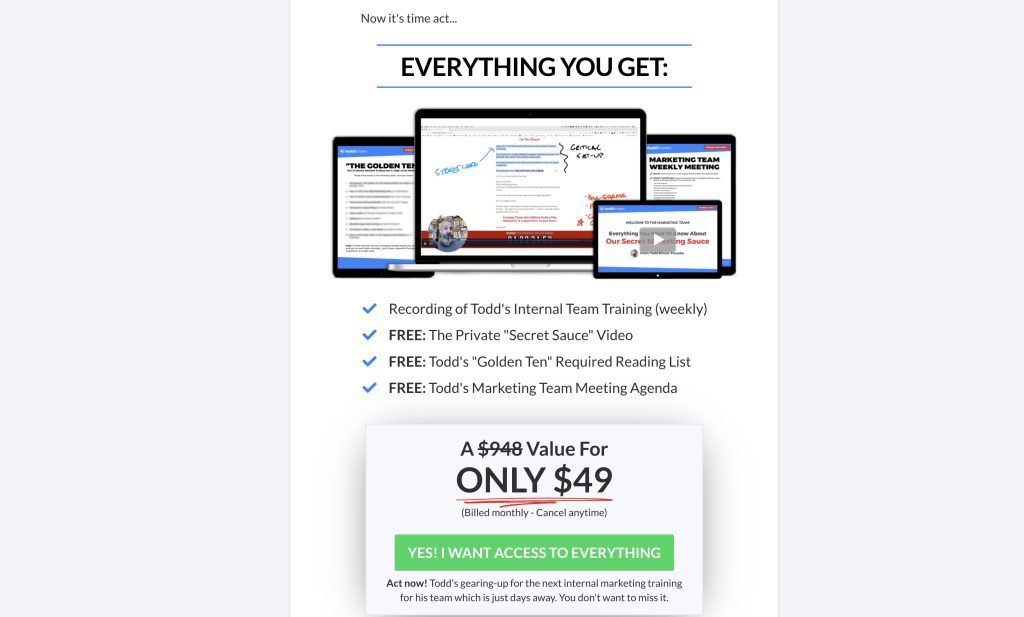
This is where you want to provide a summary of all the things the person is going to get and what it would usually cost.
Why This Works:
Often people will buy your product because of one or a few specific items that are included – not the full package together.
So, in order to get the highest conversion rate, every individual piece needs to feel like it’s worth more than the price that you’re charging.
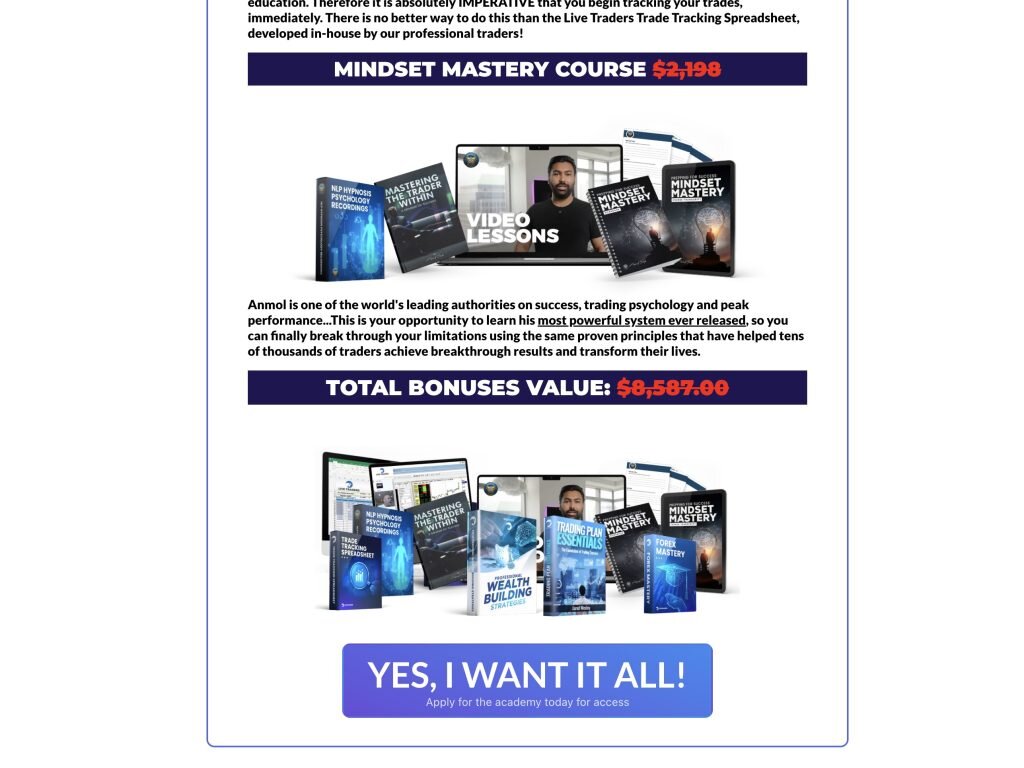
Place this immediately after the offer stack when perceived value is at its peak. As you can see from both offer stack examples above.
If you don’t have a guarantee, you can just use more social proof for this section.
Using both will convert better.
In my opinion though, always offer money back guarantee. This makes them feel like it’s fine to make the jump and buy.
Here is what to include:
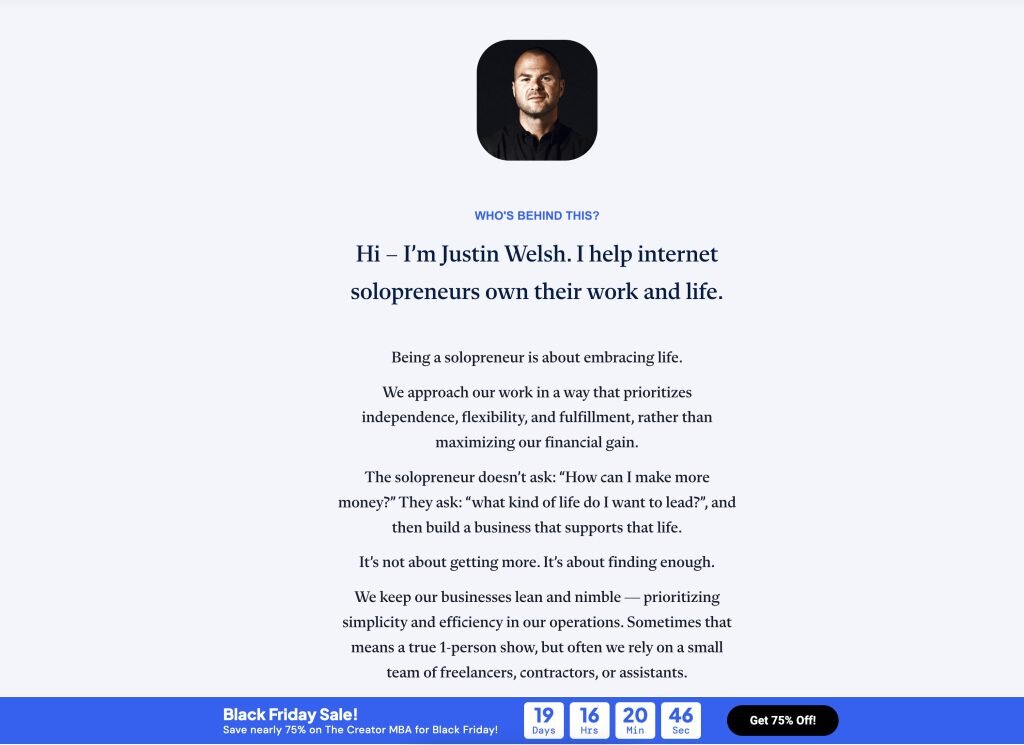
This doesn’t always apply, but if you personally are going to be involved in your sales page in any way, put it at the bottom, not the top.
The only reason you want to tell your story is if telling your story helps your reader understand how you were like them and therefore can help solve their problem. It’s really about solving their problem. It needs to be about the reader, not about you.
For warm traffic sales pages – usually people already know you, so I find including it at the bottom works better.
In some cases, especially cold traffic, it can work better putting this section at the top. But again – only if your story is related to the discovery of the product and shows you were in their shoes.
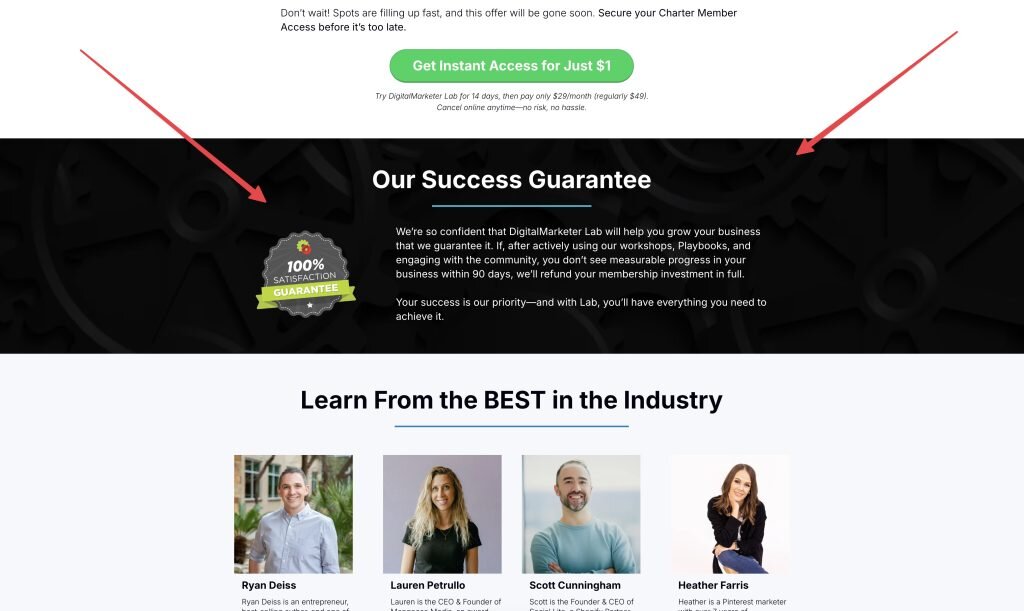
The above photo shows instructors. But obviously, if you’re the main instructor (or only one), it can be just you.
If you are going to use this, I’d say:
And include the following:
This could include:
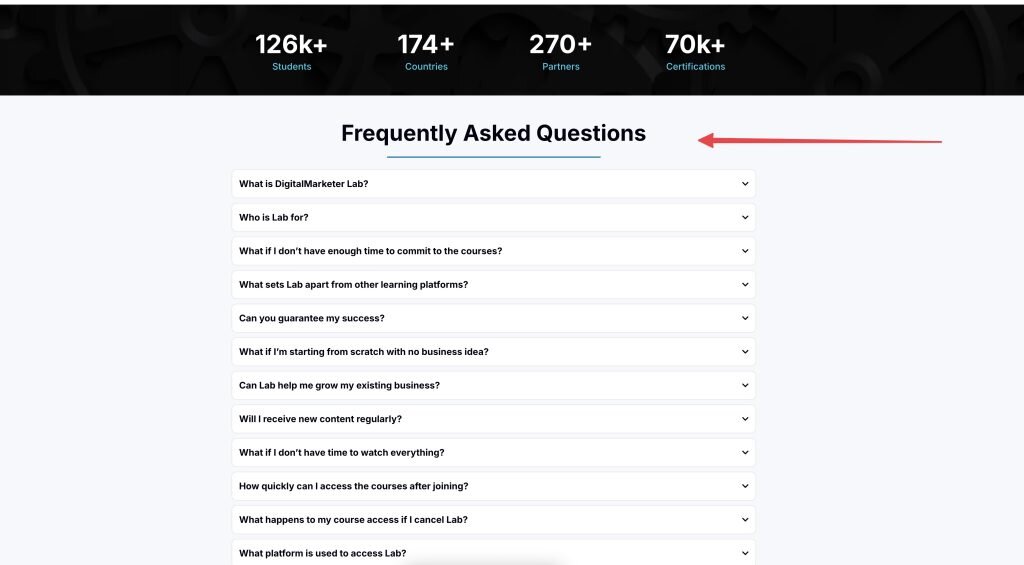
FAQ’s are essentially a way to answer common questions that people need answered before they make the decision to buy.
They also increase conversion rates by 7 to 15%…
This is because people often skim through pages and miss crucial parts of the sales message.
Here’s some things to include:
A lot of people don’t use a CTA after the FAQ, and it’s a big mistake.
Or, they’ll use a CTA in the section before the FAQ and then won’t use one right after the FAQ.
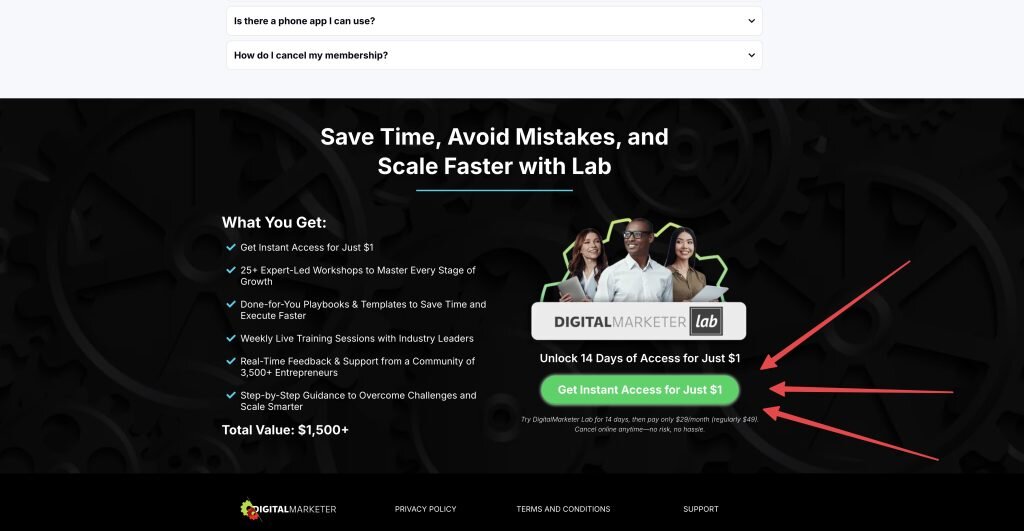
This is your final call-to-action after they’ve seen everything:
Make this CTA button prominent and clear.
You can generate all of the leads and traffic in the world. But if you don’t have a way to convert your warm leads, you’re wasting both your marketing dollars and your time.
A typical “non-funnel” approach might send a generic newsletter directly to a calendar page with no VSL or landing page elements and get a 0.5% conversion rate…
1000 clicks to that same calendar page, at a $200 AOV = $10,000.
But if you converted 1% of those clicks instead of 0.5%, you’d make $20,000.
Crazy Egg saw a 363% increase in sales by implementing a new sales page. The primary change was redesigning their text-heavy page into a clear, benefit-driven page that prominently featured an explainer video (a VSL).
WikiJob saw a 34% increase in conversion rate by adding social proof to their page. And in my opinion, they did a terrible job of displaying that social proof! Imagine how much better it could’ve been with good design and careful selection of the proof.
I’ve done this with clients and we converted 400% more leads.
That’s quadruple the revenue. Just by doing nothing to the email at all. Just by optimizing the sales page.
Typically, 2-3% is where you want to be, depending on your price point.
And if it’s a call-booking funnel, just think of how many more calls you book. Or what the rev-per-call is from email traffic (one of my favorite NorthStar KPIs).
If you’re promoting webinars, etc. It’s the same thing. Think of your typical webinar registration rates. How many people attend, then of those who attend, how many convert. Now you can factor in how much more $$ you make by optimizing your opt-in page to get more registrants.
When you track this across the entire funnel, you’ll see how better funnels = more email revenue, converts more people on your email list and can make you over 363% more profit per email subscriber.


“Matt is an email wizard. Our list is growing faster than ever and our
conversion rates have more than doubled.”

“Our email revenue has grown a lot since working with Matt, and more importantly he's helped us lower our CPA on cold traffic by 4x.”

“Matt drove conversions across multiple campaigns. His copywriting resulted in higher open rates, click-through rates, new customer acquisition and ascension, and increased revenue for the company.”


