
Email Marketing Playbook For Course Creators: Grow From $1M to $100M+ in ARR...
A step-by-step proven roadmap for turning 7-figure creator businesses into 9-figure education empires...

Matt Hommel

I hope you enjoy this blog post. If you want my team to just do your marketing for you, click here.
The creator economy has seen a massive shift…
Today, the most sophisticated players aren’t just personalities; they’re founders and operators of sophisticated enterprises behind the rapid growth of M&A activity inside the creator economy.
This report provides a revenue-centric analysis of this evolution.
We’ll focus on:
It moves beyond vanity metrics to dissect the financial machinery that separates the “popular influencer” types that aren’t close to as rich or successful as they seem online from the real apex creators who are growing massive empires with enterprise value that they can exit for millions of dollars.
The creator economy has transcended its status as a niche segment of the media industry to become a formidable economic sector in its own right. Projections from Goldman Sachs indicate the market is on a trajectory to reach a valuation of $480 billion by 2027.
Other market analyses present an even more aggressive forecast, projecting a global market size of $1.07 trillion by 2034, expanding from $149.4 billion in 2024 at a compound annual growth rate (CAGR) of 21.8%.
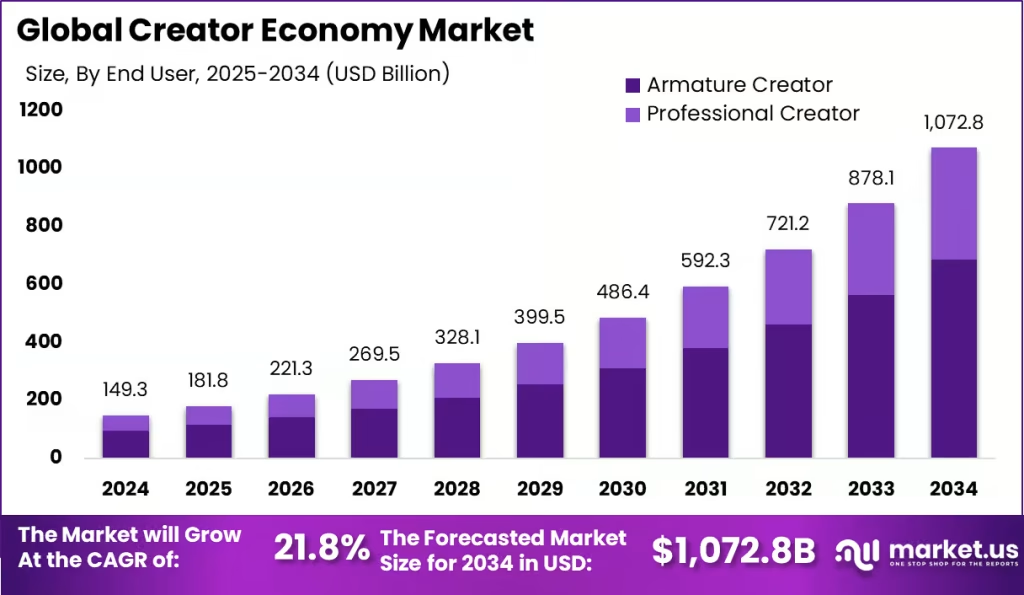
This rapid expansion is reflected in the proven financial success of today’s top creators:
For example, between April 2024 and April 2025, the 50 top-earning creators collectively generated an estimated $853 million in income, an 18% increase over the prior year’s record-setting performance.
This growth rate, substantially outpacing that of many traditional sectors, validates the increasing allocation of capital from brands, media conglomerates, and institutional investors into the creator ecosystem.
The concentration of this earnings growth at the apex of the market suggests a “power law” dynamic, where creators with sophisticated, scalable business models are capturing a disproportionate share of the value.
North America remains the dominant market, accounting for over 37.4% of the global creator economy in 2024, a position solidified by its mature digital infrastructure and highly engaged consumer base.
Understanding the financial health of the creator economy requires a granular analysis of its revenue streams.
While advertising revenue remains a significant component, the monetization landscape has become increasingly diversified. A 2024 market analysis reveals a multi-pillared revenue structure, with brand collaborations constituting the largest single share at 23.5%.
This underscores the continued strategic importance of influencer marketing, which 94% of organizations believe drives a greater return on investment than traditional digital advertising.
Following brand deals, the revenue stack is composed of advertising revenue (22.1%), subscriptions (20.0%), affiliate marketing (12.5%), and direct fan donations or tips (6.3%).
The substantial and growing share of subscriptions is especially noteworthy. It signals a strategic pivot across the industry, from renting audience attention to platforms and advertisers toward owning the customer relationship directly through exclusive content and community-based models.
Hence, why we’ve now entered an info gold rush.

This shift empowers creators with more predictable, recurring revenue streams and insulates them from the volatility of platform algorithms and fluctuating ad rates.
I think it’s brilliant for creators to start selling digital products, communities & memberships. I help them generate millions of dollars a year with it.
A critical examination of the top creators reveals a fundamental decoupling of audience size from financial success. Follower count, once the primary metric of influence, has become a misleading indicator of revenue-generating capability.
The most financially successful creators are not necessarily those with the largest audiences, but those with the most efficient and sophisticated monetization models.
For example, Alex Cooper, host of the Call Her Daddy podcast, commands a media empire with a relatively modest follower base of 15 million. And yet, she was able to score a three-year content deal with SiriusXM valued at $125 million and now holds assets of $32 million.
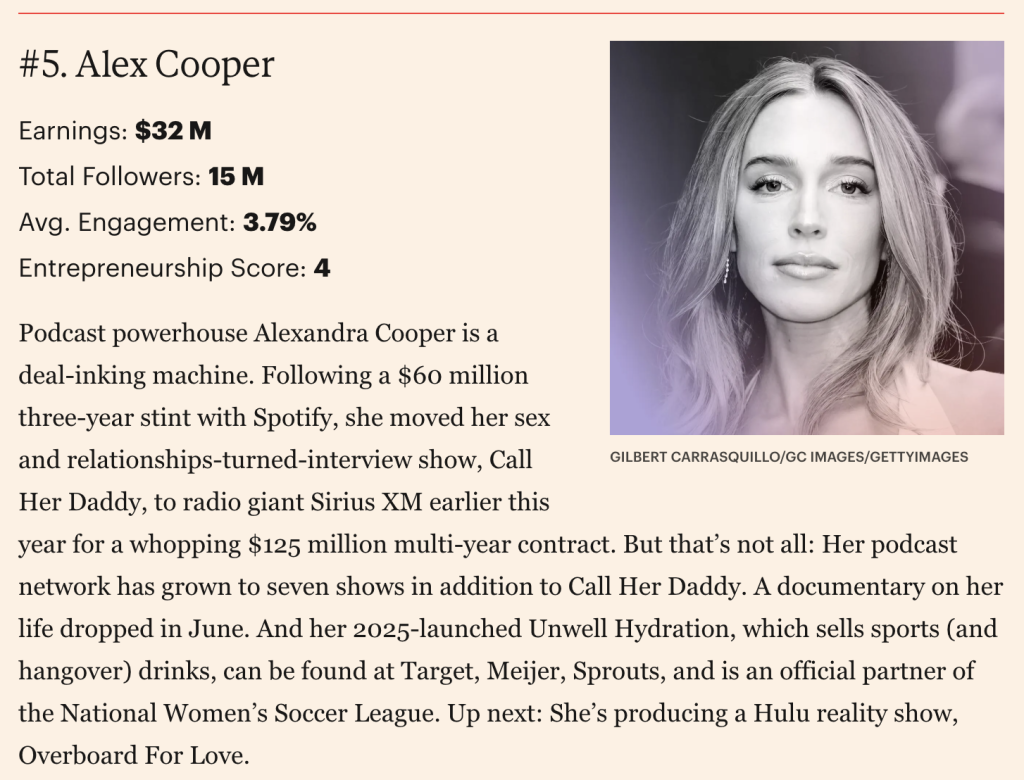
Her value is derived not from sheer numbers, but from a highly engaged, demographically coveted audience willing to follow her across platforms and subscribe to premium content.
In contrast, Khaby Lame, the most-followed creator on TikTok with over 162.2 million fans, does not rank in the highest tier of annual earners. His income is substantial but is primarily based on high-value, selective brand endorsements rather than a diversified enterprise.
A similar dynamic is visible in the comparison between boxer-turned-media personality Jake Paul and TikTok dancer Charli D’Amelio. Paul, with 79 million followers, generated an estimated $50 million in earnings, largely from event-driven pay-per-view spectacles and related ventures.
D’Amelio, despite having a much larger audience of 216 million followers, earned a comparatively lower $23.5 million, derived from brand partnerships and a stake in her family’s business ventures.
This disparity demonstrates a spectrum of monetization efficiency:
At one end lies broad, low-efficiency monetization, such as programmatic ad revenue from a single viral video, which requires massive scale to be meaningful. At the other end is deep, high-efficiency monetization, which involves selling high-margin proprietary products, securing nine-figure exclusive content licenses, or building subscription-based communities.
The creators ascending to the status of enterprise founders are those who have strategically moved their business models toward the high-efficiency end of this spectrum, focusing on intellectual property (IP) ownership, direct-to-consumer (D2C) commerce, and the creation of economic scarcity… And of course, online courses & info products 😉 .
To accurately map the financial landscape of the creator economy, it is essential to rank its key players by their primary financial output: annual earnings.
This section provides a data-driven hierarchy of the industry’s top earners, using figures compiled by Forbes and other financial reports as a foundational dataset.
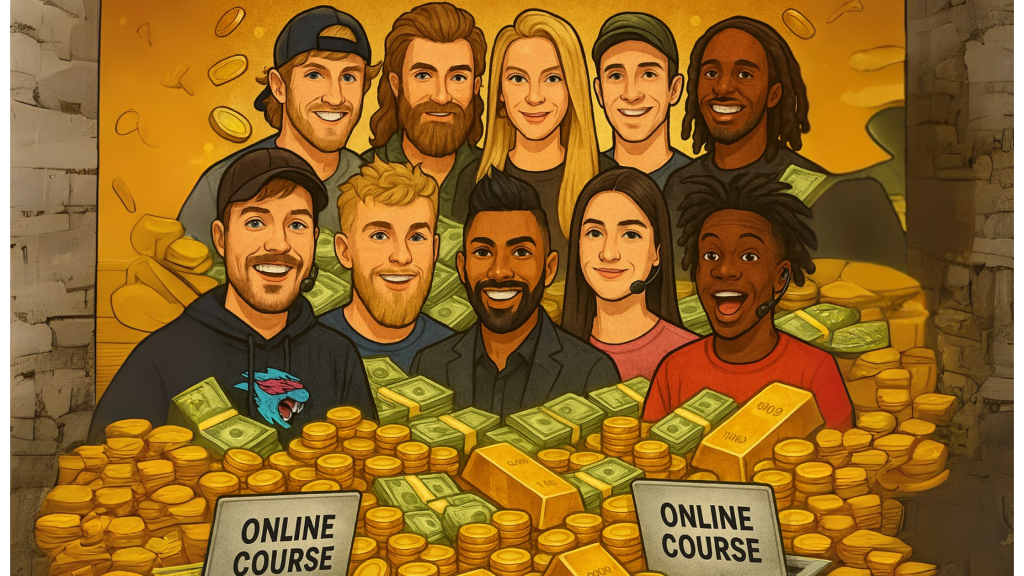
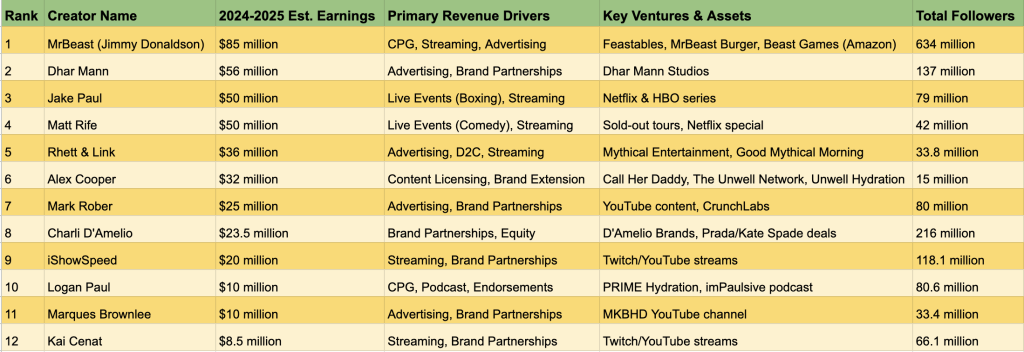
The following table details the top-earning creators for the period between April 2024 and April 2025.
The ranking is based on estimated gross earnings and highlights the primary business activities that generate this income.
This chart below provides a clear, revenue-focused snapshot of the market’s most influential & profitable creators:
For a sophisticated financial analysis, it is crucial to distinguish between annual earnings—a flow metric representing income over a period—and net worth, a stock metric reflecting the total value of an individual’s assets.
While high earnings can contribute to wealth accumulation, the most advanced creator-entrepreneurs are now prioritizing the growth of enterprise value over the maximization of personal income.
This strategic shift is exemplified by figures like Jeffree Star and MrBeast. Star, a beauty mogul who built a cosmetics empire from his YouTube fame, boasts an estimated net worth of over $200 million, primarily from the value of Jeffree Star Cosmetics. Despite this immense wealth, he does not appear on the list of top annual earners, indicating his financial position is rooted in asset ownership rather than current content-driven income.
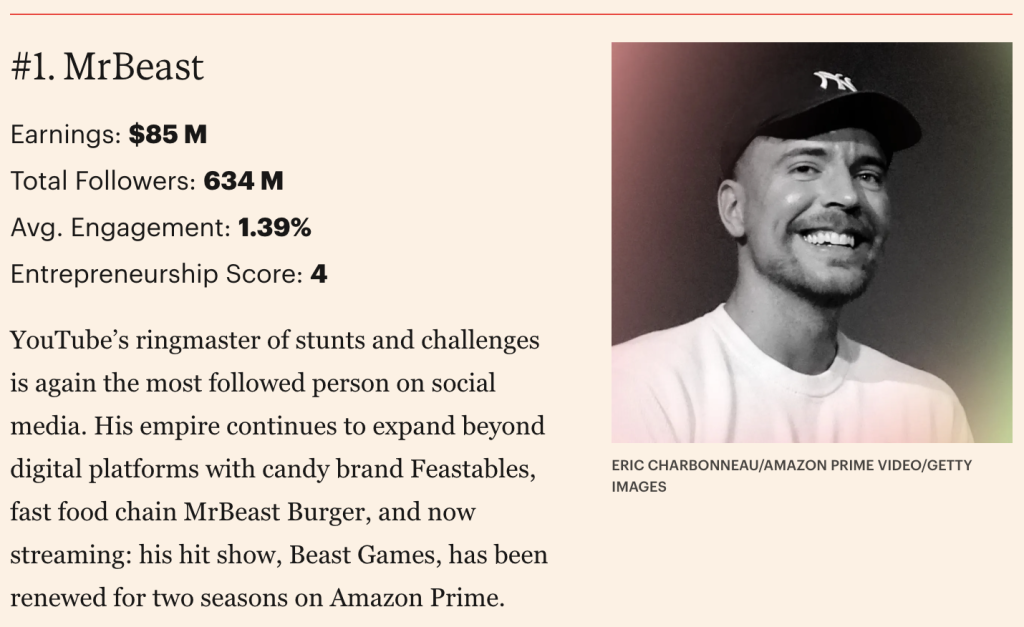
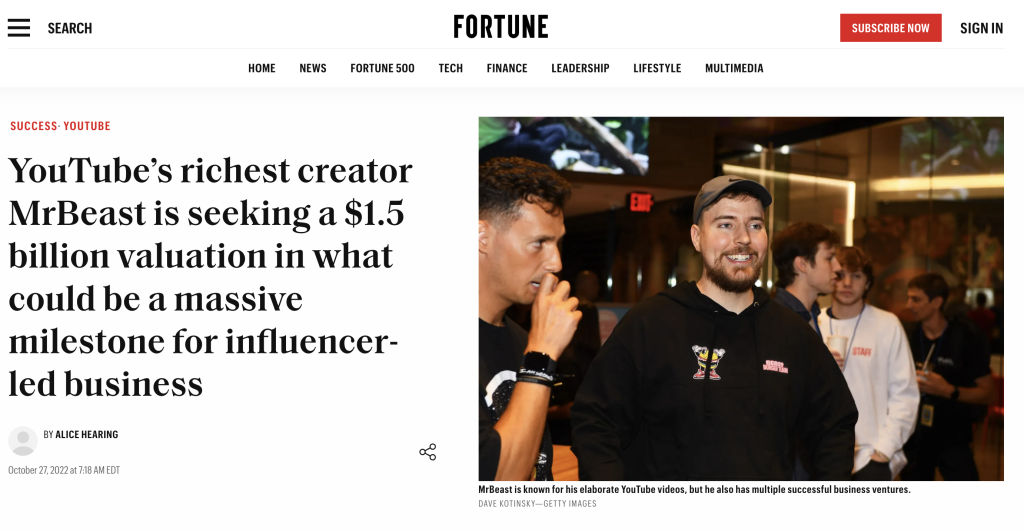
MrBeast presents an even more compelling case. His reported annual earnings of $85 million are substantial, yet they are dwarfed by the valuation of his enterprise.
His net worth is estimated to be as high as $1 billion, a figure derived not from his bank account but from the equity he holds in his holding company, Beast Industries. That’s because he reinvests a majority of his earnings directly back into his ventures, operating with relatively low personal liquidity to fuel aggressive growth.
This approach mirrors the strategy of high-growth technology founders, who historically prioritized market share and long-term enterprise value over short-term profitability. The financial endgame for the elite tier of creators has fundamentally changed. The objective is no longer simply to be the highest-paid influencer but to become the founder of the first publicly traded, creator-led media and CPG conglomerate.
This evolution has profound implications for how these businesses are structured, funded, and valued, attracting growth equity and strategic M&A interest rather than simple endorsement contracts.
To understand the mechanics of value creation in the modern creator economy, it is necessary to perform a granular analysis of its leading enterprises. The following case studies deconstruct the business models, financial structures, and strategic imperatives of the market’s most significant and innovative players.
Jimmy “MrBeast” Donaldson has engineered a business model that represents the pinnacle of creator-led commerce. His operation is structured under a holding company, Beast Industries, which functions as a vertically integrated conglomerate. This entity uses a colossal media arm as a powerful and cost-effective customer acquisition engine for a portfolio of rapidly scaling consumer product brands.
The financial performance of Beast Industries is staggering.
In 2024, the company generated $473 million in total sales, with projections to reach $899 million in 2025. Not to mention, Mr. Beast only kept $1 million for himself—further substantiating his investment into growing enterprise value over personal cashflow. The company is reportedly in negotiations for a funding round that would establish its pre-money valuation at approximately $5 billion.
The engine of this valuation is not his media fame itself, but the commerce it enables…
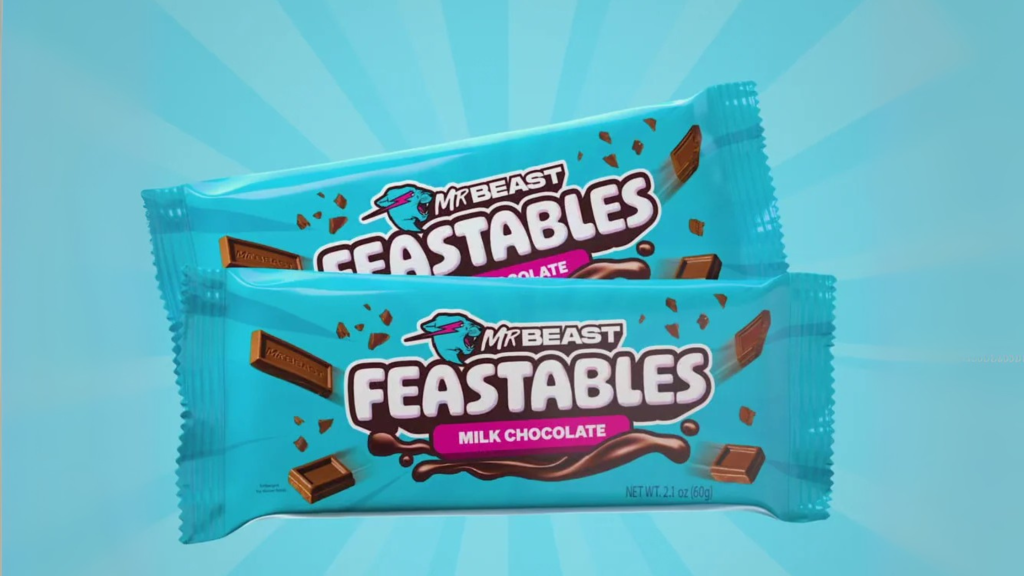
The primary profit driver within Mr. Beast’s enterprise is his snack brand, Feastables. Launched in 2022, Feastables generated an estimated $251 million in sales in 2024, and over $20 million in pure profit. This performance is a watershed moment, as the CPG division surpassed the media business in profitability for the first time.
Mr. Beast’s toy line, MrBeast Lab, launched in mid-2024 and achieved $65 million in net sales within six months, becoming the best-selling U.S. action-figure line of the fall season.
On the other hand, his media division, which includes his YouTube channels and streaming productions, operate on a different financial logic. While Forbes estimated Mr. Beast’s personal earnings from media at $85 million in 2024, the division as a whole actually closed the year at a net loss of nearly $80 million.
This loss was driven by massive production expenditures, most notably for his Amazon Prime series, Beast Games, a project with a budget reportedly exceeding $100 million.
This financial structure reveals a sophisticated strategic flywheel. The media arm is not managed as a standalone profit center but as a strategic marketing expense—a highly effective loss-leader. The high-production-value videos and streaming shows function as global advertising campaigns for Feastables and other ventures. Profits from the high-margin CPG products are then reinvested to fund even more spectacular and costly content, which in turn drives greater brand awareness and sales.
This self-reinforcing loop creates a highly defensible and scalable business model that traditional CPG and media companies find difficult to replicate, and in my opinion, have no chance competing with.
Alex Cooper’s success demonstrates a different but equally potent strategy: leveraging a singular, powerful IP into a multi-platform media and licensing empire. Her core asset is the Call Her Daddy brand and the fiercely loyal community known as the “Daddy Gang.” Her business model is a masterclass in escalating the value of this IP through strategic licensing and brand extension.
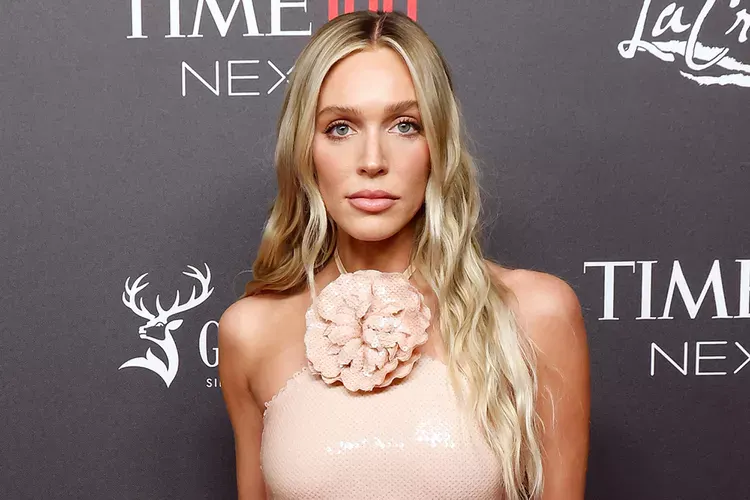
Cooper’s financial trajectory is best tracked through her landmark content deals. She first proved the value of her IP by transitioning from Barstool Sports to a three-year exclusive deal with Spotify in 2021, valued at $60 million.
As the brand’s influence grew, she engineered an even more lucrative move…
In 2024, she signed a new three-year agreement with SiriusXM for a reported $125 million.
This dramatic increase in contract value in just three years is a direct measure of her IP’s appreciating worth. Her estimated earnings for the 2024-2025 period were $32 million.
Beyond direct licensing, Cooper has pursued an “IP-as-a-Platform” strategy.
She leveraged the success of Call Her Daddy to launch The Unwell Network, a podcast network designed to incubate and distribute shows from other prominent creators, effectively transforming her own show into a flagship platform for a larger media business…
Such as, forming a new Gen Z media venture with Matt Kaplan:

Most recently, she has extended the “Unwell” brand, born from her network, into the physical product space.
In late 2024, she announced the launch of Unwell Hydration, a wellness beverage line developed in partnership with the global CPG giant Nestlé.
This move into CPG contrasts with MrBeast’s vertically integrated approach; by partnering with Nestlé for production and distribution, Cooper gains access to a massive, capital-intensive market with minimal upfront capital expenditure, trading a portion of the upside for reduced risk and immediate scale.
This is a smart move in my opinion, and many other huge institutions are stealing this idea too. Like Hershey’s, who recently acquired fitness creator Maxx Chewning’s Sour Strips candy brand for a whopping $75.5 million.
The purchasing power of Alex Cooper’s audience was already proven early on, when she sold $800,000 worth of merchandise in just 3 days in 2020. So this was a very logical bet to make that paid off.

The D’Amelio family has executed a rapid and sophisticated transition from individual social media fame to a structured, diversified family enterprise.
Their model involves centralizing the powerful brands of daughters Charli and Dixie under a corporate umbrella that functions as both a startup incubator and an investment vehicle.
The core of their operation is D’Amelio Brands, a formal holding company launched in 2022 with an initial $6 million seed funding round.
This entity is designed to build and scale owned-and-operated companies that leverage the family’s marketing reach. Its portfolio already includes ventures in key consumer categories, such as D’Amelio Footwear and the skincare line, ZITSALLRIGHT.
Charli D’Amelio’s personal earnings, estimated at $23.5 million for 2024-2025, are derived from a combination of high-fashion partnerships with brands like Prada and Kate Spade, as well as her equity stake in the success of D’Amelio Brands.
The most financially sophisticated component of their strategy is the establishment of 444 Capital, a venture capital fund to invest $25 million into high growth startups…
And the fund’s past GP performance has already shown a 3.6x net return multiple and 71% net annual rate of return.
The fund also co-invests alongside established VC firms in high-growth technology companies, with a particular emphasis on backing female and minority founders. Investments include the low-carb food company Hero Bread and the healthcare career marketplace Incredible Health.
This evolution represents the creation of a modern, digitally native family office. The D’Amelios are systematically converting social capital into financial capital, progressing from endorsing other companies’ products to building their own, and now to making direct equity investments in other emerging businesses. This long-term, portfolio-based approach to wealth creation and diversification is arguably one of the most advanced and durable financial models in the creator ecosystem.
I’ve already started doing this too with some of my own portfolio companies.
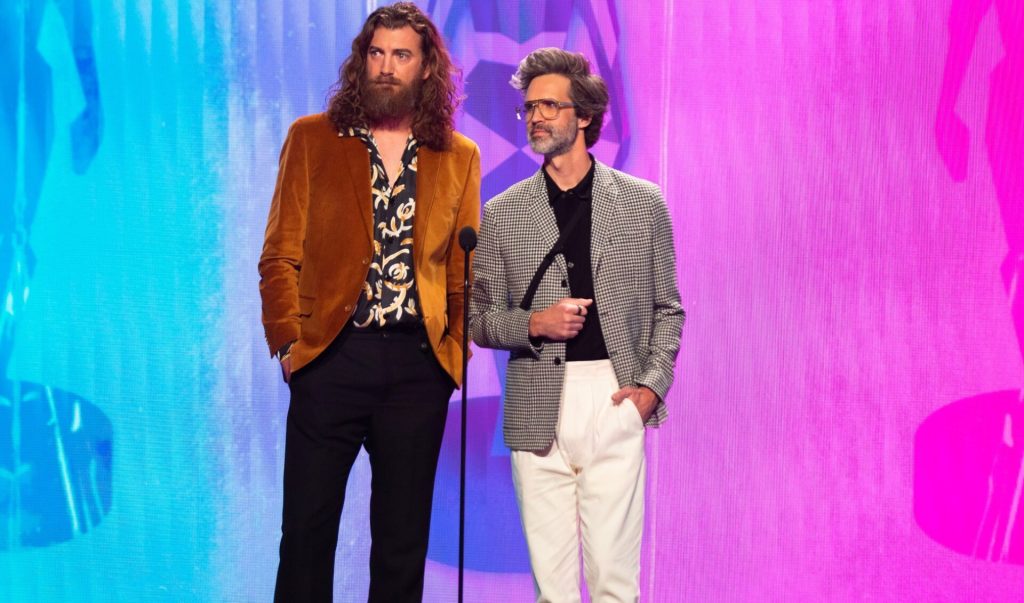
Rhett McLaughlin and Link Neal represent the “blue-chip stock” of the creator economy.
Their company, Mythical Entertainment, is a mature, independent digital media studio built through over a decade of consistent content production. Their success is not predicated on explosive, trend-driven virality but on building a durable media institution with a diversified portfolio of IP and resilient revenue streams.
The company’s financial health is robust, with the duo earning an estimated $36 million between 2024-2025.
This income is generated from a wide array of sources, which insulates their business from platform-specific risks…
Their key revenue streams include:
They have also engaged in strategic M&A. In 2019, they acquired the legacy YouTube comedy brand SMOSH under their parent company Mythical Entertainment for a reported $10 million.
This deal significantly expanded the Mythical Entertainment portfolio, and grew the business to over 70M subscribers and 250M monthly views across 14 YouTube channels!
4 years later, they sold SMOSH back to the original founders for a “nice, clean exit.”
The company’s consistency and brand-safe content have made it an exceptionally reliable partner for advertisers and a valuable asset in the broader media landscape.
Reports have emerged that Mythical is exploring the sale of a minority stake, with potential suitors including major media players like Spotify and Roku.
This interest from institutional media companies signals that the market values Mythical Entertainment not as a pair of influencers, but as a scalable, independent production studio with a valuable library of content and a loyal, multi-generational audience…
AND… they’ve opened a $5M Creator Fund called, the Mythical Accelerator.
Beyond the top-tier celebrity enterprises, the creator economy is fostering other highly successful, revenue-focused business models.
These niche dominators offer crucial lessons in market strategy that are nos being leveraged for HUGE financial success.
The story of Dani Austin and her haircare brand Divi provides a powerful blueprint for authentic, creator-led product development. Austin founded the company not from a calculated analysis of market opportunity, but to solve a deeply personal problem with hair loss. This genuine origin story created an immediate and powerful bond with her target audience, who shared the same struggle…

The commercial result of this authenticity was EXPLOSIVE.
Upon its debut in 2021… Divi’s flagship Scalp Serum sold out in two hours and propelled the brand to generate almost $40 million in revenue in its first year of operation.
This success was not a fleeting moment; the brand is projecting 60% year-over-year growth and over $100M in sales in 2025, and it landed a major retail distribution partnership with Ulta Beauty, including placement in all Ulta Beauty at Target locations nationwide.
Divi’s success illustrates that in a crowded CPG market, a creator’s authentic narrative and trusted relationship with a dedicated niche community can serve as a more potent launchpad than a multimillion-dollar traditional marketing budget…
The brand’s rapid growth and strong product-market fit, validated by its successful expansion into premier retail channels, make this model particularly attractive to private equity and venture capital firms seeking consumer brands with organic customer loyalty and a defensible market position.
Khaby Lame’s business model represents a hyper-evolved and highly lucrative version of the traditional celebrity endorsement.
As the most-followed creator on TikTok with over 162.2 million followers, his primary asset is his unparalleled global reach.
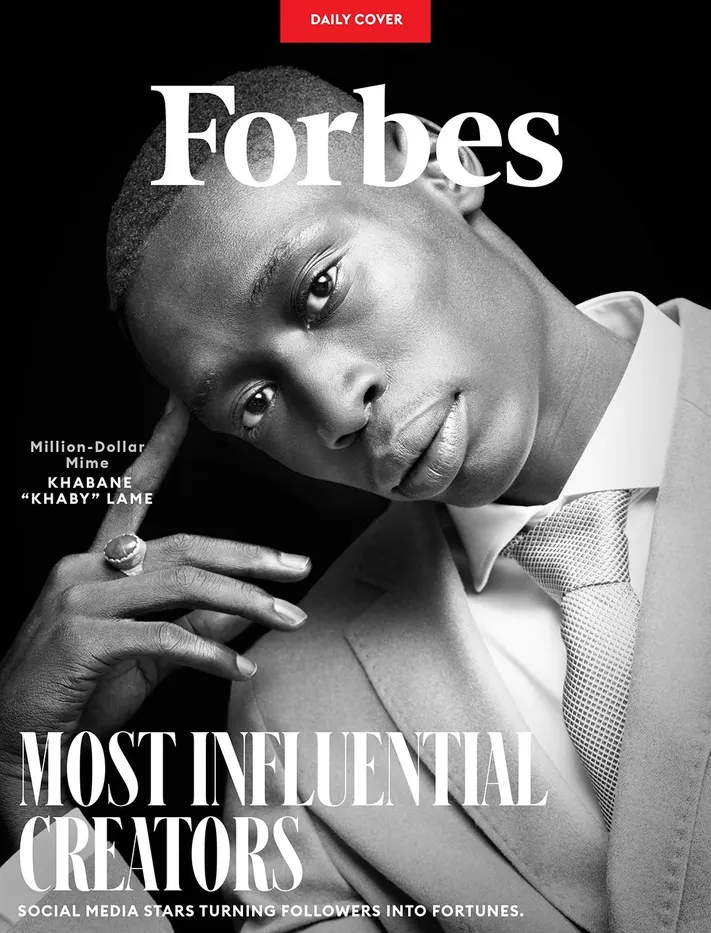
The key to this reach is the nature of his content: silent, universally understood physical comedy that transcends all linguistic and cultural barriers.
This universal appeal, combined with his simple, inoffensive humor, makes him an exceptionally “brand-safe” partner for the world’s largest corporations, minimizing the perceived risk of controversial associations…
And as a result, he’s become a walking, wordless billboard for global brands, securing major, multi-year partnerships with companies like Hugo Boss, Pepsi, and the crypto platform Binance.
He was also the centerpiece of a P&G-produced unscripted series for the streaming service Tubi, designed to promote brands like Tide and Crest to a multicultural audience.
This high-demand status translates into premier earning potential. In fact, Lame reportedly commands fees ranging from $500,000 to $850,000 for a single sponsored post.
His model may not focus on building a diversified holding company like the Mr. Beasts, Rhett McLaughlin and Link Neal duo, The D’Amelio family and many others extracting huge profits from the creator industry right now.
However, he’s still done a decent job at maximizing his financial value as a media partner, and he’s demonstrated how optimizing for global reach and brand safety can create a distinct and highly profitable lane in the creator economy.
The analysis of the creator economy’s financial elite reveals a clear and accelerating evolution from influencing to enterprise-building.
Synthesizing the findings from the above case studies provides an easy framework for understanding the pillars of financial success and the future trajectory of investment and market structure.
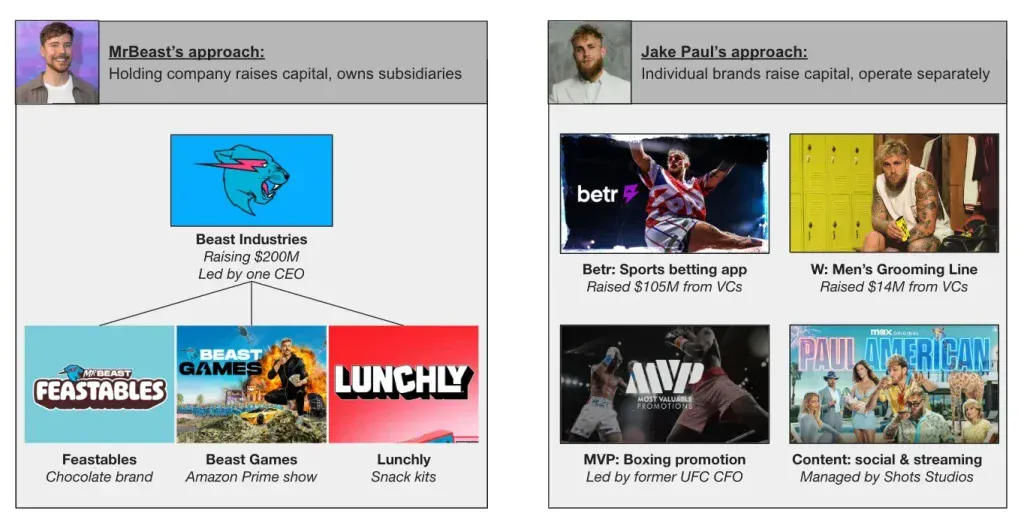
The most financially successful creators have gone beyond basic monetization tactics and have built their businesses on 4 core pillars:
The flow of institutional capital into the creator economy is becoming more sophisticated and is bifurcating along strategic lines.
On one side, growth equity and M&A activity are targeting mature, scalable creator enterprises. For example, a company like Mythical Entertainment, with its stable revenues and proven studio model, is an attractive target for a traditional media looking to gain stronger footing in the digital content segment of their industry through a nice little strategic acquisition.

And a high-growth behemoth like Beast Industries is a prime candidate for large private equity investments to fuel global expansion.
On the other side, venture and seed-stage capital is flowing into creator-led products and platforms.
A brand like Dani Austin’s Divi, which demonstrated explosive product-market fit, attracts investment to scale its retail and international presence.
And a venture like the D’Amelios’ 444 Capital represents an entirely new channel, allowing investors to partner with creators to fund the next generation of startups.
Looking forward, an acceleration of M&A activity is expected as traditional CPG and media giants recognize the strategic necessity of acquiring these highly engaged communities and their innovative marketing flywheels.
The next frontier will likely be creator-led M&A, where a dominant player like Beast Industries could begin acquiring smaller, promising creator-led brands to integrate into its powerful commerce and media ecosystem.

The logical conclusion of the market’s maturation is the public offering of a creator-led enterprise. With private valuations reaching the multi-billion-dollar level, as seen with Beast Industries’ potential $5 billion valuation, the path to the public markets is becoming increasingly plausible.
A company like Beast Industries, with its strong CPG revenue and clear growth narrative, or a mature, profitable studio like Mythical Entertainment, possesses the financial metrics and corporate structure that could withstand the scrutiny of public market investors… A successful IPO would be a landmark event for the sector.
PLUS… it would provide immense liquidity for the founding creator, unlock vast pools of capital for global expansion and acquisitions, and, most importantly, establish a public market valuation benchmark for the entire creator economy.
This would represent the ultimate validation of the creator-as-an-enterprise model, cementing its status as an institutional-grade asset class and charting the course for the next generation of digital media moguls and Mega Funds.
If you want to grow your enterprise value and add a few more zeros to your bank account, book a call with our team and learn how we make companies like yours 2-4x more profit per customer. We do 100% of the work for you, so you can start seeing more cash flow into your bank account without you having to lift a finger.


“Matt is an email wizard. Our list is growing faster than ever and our
conversion rates have more than doubled.”

“Our email revenue has grown a lot since working with Matt, and more importantly he's helped us lower our CPA on cold traffic by 4x.”

“Matt drove conversions across multiple campaigns. His copywriting resulted in higher open rates, click-through rates, new customer acquisition and ascension, and increased revenue for the company.”


